

• I was going to write a little bit about the bloody 1892 Homestead strike this week since I’m moving into 1892 with the Debs Locomotive Firemen’s Magazine material and have been reading an 1893 account of the conflict written by a close observer. However, those words still aren’t ready to be written quite yet. Instead, another question came up this week — one about which I have observations but no deep or profound answers.
The 1892 Homestead strike wasn’t the first at the Carnegie steel works in that city. In 1889 the same mill was the site of another lockout, a bitter affair which moved the Pittsburgh Press to categorize some of the strikers as semi-civilized “Hungarians, who look savagely at all strangers.”†
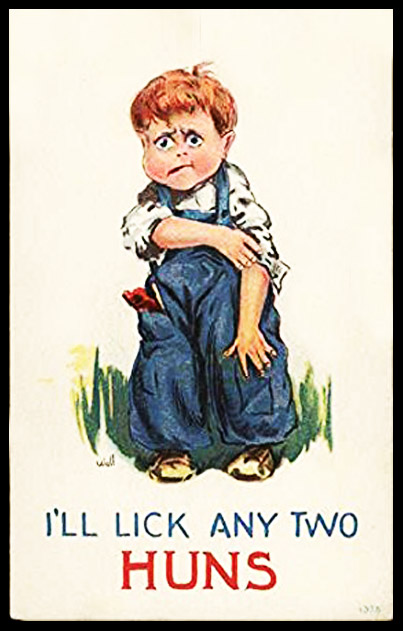 That sort of nativist thinking has had a long tradition in America — starting with immigrants from England talking smack about immigrants from Germany and indentured whites slamming black slaves, for all I know, a malevolent impulse running through the generations all the way to the Republican Party of today.
The organized labor movement that emerged during the second half of the 19th Century was particularly culpable for promulgating this ideology, leading the cheers and helping to push the legislative agenda for Chinese exclusion in an effort to restrict mass immigration from that overpopulated nation and a consequent lowering of wage scales. Unions have always been, first and foremost, about getting as much money as possible for their members from employers, after all, and the introduction of foreign workers on en masse represented a threat to American wage levels — which were historically high in comparison to the prevailing situation in Europe.
Although a trade unionist to his core by the 1890s, I honestly didn’t expect Gene Debs to exhibit such thinking. He was, after all, very good on the race issue throughout his life, viewing the radical abolitionist Wendell Phillips (1811-1884) as one of his particular role models, stepping up for black workers within the Socialist Party when it was unpopular to do so, taking an enlightened view of the women’s movement, and so on. Debs was nothing if not a radical Christian during the first half of his life (the number of biblical references that are going to show up in the index of Volume 1 of the Debs Selected Works will be something that turns a few academic heads). Debs and nativism? Fat chance.
As it turns out, Debs the railway brotherhood magazine editor comes back several times to rather simplistic nativism with respect to foreign workers, with four particular immigrant worker bogeys: Chinese, Poles, Hungarians, and Italians. While I have yet to come across Debs using derogatory epithets for the former two nationalities, he did call Hungarians “Huns” and fairly shamelessly employed the phrase “Dagoes” for Italians — with a sneer, as for example he does in this quote from “Fair Wages” (Jan. 1891):
When wages go down the “labor market” is referred to as being overstocked — the supply of labor being greater than the demand. Labor is referred to as a “commodity,” to take its chances like hides or hair, guano or jute, or any other article of trade. Take the “labor market” and supply it with Poles, Huns, and Dagoes, and wages go down to a level which would not furnish subsistence to a millionaire’s poodle or parrot. In such an event, the American workingman has one hope, and only one, and that is to organize and federate, and say to employers that the standard of wages is thus and so, and all the Huns and Poles and Dagoes on top of the ground, backed by the American scab, cannot lower the standard.
That’s pretty hard to miss, eh? Nor does EVD get any sort of free pass for potentially having used the term “Dago” in a softer archaic context than the term has today, exemplified by his calling a certain Bonzano, right hand man of railroad mogul Austin Corbin, a “Dago lickspittle” (“The Policy of This Magazine,” Feb. 1891). It was a racial insult then, and he knowingly spewed it. Obviously any serious scholarly accounting of Debs in the 19th Century, during the first half of his life, needs to at least make mention of the fact.
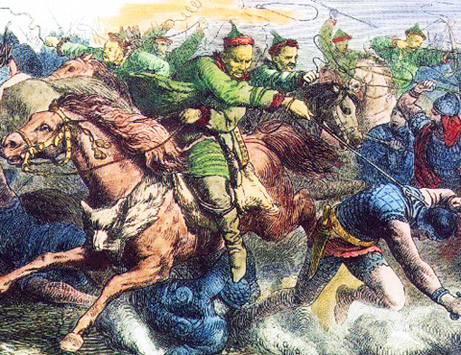 • This brings us to another topic which David Walters and I have discussed a bit this week: “What the heck is a ‘Hun’?”
David pointed out the original archaic use of the term, in which a “Hun” was basically a term bandied to demonize “culturally different outsiders” with obviously violent and uncivilized overtones. I replied with my own observation of a familiar 20th Century usage, when “Hun” was made a primary epithet by the Allies in a systematic attempt to demonize Imperial Germany for purported barbarism during World War I.
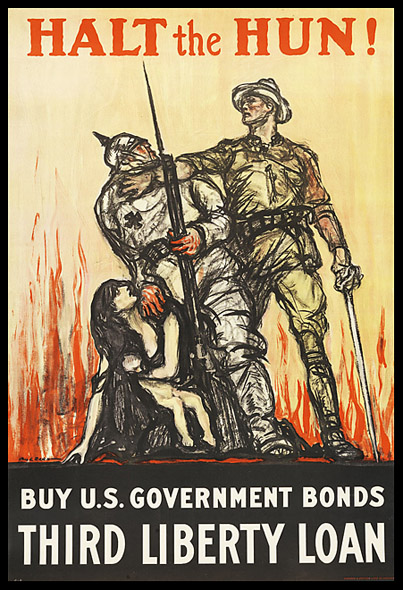 But what did Gene Debs mean by the term when he spoke of “Poles, Huns, and Dagoes”?
I am convinced that this essentially undocumented 1890s racial epithet was short for those savage “Hungarians” mentioned by the Pittsburgh Press — and that these were actually not Magyars (ethnic Hungarians) in the precise sense, but rather this was a name attached to a general category of poor Central European agrarian immigrant to the United States. The Austro-Hungarian empire included not just Austrians and Hungarians, after all, but also Bohemians (Czechs), Slovaks, Croatians, Slovenes, Ruthenians, and the odd Serb or Italian. The Austro-Hungarian Empire was, in short, a multinational state as was the Russian Empire, and there was little effort by outsiders like Debs to understand the exact constituent nationalities. To him they were all Hungarians — “Huns” — I argue.
To further illustrate this, see Debs’s July 1894 article “The Fourth of July,” in which he rails against “all of these imported Huns, Dagoes, Slavs, and Poles.” Can there be any doubt that “Hun” is an insulting shortcut phrase for uneducated newcomers from Central Europe, rather than a term reserved for Magyars only — the immigration of whom was numerically modest?
Note as well: the Austro-Hungarian Empire was Imperial Germany’s main ally in the First World War. Isn’t it interesting how that 1890s term of Debs and his peers evolved and was repurposed for war propaganda two decades later?

The title of this April 1916 article in The Survey drew an inquiry several years later from a dictionary trying to determine the etymology of the ethnic slur “Bohunk.”
• Related interesting etymological note: the early 20th Century racial epithet “Bohunk” — an uneducated Lithuanian or Central European manual worker — seems to have been derived from BOhemian + HUNgarian, according to some authorities. And the related epithet “Hunkies,” again, has HUNgarian written all over it…
• I ran into a small speed bump this week in my file conversion process using optical character recognition, which I had pretty well perfected. It turns out the Google scan of the 1892 volume of Locomotive Firemen’s Magazine was pretty defective, with slanted lines and garbled and crooked text on the binding side edges caused by a failure to either flatten the volume or to use a proper book scanning device.
This meant either a huge “error rate” that would have slowed me down or else a return to hand-typing documents. Either way, it wasn’t going to be a highly productive week in terms of file conversion. I opted for manually typing everything. This reduced my tempo quite a little, but I’ve nevertheless managed to take a pretty good chunk out of the problematic Volume 16 of Firemen’s Magazine and still am on pace the finish on schedule on July 1, with just under 100 files to go and five weeks to take care of them.

 • Nothing directly Debs-related arrived this week, but this new gem for my collection of political pamphlets really makes it clear how Debs fit it chronologically with the American socialist and labor movement. This 1887 Socialist Labor Party pamphlet by Laurence Gronlund (1846-1899) — one of the socialist authors that Debs is known to have read while he was incarcerated in Woodstock Jail in 1894 — was published in Year 10 of that organization. The SLP was the first real socialist organization in America that existed on a national scale. This publication is early, early stuff, particularly given that the pioneer SLP was more than half comprised of German immigrants and published many or most of their publications in the German language in this period.
Debs was editing Locomotive Firemen’s Magazine at the time, and had been doing the same for half a decade, and had been around the fledgling Brotherhood of Locomotive Firemen for another half a decade before that.
Debs was born in 1855. Georgii Plekhanov, regarded as the “Father of Russian Marxism,” was born in 1856. V.I. Lenin, the father of Soviet Communism, was born in 1870. This little Gronlund pamphlet has helped bring into focus for me just how early in the history of American radicalism that Gene Debs made his appearance.

You can find the articles mentioned here in the Eugene V. Debs Internet Archive of MIA, which is maintained by David Walters. He puts up my stuff a couple times a month in big batches, so there may be a slight delay before you can see the specific files mentioned this week…
• “Liberating Convicts” — Jan. 1892 article — 1,195 words
• “Is It Possible?” — Feb. 1892 article — 1,210 words
• “Strikes” — March 1892 article — 950 words
• “Arbitration” — May 1892 article — 1,750 words
• “Rest” — May 1892 article — 1,000 words
• “Labor Representatives in Legislative Bodies” — July 1892 article — 1,300 words
• “The Pinkertons at Homestead” — Aug. 1892 article — 2,980 words
• “Public Opinion” — Aug. 1892 article — 1,130 words
• “H.C. Frick and Alexander Berkman” — Sept. 1892 article — 685 words
….Word count = 484,205 words in the can + 12,200 this week = 496,405 words
• 5 more Saturdays to go until the July 1 target for the end of output of editable text. There are still 99 article pdfs remaining to be processed (or rejected at second reading).
• ALSO NEW: one for background: J.R.T. Auston, “The ARU Strike,” up at Archive.org.
_____________________
† – Pittsburgh Press, July 15, 1889; cited in Paul Krause, The Battle for Homestead, 1880-1892: Politics, Culture, and Steel. (University of Pittsburgh Press, 1992), pg. 319.


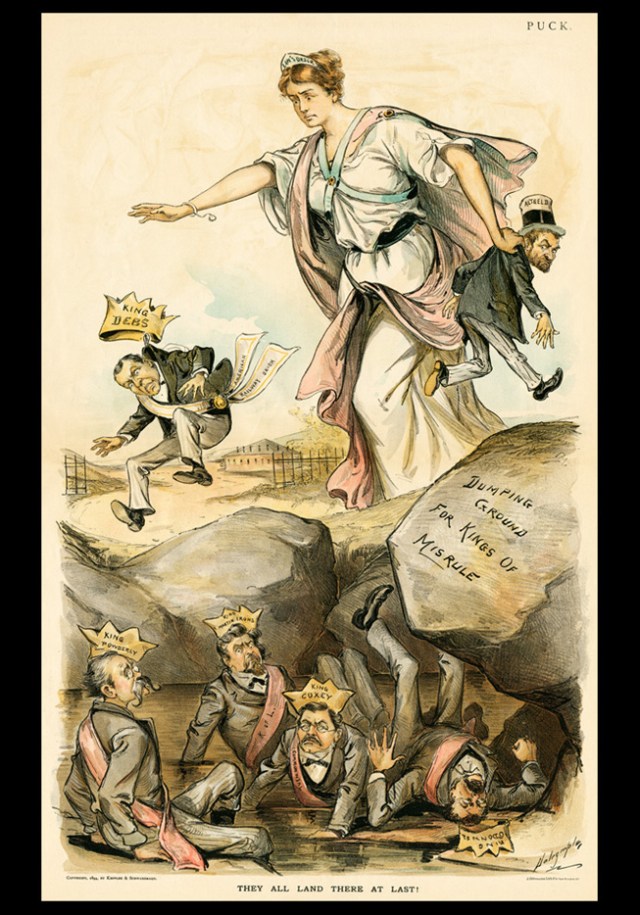
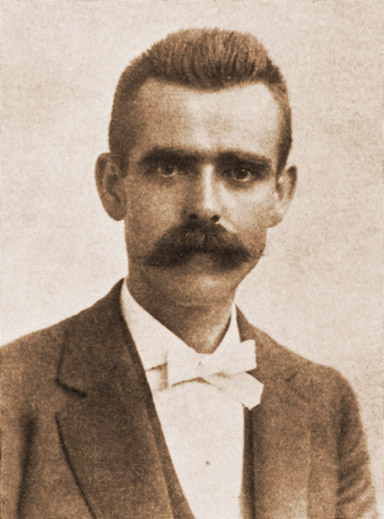 I was feeling the need to make a Wikipedia contribution for May so I spent one of my free days this week on the question. It turned out that “O’Donnell” was
 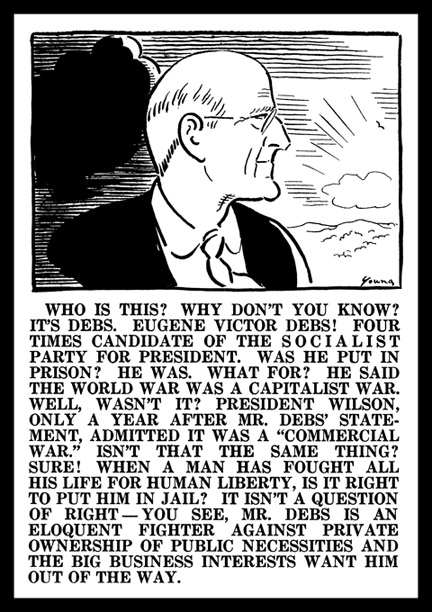 • Marty Goodman passes along this cool little india ink drawing by the great radical cartoonist
 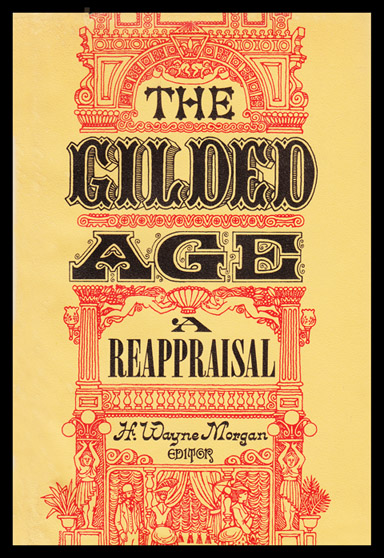 • Next up is a collection of articles edited by our friend H. Wayne Morgan, he of the unreadably bad Debs biography mentioned here last week. His collection The Gilded Age: A Reappraisal (Syracuse University Press, 1963) is a far better effort. Indeed, it is regarded as an pioneering work that refocused American historical scholarship on an era that had been previously given short shrift — the Gilded Age having little of the drama and excitement of the Civil War and Reconstruction which preceded it or the obvious significance for the modern world represented by the Progressive Era which followed.
 • My friend Marty Goodman found this drawing of Debs in the May 1904 issue of The Comrade, an illustrated socialist magazine that he’s getting ready to re-scan. The original scan is by Google from a copy in the Princeton University Library and is of better quality than their usual fare. It’s probably something we can use at the appropriate juncture in Volume 2 but we’ll almost certainly work fresh with a new scan from an original issue if we do use it.
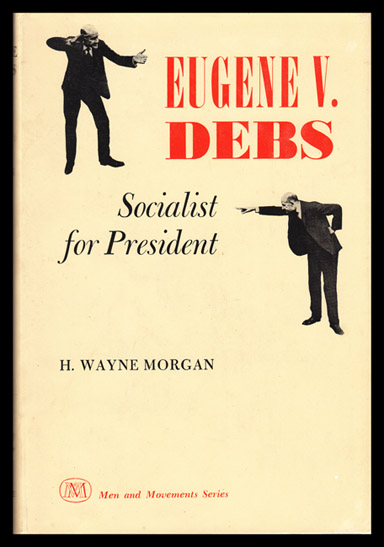 • Since it doesn’t look like the new stuff will be here ahead of this blog posting, I’ll pull a volume off my stack and will let fly. I’m not sure how long I’ve had H. Wayne Morgan’s Eugene V. Debs: Socialist for President (Syracuse University Press, 1962) — several years at least. I thought it was going to be very solid based on the publisher. It proved to be a lame-o 250 page Introduction for Imbeciles that quickly found a spot in the deep corner of the dank shoe store basement amidst the “mistakes.” I’m sure there were a couple of classes of college students that were taught the book early in the 1960s, but there’s little of use to contemporary scholarship.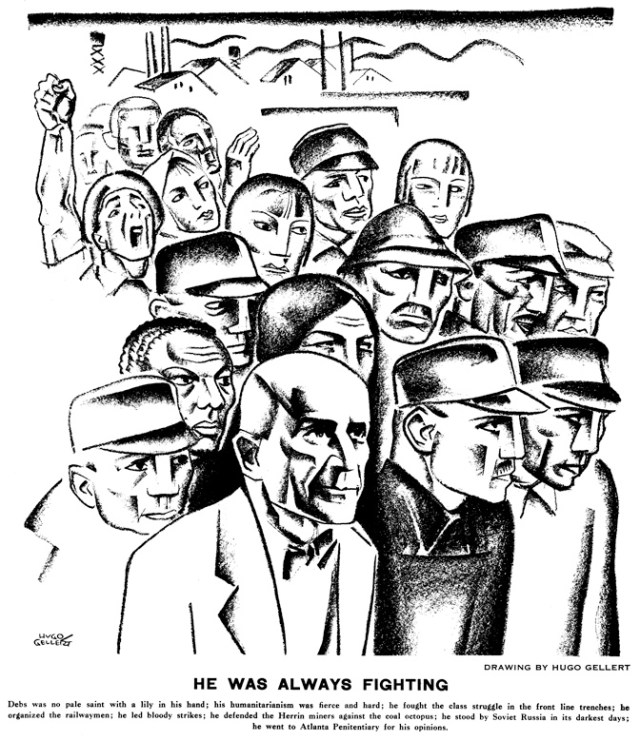
 • This Debs Project is a marathon, I don’t see how it can be conceived any other way. Four thick volumes in four years and will take a pattern of constant, steady, protracted work to get finished.
 • Fifth grade definitely marked the first baby steps in my being radicalized. Once Conove heard me talking about “hippies,” which were a thing in 1971. I was just aping my parents, as children inevitably do, no memory whatsoever in what context I used the term. But young, long-haired Mr. Conove overheard me and got right in my face about it: “What do you mean a ‘hippie’? What’s a ‘hippie’?!?”
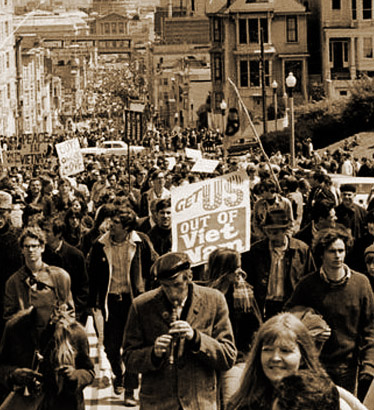 • Another memory from that year: once I mouthed off to Conove about something or other and he cuffed me in the ear pretty hard. My ear rang like a bomb had gone off in it. I couldn’t hear at all from it for a minute or two. I cried.
 • Nothing really Debs-related, directly or tangentially, this week. I did get a really nice inscribed and signed copy of an old Communist Party book from 1934, written by Grace Hutchins, the lesbian partner of Anna Rochester. Title is Women Who Work, and it is well-written, red-hot feminist blast from the Depression 1930s, produced under the auspices of the CPUSA’s statistical bureau, the “Labor Research Association.”

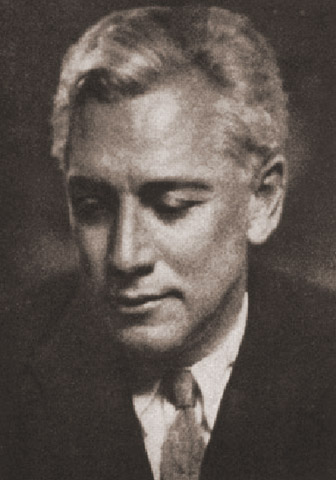
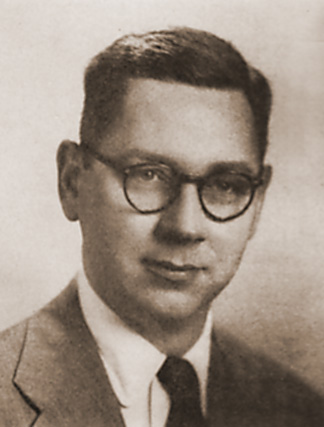
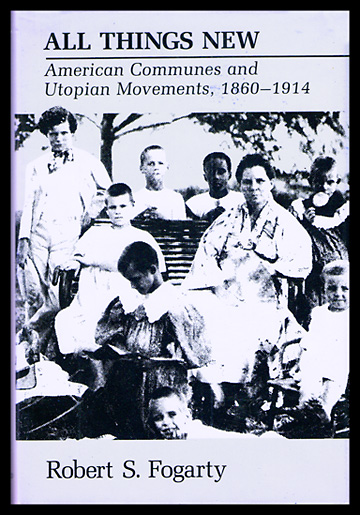 • This week’s new additions include a think piece that attempts to systematize the utopian collectivist movement of the 19th Century, All Things New: American Communes and Utopian Movements, 1860-1914, by Robert S. Fogarty (University of Chicago Press, 1990). This actually relates tangentially to Debs in “Volume 2,” when he was briefly associated with the Social Democracy of America in its initial planning phases for what would eventually become the Brotherhood of the Cooperative Commonwealth in Washington state.
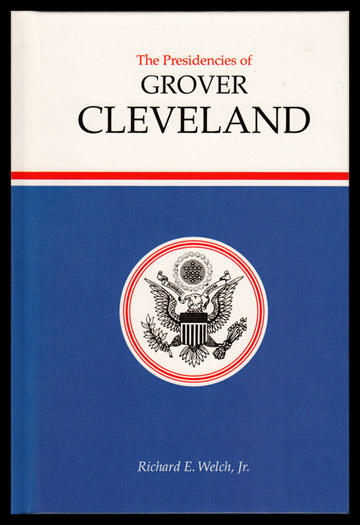 • I blundered into the perfect Grover Cleveland biography for me. Fattypants Cleveland was, of course, the President that sent out the troops to crush the 1894 ARU strike led by Debs and a biographical subject of great importance to me. Over the last 100 years there have been Cleveland biographies strewn all over the map, ranging from the hagiographic to the bitterly antagonistic. Was Cleveland an under appreciated, earnest, and honest chief executive and forerunner of progressivism with measures like the Interstate Commerce law? An arch-reactionary “Bourbon Democrat” defender of big capital and corporate interest? Piles of metal shavings from the finely whetted political axes of historians have been heaped high arguing the matter. It takes a while to figure these things out just randomly falling into a shelf of books and there could be a lot of time wasted in the process. I’m not a historian of the 1880s by inclination, but rather a historian of the 1910s and 1920s, one full generation later.
 The Debs Project