
• Debs has the reputation of being the most American of Americans — a Midwesterner cut from the old national cloth, Indiana Hoosier to the core, smoo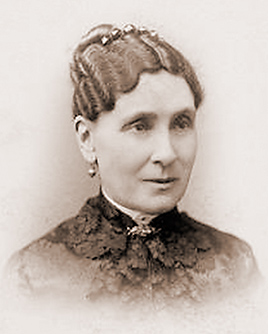 th yet rustic. This stands in marked contrast to the accented mutterings of the Hillquits and Bergers of the Socialist Party and the legions of foreign-born Communists — those somewhat unseemly Euros, un-Americans all.
Aside from the fact that the American working class of the late 19th and early 20th Centuries was largely an immigrant population, the supposed “difference” of Debs was essentially a myth. In actual fact, EVD was the son of newcomers to the United States. Both his father Jean Daniel “Dandy” Debs and his mother Marguerite “Daisy” Debs were French nationals who arrived in the USA from the Alsace Lorraine region only a few years before his birth. French was the second language in the house.
Interestingly, in daily life EVD and his siblings seem to have been English-speakers through and through. The number of times Debs used French words in his speeches can be counted on one hand. This is not to say that the French upbringing didn’t matter… The French revolutionary tradition of Liberty, Equality, and Fraternity was very strong with this one. He was a true believing adherent to that revolutionary ethic.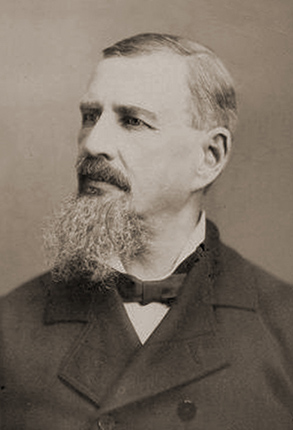
• These days microfilm is the “8-track tape” of the intellectual world. Not very many people have the players to make use of the format and those that do tend to have moved on to the digital replacement. Microfilm is a dinosaur and libraries are now starting to unburden themselves of their film holdings — a trickle that promises to become a flood.
Over the past few weeks I have been able to acquire — for pennies on the dollar — Current Opinion (1888-1925), McClure’s (1893-1929), Gunton’s (1891-1904), The American Mercury (1924-1961), Newsweek (1933-1962), and one of the five or so black daily papers of record, the Norfolk Journal and Guide (1917-1943). It’s a buyers’ market for us geeks that actually own 8-track tape decks… ProQuest might charge $225 a reel and get away with it once in a while, but it’s more like $2 a reel on eBay… Less than that sometimes…
In defense of analog: film is permanent, volumes out of one’s collection are easy to locate and queue up (just trying finding a specific volume via Google Books, I dare ya), and skimming the general content of multiple pages is a more pleasant experience with film than on a typical laptop screen.
As for Debs: without a microfilm reader and access to film, this project would be impossible. That’s a true statement — as of this moment, at least…
• I am doing my part for the digital revolution, I’ve sent out my extensive (and costly) holding of the Communist Party’s Daily Worker film for digitization to a fellow whose mission in life is digitizing the newspapers of New York state. My whole cost, unless the film goes missing, will be the price of shipping both ways — which beats the hell out of paying a digitization shop $50 a reel, eh?
I’m not aware of anything Debs ever wrote for the Daily Worker (the relationship between Debs and the Communists was complex and not very friendly). However, I will soon be able to search the entire run of the paper during his lifetime and confirm that. Score one for digital over film…
• I’m feeling joy and relief over the effective completion of my massive database of articles, editorials, public statements, interviews, and speeches by Eugene V. Debs. The previous definitive listing presented in the guide to the Debs papers on microfilm has been left in the dust, with the database currently sitting at 3,852 items. While a handful of these are duplicate listings that will be deleted, based on an early tiptoe through the tulips it seems there will be another 300 to 500 (or more) items emerging from the Debs microfilm and through exploration of digital newspaper records, so if I were to say “there are more than four thousand Debs items” it would be absolutely correct.
I’m relieved to be done with the very tedious job of listing this stuff up and now have a tool on my computer that is enormously useful. Whenever I bump into a Debs item I can tell if it is “previously reported” or “previously unlisted” within about three seconds. The new finds can be carefully perused, the previously known things can be safely set aside, they will emerge again at the appropriate juncture. My database is also invaluable in helping to plan and chronologically organize actual volume content and to keep track of the word count. I’m pretty happy at having finished this preparatory marathon…

• “William H. Vanderbilt” — March 1886 editorial snippet — 125 words
• “ARU Purposes and Procedures” — May 1894 magazine article — 760 words
• “Brothers and Friends: The ARU Asks the Helping Hand” — July 1894 fund-raising appeal — 225 words
• “The Solidarity of Labor” — May 1895 article — 1,300 words
• “New and Old” — May 1895 article — 1,125 words
• “Success and Failure” — July 1895 article — 2,450 words
• “Letter to William C. Endicott, Jr.” — July 1895 letter — 240 words
• “Cultural Changes: Bicycles, Bloomers, and the New Woman” — Sept. 1895 article — 1,075 words
• “Centralization and the Role of the Courts” — Jan. 1896 speech — 10,870 words
• “The American University and the Labor Problem” — Feb. 1896 article — 1,775 words
• “For Bryan” — Oct. 1896 speech — 2,525 words
….Word count = 259,500 + 22,680 = 282,180 words
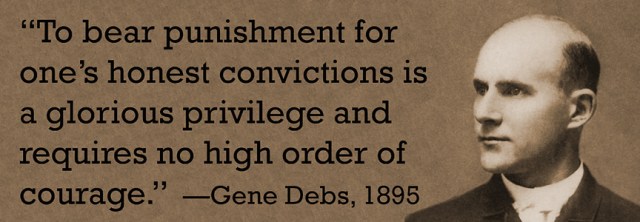
 of American radicalism from the preparedness hysteria of 1915-1916 to the collapse of the Farmer-Labor Party movement and “bolshevization” of the Communist Party in 1924-25. So type, type, type, type, type has been part of my life for a long time — with me moving my main effort from the website to Wikipedia from 2009. I probably have typed something like 1.5 million to 2 million words for my website, believe it or not.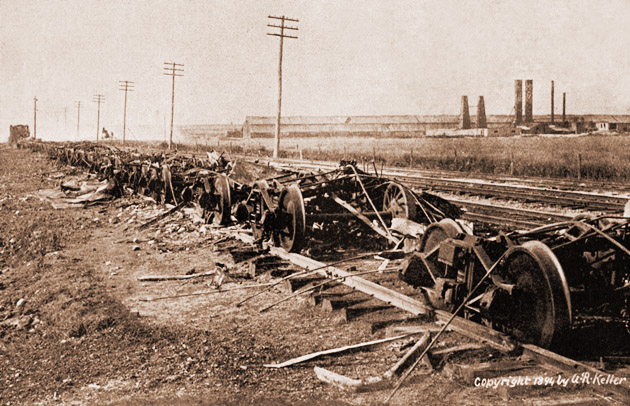
 • One thing a person need to know doing a project like this is copyright law. Here are the rules in the USA… Published material, either text or photos, which was put into print before 1923 is automatically in the public domain and can be used without worries. Unpublished material, print or photos, remains the intellectual property of the producer, who is either the writer or the photographer, for a period of their lifetime plus 70 years after their death. This copyright is automatically passed on to heirs after death (although very few survivors are aware of this right and the threat of a lawsuit over use of such material is generally very small). Gene Debs died in 1926, so anything he ever wrote, published or not, became fair game for the world in 1996. Material published between 1923 and 1963 with no “© copyright 19XX” notice exhibited in the first publication of that material is also in the public domain and free to use (due to “no copyright notice in first publication”). If such notice was properly posted, copyright of these materials was initally for a period of 28 years. During year #28 (and only during year #28), copyright could be formally renewed with the Library of Congress, extending the period of protection to 75 years from date of publication — this being later automatically extended by Congressional idiots to 95 years. Most things, understandably, were not re-registered in Year 28. So anything that was not renewed has similarly gone into the public domain, to be used by anyone (owing to “copyright not renewed”). Stuff gets more complicated for post 1963 publications, and reuse of such material more prickly, but those rules are outside the scope of this project. Any questions?
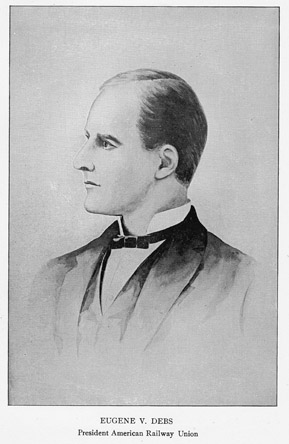 • Which brings me to the litigious fucks at Getty Images, a really gross photo licensing bureau launched by oil company heir Mark Getty. The public-minded defenders of photographers’ rights at Getty Images implicitly pretend to own this image of young Gene Debs (See: <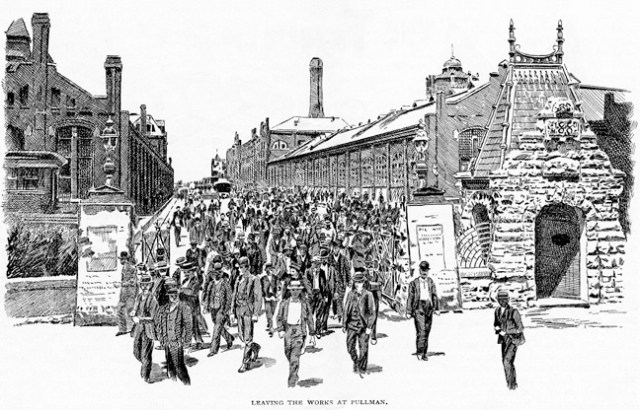
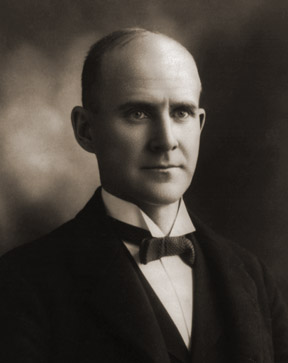 • I found a great portrait of Debs from 1897 via his Wikipedia article. The image traces back to the Library of Congress, which is good news… The resolution of the LOC scan is not terrible, but also not the best (it looks great on screen, but preparing for the press requires much higher resolution). With pre-1900 portraits of Debs at a premium, it is good to find a beauty that is free and clear to use. This image will run in volume 2 since the first volume cuts off in 1896, assuming the resolution is up to snuff. It’s borderline… I tried to con the Library of Congress into a “re-do” of the scan with some heavy-duty resolution. They said, “Sure, just pay us fifty bucks plus expenses and we’ll do it for you”… Costs and benefits…
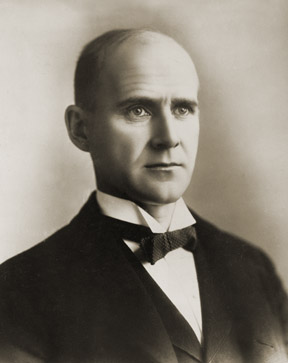 • Ironically, about an hour after I typed the above I just had an eBay purchase roll in, a reprint news glossy by Culver Pictures, seemingly shot by the same photographer but taken about one pace to the left so that Debs’ left ear isn’t showing and with a completely different treatment given to the background. At first I thought it was from the same photo session since Debs was wearing the same shirt and tie. Once you put them side by side, you can see it was shot several years later, since the forehead wrinkles are more pronounced and the bags under the eyes a little deeper. The Culver glossy is a second generation of the original news photo so there is no date on the back, sadly. I’m not an expert on Debs’ receding hairline at this point, but I’d peg the new image as circa 1904. Resolution is no problem on the later image, but since it’s a worn second generation glossy it has been a bit of a bear to clear up dust and artifacts. Nothing that a couple hours of Photoshop can’t fix…

 The Debs Project