What do you see? (18-20)

rorschachheader

This was another week in which much of my attention was pulled away from Volume 3: 1897-1904 by the need to get finished with the corrected manuscript for Volume 1: 1877-1892.

Last week I chose to spend most of what limited time that remained on this blog, this week I invested my truncated free time putting the pedal to the metal typing up documents. So my apologies if this is sparse and rambling.

Fortunately, the 750-page manuscript for the first book has now been corrected for punctuation and capitalization styled. A few new footnotes were written and my cludgy prose made a little less so in the introduction.

Hopefully I will be back to my normal pace of work from here on out. I’m not entirely sure if it will  be six or seven more weeks to get done with the document transcription phase for Volume 3 — one of those.

•          •          •          •          •

Was Debs a “Left Wing” Socialist?

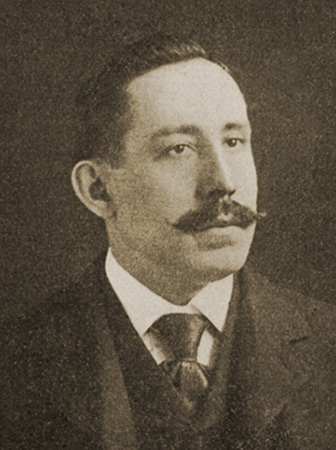
inkblotSocialists have always fought with one another over strategy and tactics. It’s a dubious tradition that dates all the way back to the origin of international socialism in America back in the middle 1870s. The Socialist Labor Party split over the question in the early 1880s, with a right wing believing in fielding candidates in elections and educating working class voters to take control through the ballot box facing off against a revolutionary socialist left that believed in armed struggle, agitation to fan the flames of popular discontent, and a physical seizure of power when the time was ripe.

There were those who believed in primary attention should be directed to the election process, others who thought running candidates was fruitless and that the educational mission was paramount, still others who thought that trade unions held the key and that the combination and coordination of strike efforts held the most promise in winning a change.

Many thought that radicalizing the existing trade union movement, conservative and costly bureaucracy and all, was the most promising avenue for activity. Many others believed the “old” unions were a lost cause and sought to build a new parallel explicitly socialist trade union movement as an absolute necessity. Some sought to convert those already in union movement to the socialist mission, others believed that organizing the unorganized and enlarging the movement in that way was an essential first step.

There were socialists who thought that religion was a diversion and that organized religion was a bulwark of the conservative capitalist state. Others saw the socialist movement as the fulfillment of the Christian ethic of brotherhood, equality, and the need to provide care and sustenance to all.

And so on and so forth. it’s a bit of a wonder that anybody ever agreed totally with anyone about anything.

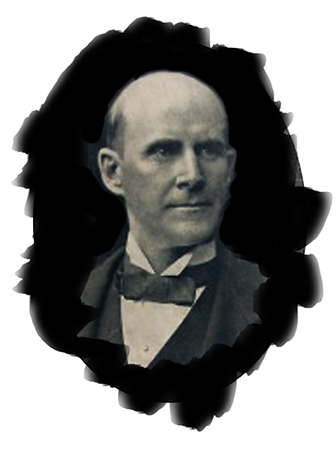
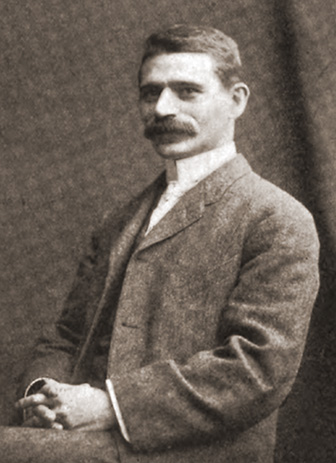
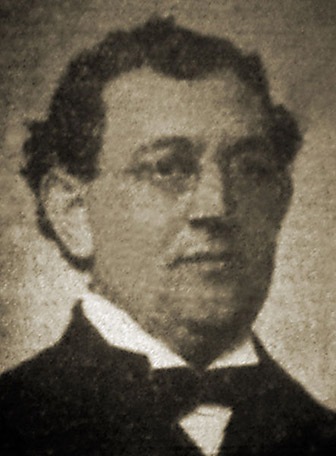
debs-inkportraitGene Debs was a unique figure in the American radical movement in that he was attractive to many different sorts of socialists. His devoted supporters ran the gamut from Christian socialists to electoral activists to gritty trade unionists to “give ’em hell” revolutionary-minded types anticipating a forthcoming cataclysm.

He was a sort of human glue that held all these disparate elements together in a single movement.

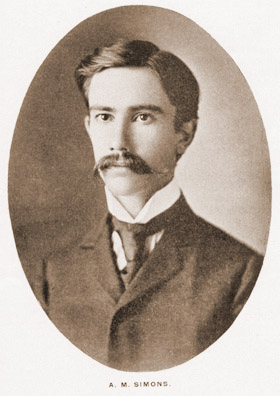
Debs seemed to offer a little something to everyone, regardless of their own socialist predictions and preferences. People tended to see in him what they wanted to see. Debs appealed to Christian socialist pacifists because he was a Christian socialist and a pacifist. He appealed to election activists because he was an election activist. He appealed to trade union oriented socialists because he was a trade union organizer. He was supported by fire-breathing socialist millennialists because he was a fire-breathing orator preaching about the coming socialist millennium.

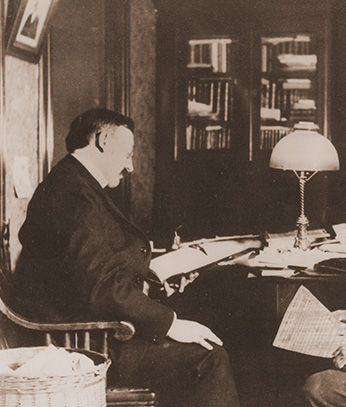
Eugene V. Debs was a human Rorschach test.

•          •          •          •          •

This is not to say, however, that Debs was each of these things in equal measures at all times.

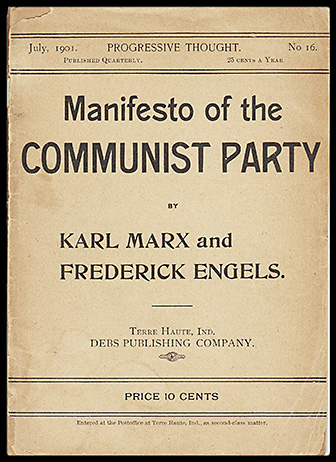
01-debspubco-communistmanifesto-sm

Edition of the Communist Manifesto published in 1901 by Debs Publishing Co. The edition is crazy rare…

In the 1880s he was a Christian paternalist and old school railway brotherhood functionary. He developed trade union feistiness in the early 1890s, and emerged as a radical populist and public figure on the national stage in the last half of that decade.

Debs flirted briefly to utopian socialism in 1897, moved decisively towards political action in 1898, and had fully embraced the notion of class struggle soon after, actually publishing an edition of The Communist Manifesto by Marx and Engels by 1901.

He fell in with the radical miners of the West and came aboard to help found the Industrial Workers of the World in 1905… Then he left them behind, throwing up his hands over their aversion to politics, moving all the way to a harsh anti-syndicalist position in 1912.

Throughout Debs’s life we see a regular shedding of skins and changing of intellectual emphasis. But these perspectives and orientations were never abandoned completely, threads of previous belief remained, with contrasting and occasionally contradictory ideas tugging one against the other, changing as the external situation evolved.

As for the moment with which I am currently concerned, 1903, it appears that in addition to spending time on the road as a paid lecturer, Debs was also a consistent contributor to Victor Berger’s Social Democratic Herald — one of the most electorally-oriented, not to say tepid, of publications. Interestingly, it was at this same time that Debs was giving full throated voice to the doctrine of class struggle, the fundamental idea of Marxism.

So was Debs a “left wing” socialist, as many commentators would have it?

Yes. No. Sometimes. Maybe.

It all depends on what one chooses to see.

•          •          •          •          •

Debs Papers source deficiencies, redux.

I managed to dig out the last couple of reels of Debs papers microfilm I had yet to examine and spun them out, just to make sure I wasn’t missing anything from the 1902 to 1904 period that had been chronologically misfiled.

No such luck.

There seems to be a pretty huge hole for 1903 and 1904, meaning the additions to the database of about 165 items for those two years are apt to be few.

It appears that the years 1905 to 1914 have fairly heavy amounts of material that was scrapbooked or saved by the Debs brothers. The situation appears worse after the outbreak of World War I, with virtually nothing preserved from the last few years of Debs’s life.

It is what it is, as they say. I’ll do my best with what there is.


NewFiles

The deadline for Eugene V. Debs Selected Works: Volume 3 is October 15, 2018. I’m setting a soft deadline of August 1 to finish the document compilation phase of the project. This means there are now 6 more Saturdays after today to get the core content section of the book assembled, with a limit for publication of approximately 260,000 words.

  • “The Arbitration Farce” — Jan. 24, 1903 — 2,372 words
  • “Socialism’s Steady Progress” — March 7, 1903 — 1,322 words
  • “Frederic O. MacCartney Belongs to the Living” — June 1, 1903 — 949 words
  • “Labor and the Color Question” [expanded excerpt] — June 20, 1903 — 1,716 words
  • “Class-Conscious Courts” — June 20, 1903 — 1,520 words
  • “You Only Work at the Pleasure of Your Masters”: Speech in Milwaukee [excerpt] — July 19, 1903 — 1,151 words

Word count: 211,058 in the can + 7,500 this week = 218,558 words total.


Posted in Uncategorized | Leave a comment

Spinning film and skimming books (18-19)

microfilmheader

This is a light week for new creation for me, with the manuscript for Volume 1 needing to be totally put to bed so that the Haymarket production team can get to work doing the final page layout. Nevertheless, my mailbox provided a little bit of intellectual stimulation this week, with the arrival of a publication which I had never seen — and of which I had never even heard as few as six weeks ago.

•          •          •          •          •

A new source for the socialist movement in California
Advance

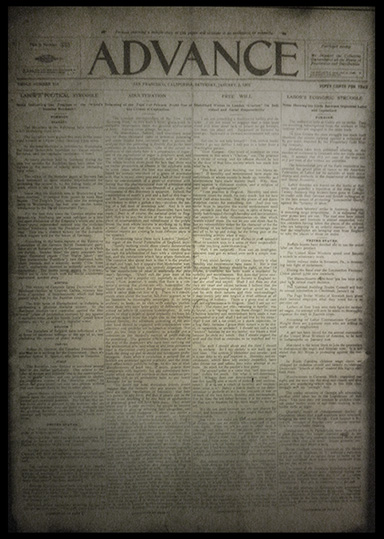
Front page of the Jan. 5, 1901 issue of Advance….(I always knew that 7.5x-9.5x zoom lens would be good for something…)

This week’s new arrival is three reels of Advance, a socialist weekly published in San Francisco, filmed from the holdings of Harvard University. I first learned of the publication from an issue of its predecessor, The Class Struggle, which was preserved en toto in the Debs scrapbooks filmed for the Papers of Eugene V. Debs microfilm collection. These are rare reels, pretty much one copy out there, located at the filming institution, Harvard University, only.

The forerunner publication was known as The New Charter, a privately owned weekly edited by M.W. Wilkins, who moved to San Francisco in 1898. Based upon the publication’s numbering system, it appears that The New Charter was launched in the summer of 1894. The name of the paper was changed to The Class Struggle, not later than 1899. It was sold on Oct. 7, 1899 to a group of five San Francisco Socialists, headed by George B. Benham, who became the paper’s new editor.

This group of five sold the paper to the Social Democratic Party of California for $600 on June 23, 1900, with Emil Liess, a lawyer from San Francisco, named the new editor. Not long after, the name of the publication was changed to Advance.

At some point in 1900 a change was made, and the new editor was J.J. Noel, who remained on the job until the first issue of February 1902, at which time the faltering financial condition of the paper made it impossible to pay him for his editorial services, forcing his regretful departure. Noel was replaced by an unpaid three member editorial board including Cameron King, Jr. (later a very important figure in the Socialist Party of California), Mary Fairbrother, and a certain Ober. At the same time a move was made back to a broadsheet layout.

The first issue on the slim first reel is whole no. 318, dated September 8, 1900. The single 1900 issue is an oddball, however, as the core content of the reel begins with the first issue of January 1901, whole #335, and runs through the first issue of June, whole #356, uninterrupted. The film is so short that it easily could and should have been part of the following reel.

Reel 2 picks up where the first left off, issue #357 of June 8, 1901. The apparent cause of the split reel is a format change, with a move made to smaller paper stock, no bigger than tabloid size, and the four page layout expanded to eight.

Reel 3, marked by another change of paper size, takes the run to the end of 1902, with a couple of missing issues and some less-than-perfect physical issues with which they were forced to work.

The filming of Advance is first-rate, high-contrast work done in 2008, and the issues filmed appear to have been extracted from a bound volume and filmed flat — which is the correct way to do these things. Total tab for the three reels came to a touch over $250 and Harvard was very efficient in helping achieve replication of their holdings. The process between initial request and delivered film took about a month.

•          •          •          •          •

So What Did We Learn?

Advance is an invaluable resource for the activities of the Springfield SDP in California. It also gives us another first-hand take on the Socialist Unity Convention of July-Aug. 1901.

The Debs-related content is as follows:

Carey of Massachusetts was chairman on Tuesday [July 30, 1901]. A capitalist lie about “repudiating Debs” was nailed and a telegram expressing “esteem and love” was sent, to which the following reply was received:

“The expression of the Convention is gratifying in the extreme. May a united and harmonious party crown your labors. Press reports do not disturb me. I am a Socialist. A thousand thanks to the delegates for their personal expression. But for illness in my family I would be with you.”

Nothing new there.

As for Theodore Debs’s report to the convention as National Executive Secretary of the Chicago SDP:

Secretary Theodore Debs next reported for the Chicago NEB. The report was a brief one and showed receipts since Jan. 1, 1901, of $3,707.01, and disbursements of $3,637.64. Liabilities for loans and salaries were stated at $1,083.55. He stated that a complete report would be given when the work of the convention is accomplished and his office transferred to his successor. He expressed his hope that unity would be effected and said that when relieved from the office he would not be a candidate for any official position in the party. (Source: Advance, “Organic Unity Achieved At Last,” Aug. 10, 1901, pp. 1, 4.)

There were two delegates from California, William E. Costley from San Francisco, representing the Northern part of the state, and Gaylord Wilshire of Los Angeles, representing Southern California. (The decision to send two regional delegates was made by referendum vote of the state party.)

Costley wrote a letter home after the close of the convention which was published in Advance, in which he noted:

…[A]t the beginning of the convention a spirit of cautiousness was shown by all parties represented. The adherents of the Chicago Board were instructed to report on every measure taken back to a referendum vote of their constituency, and they insisted that the parties vote separately on all questions of importance. This cautiousness finally gave way to a feeling of confidence on both sides, and after the first day’s session, unity was assured. (Source: Costley, “A Letter from the Convention,” Advance, Aug. 10, 1901, pp. 4-5.)

In reading the stenographic minutes, one is struck by this discernible shift in mood mentioned by Costley: an uneasy jockeying for position by the Chicago NEB at the opening of the floor debates, with Berger and Margaret Haile playing the most vocal part, before their deep uneasiness was finally buried beneath an overwhelming show of pro-unification sentiment.

No doubt the decision for equal representation of the parties on committees was the decisive factor in this transformation of the gathering’s tenor. This achievement of organizational trust was the big story of that four day event in Indianapolis.

By the way, Debs apparently only wrote one original article for Advance: “The Climax of Capitalism,” April 27, 1901.

•          •          •          •          •

The Victor Berger Letters

Victor Berger Letter No. 1: The People’s Party Convention.
berger-poster

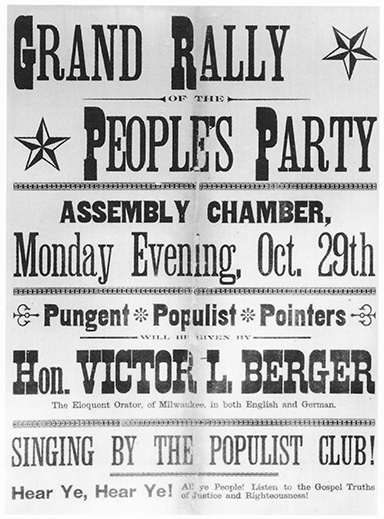
Victor L. Berger was a leading activist in the People’s Party during the first half of the 1890s, as this 1894 poster illustrates.

The letters of the Debs brothers for the years of Volume 3 (1897-1904) are few and far between — I have mentioned that several times. Another big socialist leader of the period, Morris Hillquit, has papers which begin only in 1902 or 1903, after all the first round of confusing factional action had already been resolved. Fortunately, the third big leader of the Socialist Party in this era, Victor L. Berger, also left a few pieces of political correspondence in the form of letters to his wife, Meta, which provide a glimpse at the backstage politics of the era.

First, here is a snippet written from the national convention of the People’s Party in July 1896.

Well, little Meta, I tried hard to get up an anti-Bryan combine. Succeeded, because circumstances helped me. Telegraphed for Debs. He promised to come, but hasn’t so far. Henry D. Lloyd, also one of our radical leaders and prominently mentioned in connection with the nomination has just left me. He is rather disgusted with the leaders of the People’s Party.

Whether Bryan will be nominated or not, I do not know. He is certainly very popular personally. And the leaders, seeing the party break up on account of the “silver question,” tried to “sneak under” in the new [progressive] Democratic Party. But the rank and file of our party, the so-called “Middle-of-the-Road” people stood it, like a stone wall so far; they don’t want to hear anything about Bryan….

If the People’s Party puts up its own candidate it means certain defeat to Bryan. If we endorse him, or rather if we also nominate him, it means certain victory. But it also means surrender of all our principles and the death of the People’s Party. (Source: VLB in St. Louis to MB in Milwaukee, July 21, 1896; in Michael E. Stevens, ed. The Family Letters of Victor and Meta Berger, 1894-1929. Madison: State Historical Society of Wisconsin, 1995; pp. 49-50.)

Debs never made his promised appearance at the 1896 People’s Party convention, instead sending a telegram instructing Lloyd and his cohorts to remove his name from consideration as an alternative nominee to Bryan. With no viable national “name” to put forward, the convention inexorably nominated William Jennings Bryan.

After that, Berger went 1-for-2 with his predictions — a worst of all possible worlds outcome in which Bryan failed to win and the People’s Party was essentially destroyed over its opportunism.

•          •          •          •          •

Victor Berger Letter No. 2: Founding the Social Democratic Party.
Berger-1890s

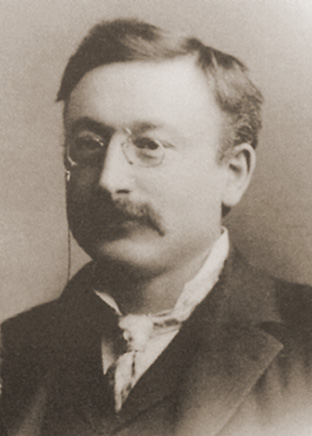
Together with Debs and Morris Hillquit, Victor L. Berger (1860-1929) was one of the most important figures of the Socialist Party of America during its first two decades.

Another published letter was written on Day 2 of the June 1898 convention of the Social Democracy of America, a day and a half ahead of the split which formed the Social Democratic Party. The short missive is absolutely pregnant with hints about the undocumented corridor politics of the organization:

This is the slowest, most boring, and weirdest convention I ever saw. The whole convention has been dragged into the battle of the parties on the executive board, which for a long time had been waged in secret, and in fact without either side having issued a proper declaration of war. The battle cry is: Here Colony, there Political Action!

I am regarded as one of the leaders of the “Political Action,” or rather as the leader, although that is not what I want.

The main battle was about the committee for the drafting of the platform, or, expressed more correctly, about the election of the members thereof. The opposition had offered me a compromise, which I simply rejected, although thereby I would have been elected unanimously. I was elected in spite of it but with a very small majority.

Because of the colony swindle it could easily come to a split tomorrow, in which case however Eugene V. Debs will obviously go along with us. (Source: VLB in Chicago to MB in Milwaukee, June 8, 1898, in Family Letters, pg. 53.)

Berger was prescient about the forthcoming split and about where Gene Debs’s loyalties would lie — although EVD once again managed to miss the actual factional fireworks and dramatic foundation of a new organization in the dead of night, having taken sick to bed. Per usual.

•          •          •          •          •

Victor Berger Letter No. 3: The Massachusetts SDP and Margaret Haile.

A third impressively relevant letter was written from Boston in January 1900 — after Henry Slobodin, Morris Hillquit, and the Volkszeitung dissidents had left the Socialist Labor Party, but before they had attempted to join forces with Berger’s SDP. Berger had arrived from New York City and already been given the grand tour of the SDP enclaves of Haverhill and Brockton, mill towns with socialist mayors:

The movement here is simply splendid, and within a few years we will be the second party in Massachusetts, i.e., the Democratic Party will be wiped out.

As to Margaret Haile, I only saw her once, but I will see more of her tonight at the meeting and the reception that is to follow. I also intend to make a short call at her home in Roxbury, one of the leaders of the Boston movement wants to take me out.

Margaret Haile looks fearfully old and wrinkled — I think she looks much older than she did two years ago; she dresses shabbily to the extreme, her gray felt hat, ancient and spotted and with two rooster feathers on it, is a sight, and when she took off her old brown cloak — the same evidently that she had worn for many years — I noticed that the lining was torn in a dozen different places.

I understand that she has lost the good place she has had, or that she has given it up in order to be able to give more time to the movement, and is working as a typewriter in a lawyer’s office. The pay there cannot be very much, I suppose, and she has to support herself and child…. (Source: VLB in Boston to MB in Milwaukee, Jan. 19, 1900, in Family Letters, pp. 54-55.)

It’s easy to dislike Haile for her right-socialist sectarianism. Berger’s depiction of her as an impoverished working mother who was truly committed to the cause makes for a useful counterbalance.

•          •          •          •          •

Victor Berger Letter No. 5: Unity with the “Kangaroos.”
berger-meta

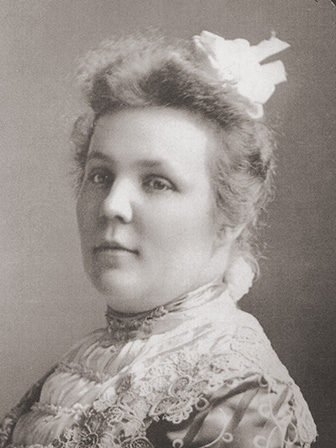
Meta Schlichting Berger (1873-1944) as she appeared in the late 1890s. After visiting the USSR in 1935 she moved into the Communist Party’s orbit.

Another letter has survived from March 8, 1900, written home from the Indianapolis first convention of the Social Democratic Party, which agreed with their Eastern counterparts, the Socialist Labor Party dissidents, to field a joint ticket for President and Vice-President in the 1900 campaign:

Concerning the convention: this time I saved the party in the literal meaning of the word. We are going to unite with the New York SLP but the name of the united party will be Social Democratic Party.

E.V. Debs will function as the candidate for the presidency, the candidate for the presidency of the SLP [Job Harriman] will be the vice-presidential candidate. The party will probably cast one million votes in the next election.

I, however, will withdraw after the election: that is now absolutely certain. Through the unification the party is becoming independent and strong enough to continue. (Source: VLB in Indianapolis to MB in Milwaukee [in German], March 8, 1900, in Family Letters, pg. 57.)

The big surprise here is the definitive nature of his assertion that union was forthcoming and the extreme emphasis on the name of the new organization, rather than its structure, organizational nexus, or any other question. This fetishization of the name goes a long ways towards explaining the “Manifesto of the National Executive Board” which effectively scuttled unity for a year — which put a hysterical emphasis on an alleged breach of faith over the name of the organization.

It was Berger who caused the rift, not Cox or Haile or Heath or Debs.

•          •          •          •          •

Victor Berger Letter No. 6: The 1900 Electoral Debacle.

Berger was in Boston shortly after the city elections which shattered socialist hopes in Haverhill and Brockton. The letter illustrates that Berger was seeing the socialist movement as a whole in the process of being unified rather than as the subject of a factional war between rival enterprises:

I read in the Boston Globe that our party was snowed under in the election held last Tuesday in the towns of Massachusetts. John C. Chase and three aldermen were defeated in Haverhill, and only two councilmen elected. The Social Democratic mayor of Brockton got there by the skin of his teeth — a plurality of 35. 

[Frederic] MacCartney and some of the others who received me at the depot expressed satisfaction about it — Margaret Haile I haven’t seen yet, will see her tomorrow — they expressed satisfaction because Haverhill had gone over to the New York faction [Springfield SDP] and played the part of a socialist Mecca to the detriment of the movement of this country. 

But I take a different view of the matter. I am afraid of the loss of prestige for our party — besides, I would rather have seen [Rep. James F.] Carey, who is a conspirator and a mischief-maker, defeated and [Mayor John C.] Chase elected. As it is the real guilty person has been elected to the assembly in November, while Chase, who simply went with him because he dare not go against him, was defeated.

However, this may be one thing is sure: the prestige of Haverhill, Brockton, etc. has been diminished in this election while that of Milwaukee has grown considerably. I am not selfish enough to be glad of that, as long as the movement at large has not grown to my expectation. (Source: VLB in Boston to MB in Milwaukee, Dec. 6, 1900, in Family Letters, pp. 59-60.)

Again: Berger was not the extreme faction fighter here. This helps to explain why he was such a willing participant in the Socialist Unity Convention the following summer, while the rest of the Chicago NEB either unenthusiastically participated (Theodore Debs), acted as obstructionists (Haile), or boycotted the proceeding altogether (EVD, Heath, Editor Edwards).

•          •          •          •          •

Victor Berger Letter No. 7: The Chicago January 1901 Snap Convention.
Thomas-Elizabeth-1907.jpg

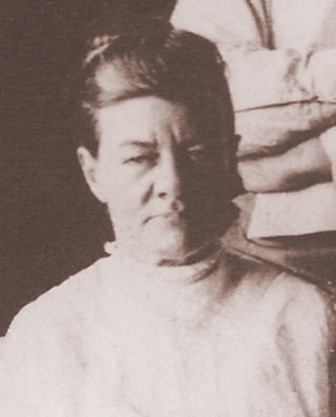
Elizabeth H. Thomas (1856-1949) was one of the key figures in Victor Berger’s Wisconsin machine. The independently wealthy Thomas was a chief stockholder in Berger’s publishing company and served as State Secretary of the Wisconsin party for two decades.

The January 1901 special convention of the Chicago Social Democratic Party remains wrapped in mystery. There are ample hints that the event was pre-planned ahead of the election with a view to delaying or halting the growing sentiment among the rank and file towards unity. Whatever the original intention, pro-unity sentiments rapidly overwhelmed those seeking distance from the larger and more vital Springfield organization, with a convention call for a Joint Unity Convention the end result of the gathering:

I know I am a base wretch for leaving my sweet wife and three darling babes for three days without any information from papa, but enclosed clipping will show you that I am very busy. I am as you can see the chairman of two committees; but I am a member of two other committees besides. Had very little rest at nights, I don’t believe I’ve slept five hours on an average.

The convention is a very hot one, all kinds of propositions of “unity” and reorganization are in the air and I am bitterly opposed by some of my “best friends” — Corinne Brown for instance. Your prediction that I may be forced out of the movement may come true. (Source: VDB in Chicago to MB in Milwaukee, Jan. 17, 1901, in Family Letters, pp. 60-61.)

This letter raises more questions than it answers but it indicates deep division over strategy moving forward among the leadership of the Chicago SDP, with some sort of fundamental issue dividing the Executive Board.

Unfortunately there is nothing from the July-August 1901 Joint Unity Convention. There seems a high probability that Meta Berger attended the event with Victor, thereby eliminating the need for a letter.

•          •          •          •          •

Some words about the Debs biographers.
salvatore

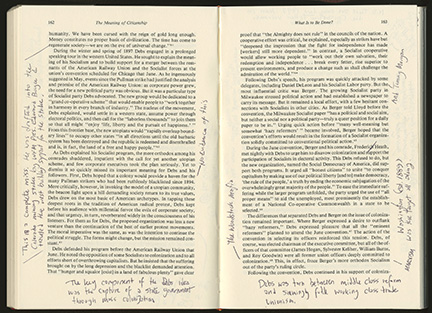
Some future Debs collector is probably going to be entertained with my brutalized copy of Salvatore’s book after I’m a dead guy.

I’m periodically sifting through several of the most important Debs biographies as I chronologically work through Debs’s output. I’ve always considered Nick Salvatore’s Eugene V. Debs: Citizen and Socialist (University of Illinois Press, 1982) to be the best of the lot and I haven’t come off that opinion. I usually hate writing marginal notes in books and only rarely do it, but I decided to have a dialog with the author in the margins of this  one and have been marking the hell out of my copy. I thought it was a super common title, but the joke’s on me, it’s gonna cost me $20 to get a clean copy for the shelf, and that’s without a dust jacket.

Salvatore is still living — and still teaching, as far as I know — but has blown off several of my emails and has never acknowledged the existence of this project with so much as a grunt or a shrug. A prominent historian has told me not to take it personally, that Dr. Salvatore doesn’t play well with others. This is unfortunate. His implicitly disrespectful attitude does add a little spice to my research — a little polemic fire in the belly is always a great aid to history writing, as anyone who practices the craft will affirm.

Honestly now: Salvatore is very, very strong for EVD’s early years. He, like absolutely everyone else, misinterprets Debs’s attitude toward socialist unity in 1901. He also does a far less satisfactory job covering the second half of Debs’s life than the first — but for the early material he is really good. Salvatore spends half the book to get to the turn of the century and then tries to tell the rest of the story in a little over 160 pages. While such a task can be done, as he demonstrates, it simply can’t be done well, as he demonstrates.
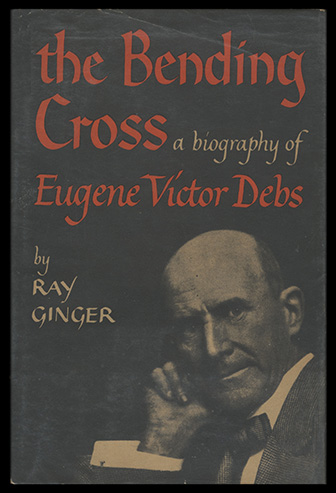
ginger

Worst. Dust. Jacket. Ever.

The favorite biography of my historian friend John Holmes — and a recent Haymarket Books reprint — is Ray Ginger’s The Bending Cross: A Biography of Eugene Victor Debs (Rutgers University Press, 1948). Speaking for myself, I absolutely can not get past the fact that there are ZERO footnotes in the volume — zip, nada, zilch, none. This deficit should have got the unpublished manuscript gonged by the Rutgers until it was fixed. It is an otherwise fine book, mind you, but no university press worth more than two shakes of iodized sodium should have accepted such a work unfootnoted. Bad, bad publisher!

Again, Ginger spends half his volume on Debs’s childhood and railway brotherhood activities, leaving a couple hundred octavo pages to tell the rest of the story. This, of course, is the same basic skew as Salvatore. My sense is that Ginger does a better job making good of this difficult, not to say impossible, task than does his literary successor, Salvatore. But this orientation nevertheless does mean that the early life story and union activities are again told relatively well, while the complicated later story is necessarily a hasty recounting.

The Debs biography that I liked second best going into this project, Bernard J. Brommel’s Eugene V. Debs: Spokesman for Labor and Socialism (Charles H. Kerr Publishing Co., 1978) has been pretty much gathering dust after I bumped into a couple howlingly wrong misinterpretations of the politics of 1899 to 1901. This book may yet be cracked open again as I reach Debs’s post-prison years — it appears that Brommel has done a good job with this material — but for the complex middle period of the Debs story this book is pretty terrible.
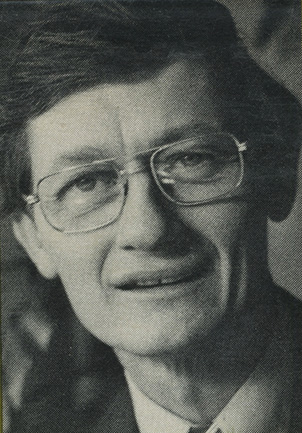
brommel

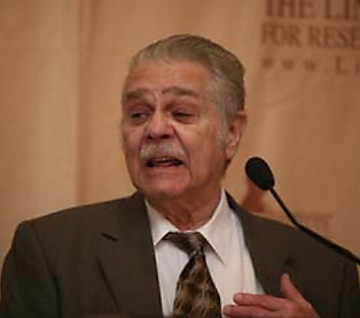
Bernard J. Brommel in 1978.

Dr. Brommel, a retired speech professor, is still living, now in his late 80s, I believe. I dropped him a letter informing him about this project. I’m not sure if he received it, but it didn’t come back “Return to Sender,” at least.

Here’s some audio of Dr. Brommel talking about his book in 1981. (P.S. Uh, no, Debs’s father didn’t “work for the railroad,” unless you count one or two painful days laying track…)

The other two heavily used volumes in addition to the Salvatore and Ginger bios are The Forging of American Socialism: Origins of the American Movement: The Impact of Socialism on American Thought and Action, by Howard H. Quint (University of South Carolina Press, 1953), and Ira Kipnis, The American Socialist Movement, 1897-1912 (Columbia University Press, 1952). Both of these are heads, shoulders, and belly-buttons above Salvatore and Ginger in telling the story of the formation of the Socialist Party and Debs’s place in the movement. (The Kipnis has been reissued by Haymarket, the publisher of the Debs Selected Works. Haymarket should work out a deal to reissue the Quint, I say again.)

Jack Ross’s The Socialist Party of America: A Complete History (Potomac Books, 2015) has also recently been added to my stack of my ready references. I use this one cautiously. Jack’s red-baiting call-out of Ira Kipnis’s politics is mockable and worthy of special rebuke. (The right/left/center split of the Socialist Party was a real thing, Jack, and Kipnis’ emphasis on the same — while perhaps slightly overdrawn — was not some kind of Bolshie plot.)

One gets the sense that this bulky volume (overly thick paper and large type was used by the publisher, a University of Nebraska Press offshoot), while unquestionably well documented, loses much of its utility owing to the tendentiousness of the historian. An excellent writer, Ross turns the twisting history of the Socialist Party into an entertaining tale for the general reader, and that’s fine, but one must be constantly vigilant as to where that reader is being led. The need to constantly acclimate oneself amidst the unceasing political spin does make one weary.

Of course, the Letters of Eugene V. Debs edited by the late Bob Constantine in three volumes must be mentioned as a constant ready reference. I can’t recommend these volumes strongly enough, even if the surviving body of Debs letters for the late 1890s and early 1900s is regrettably inadequate. That fact is no fault of Constantine’s. Indeed, all hail this scholarly masterpiece. Decoding Debs’s chickenscrawl handwriting is only slightly less difficult than trying to comprehend that of Karl Marx, and Constantine should have received some sort of book award for successful translation from an alien language, if nothing else.

By the way, you can score a mint set of all three hardcover volumes of the Debs letters for just $45 from the noble Bhagwan John of Bolerium Books. If you still need a set, use this link. Money well spent. You’re welcome.

NewFiles

The deadline for Eugene V. Debs Selected Works: Volume 3 is October 15, 2018. I’m setting a soft deadline of August 1 to finish the document compilation phase of the project. This means there are now 7 more Saturdays after today to get the core content section of the book assembled, with a limit for publication of approximately 260,000 words.

  • “The ABC of Socialism” — Oct. 10, 1902 — 1,809 words
  • “Labor and the Color Question” — June 20, 1903 — 590 words
  • “The Negro in the Class Struggle” — Nov. 1903 — 1,541 words

Word count: 207,118 in the can + 3,940 this week = 211,058 words total.

This was a short week because I was finishing up with the Volume 1 manuscript.

I’ve got a couple more articles to check out and one more to do for 1902, then it’s the rest of the time for 1903 and 1904. It takes me about three weeks per year, so I am pretty much on pace to finish on time… I might slop over a week or two since the presidential year of 1904 is potentially a big one.


Posted in Uncategorized | 2 Comments

Cheating Death in 1902 (18-18)

alpinetunnel.jpg

I don’t usually caption my headers, but this is actually the tunnel where Debs crashed.

The Eugene V. Debs saga very nearly came to an end on August 2, 1902, when he was involved in a serious train crash in the middle of Alpine Tunnel, then the highest railway tunnel in North America, located 11,523 feet above sea level in Colorado’s Rocky Mountains.

Since he provided an excellent account for readers of the Social Democratic Herald, we’ll just let EVD tell the story:

We were on a mixed train, all coal and other freight except one combination day coach and baggage, in which we rode. There were five passengers, two women and two men besides myself. We had four engines on the train to climb the steep mountain grade, two at head of train and two at rear, just ahead of our car. The road is rickety and the rolling stock rundown and it is criminal to rush that kind of a train through that kind of a hole. The continental divide is in the center of the tunnel and with two engines at each end the train is very apt to break in two and the tunnel is so dark that the engineer can’t see a foot ahead of him after the first engines have filled it with smoke….

Well, we entered the tunnel going east at 1 p.m. Saturday, the 2nd, and just after we passed the red light in the center that marks the continental divide and were rushing down the other side our train broke into three pieces and our engine and car crashed into the engine ahead of us. The shock was terrific and as the only dingy lamp in the car went out, we were left in blackest darkness. The scream of a woman, an unearthly shriek, pierced me to the marrow. Our car was derailed, seats smashed, baggage piled around us, engines off the track and jammed into each other. I picked myself together and felt that I wasn’t seriously injured, although I found later that my leg was bruised and my back wrenched, from which I am still suffering acute pains.

matchI had some matches in my pocket and in the flickering light of these we concluded that we must get out of the tunnel without delay. With the four engines in the tunnel, pouring out their dense volumes of smoke and gas, we began to suffocate and the horrible thought came to use that we might be strangled to death before we could grope our way through the tunnel. At the same spot in the same tunnel five men were suffocated to death in a previous wreck, they being unable to withstand the fumes of the gas, perishing there before help could reach them.

For a few minutes I saw my doom, and the feeling began to settle over me that this black hole in the mountain peak was to be my tomb. I now understand how the unfortunate miner feels when he finds escape cut off and realizes himself buried alive. But we acted quickly and concluded to start for the other end of the tunnel.

There were some deep holes between the ties, and the walking and stumbling in the pitchy darkness was a trial not soon to be forgotten. I took one of the women by the arm and our procession started, and after a weary march the first ray of light greeted us around the curve and it had all the glory of the primal fiat, “Let there be light!” I shall never forget it. It was our good fortune that a stray current of wind was blowing in at the east end of the tunnel, or we would probably never have emerged from it alive. (Source: SD Herald, Aug. 16, 1902, pg. 1.)

Despite the disaster and a hike back over the top of the tunnel, Debs was still able to reach Buena Vista, Colorado by 7 pm and kept his appointed speaking date there. It was certainly an appearance above and beyond the call of duty.

•          •          •          •          •

Touring in 1902.

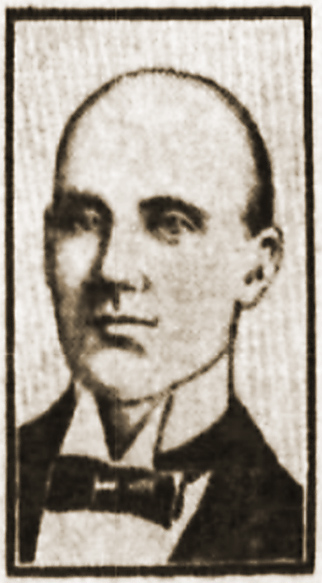
03-debs-stockportrait

Portrait of Debs used in conjunction with a syndicated article in 1903.

The coverage of Debs’s 1902 speaking tour in the newspapers currently digitized by Newspapers.com is very spotty. My list of his known dates is short and entirely unsatisfactory. He started the year with a short tour of Michigan, traveled to St. Louis for May Day, and attended the joint convention of the Western Federation of Miners, the Western Labor Union, and the Hotel and Restaurant Employee’s Union from the end  of May through the first week of June, delivering both a keynote address and a speech to a mass meeting after the conclusion.

He was touring the West from the middle of June, speaking in British Columbia and Washington in July. Additional rough detail is provided by a January 1903 article written for the Social Democratic Herald, in which Debs recounted both his booking agency and  states visited:

Since my engagement with the American Lyceum Union I have been in Illinois, Wisconsin, Michigan, Ohio, Kentucky, Missouri, Colorado, Idaho, Oregon, and Washington. *  *  *

Since the beginning of the lecture season I have spoken in colleges, high schools, and churches, though in most places the lecture is given at the opera house, under a variety of auspices, including women’s clubs, YMCAs, college courses, school societies, church associations, debating clubs, etc.

But twice have I spoken under socialist auspices during this time and but 3 or 4 times to less than a full house. As the lecture is given in the season course at almost every point and the ticket for the season is sold in advance, a full house, rain or shine, is the rule.

The people everywhere are not only ready for the gospel of socialism, but receive it with every mark of enthusiasm, and the telling points in a speaker’s argument are applauded just as heartily in a church or school room as they are in a socialist propaganda meeting.

In summary, Debs was a much more active public speaker in 1902 than he had been in 1901, with activity skewed towards the second half of the year and targeted to the West, not the East.

•          •          •          •          •

The twisted publishing legacy of the Social Democratic Herald.

There is some confusion about the publication history of the Social Democratic Herald, official organ of the Chicago Social Democratic Party which had been packed away to Milwaukee after the August 1901 Joint Unity Convention to become the crown jewel in Victor L. Berger’s socialist publishing empire. It was for some time believed that the publication had suddenly “suspended publication” from April 6 through August 8, before being resuscitated by Berger in Milwaukee.

This alleged gap in the publication’s history is wrong.

The source of the confusion was apparently a large gap in the holdings of the University of Wisconsin, whose librarian B. Wilcox appended a mistaken typewritten note on Dec. 5, 1945, to the paper being filmed explaining that there was a lengthy period of hiatus.

Subsequently another university was able to produce (very, very bad) film demonstrating that there were indeed previously unknown issues for almost that entire interval. There was a gap during the move from Chicago to Milwaukee, but it only appears to have been a void of two weeks’ duration. Here is the SDH publishing history, for the record…

  1. The Social Democracy of America split on June 10/11, 1898. Their official organ, The Social Democrat, remained in the hands the colonization wing, but was soon suspended for lack of funds. The political action wing was forced to start their own paper, which was Social Democratic Herald.
  2. The first issue of Social Democratic Herald was dated July 9, 1898. Alfred Shenstone Edwards was the editor and remained so for the entire time the publication was produced in Illinois.
  3. The paper was briefly moved from Chicago to Belleview, IL as an economy measure. Belleview is located inSouthwestern Illinois just outside of St. Louis, nearly 300 miles from Chicago. The savings do not seem to have been sufficient ot offset the inconvenience and the paper was fairly promptly moved back to Chicago.
  4. The final Chicago issue was dated July 27, 1901 and assigned whole no. 160.
  5. There was no paper issued on the scheduled August 3 and August 10, 1901 release dates. During this interval the operation was moved to Milwaukee, with Berger taking over the publication.
  6. The first Milwaukee issue was dated Aug. 17, 1901, and erroneously assigned whole no. 159 on the front page nameplate — a mistake that does not seem to have been ever corrected. Editors listed on the masthead were Victor L. Berger and A.S. Edwards.
  7. Edwards’ name was removed from the masthead effective with the issue of April 12, 1902, although he continued to contribute material to the paper periodically, so the split must have been amicable. Perhaps Edwards was trying to commute from Chicago to Milwaukee or did not like the latter city as well. He was replaced as co-editor by Frederic Heath, a pioneer historian of socialism in America, recording secretary of the Milwaukee Federated Trades Council, and protégé of Victor Berger. Under Heath’s editorship the paper very much became an organ of the Social Democratic Party of Wisconsin, with weak coverage of national affairs.
  8. Berger removed his name from the masthead effective with the issue of May 10, 1902, although his front page editorials remained a distinctive part of the publication for its entire duration.
  9. The weekly Social Democratic Herald was supplanted by the daily Milwaukee Leader, which launched on Dec. 7, 1911.
  10. The Leader would continue for years after Berger’s death after being hit by a streetcar in 1929.


NewFiles

The deadline for Eugene V. Debs Selected Works: Volume 3 is October 15, 2018. I’m setting a soft deadline of August 1 to finish the document compilation phase of the project. This means there are now 8 more Saturdays after today to get the core content section of the book assembled, with a limit for publication of approximately 260,000 words.

  • “The Socialistic Movement in America” — April 26, 1902 — 2,237 words
  • “The Pennsylvania Coal Strike is On” — May 19, 1902 — 820 words
  • “Socialism on Every Tongue: Open Letter to the Social Democratic Herald” — June 6, 1902 — 234 words
  • “A Great Western Movement is Coming: Open Letter to the Social Democratic Herald” — June 17, 1902 — 202 words
  • “The Inevitable War of the Classes” — June 21, 1902 — 1,227 words
  • “Politics — Democratic and Republican: Interview with the Spokane Spokesman-Review” — July 3, 1902 — 1,137 words
  • “The National Platform Explained” — July 18, 1902 — 712 words
  • “ A Narrow Escape: Letter to the Social Democratic Herald” — Aug. 8, 1902 — 819 words
  • “Trade Unionism Up-to-Date” — Aug. 23, 1902 — 867 words
  • “Jesse Cox: An Appreciation” — Sept. 15, 1902 — 657 words
  • “Auguries for the New Year” — Jan. 3, 1903 — 1,065 words
  • “Socialism the Trend of the Times” — Jan. 30, 1903 — 256 words
  • Socialism and Civilization: Speech at Rochester, NY” [excerpt] — Feb. 8, 1903 — 1,493 words

Word count: 195,364 in the can + 11,754 this week = 207,118 words total.


All this and more is ready to download at Marxists Internet Archive!


publishingupdate-header

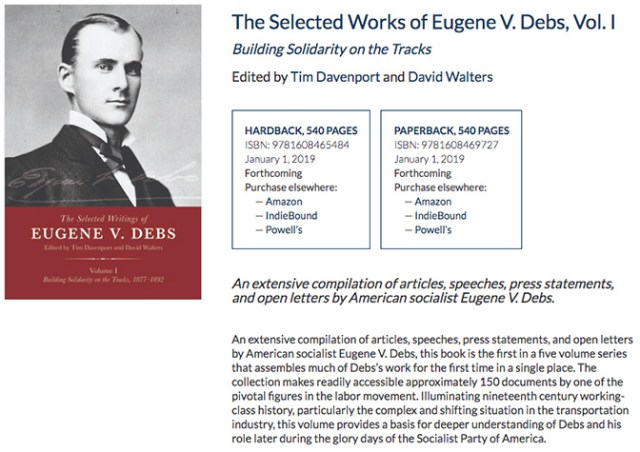
Hot damn, we have a release date for Volume 1: January 1, 2019.

Now I just need to get that proofreading finished up.

(BTW: It is six volumes, not five…)

debs-volume10-blurb

Posted in Uncategorized | Leave a comment

The Socialist Convention (18-17)

convention-header

I am a bibliophile — a serious book collector. Yeah, that makes me a nerd, and that’s okay. I have come to terms with and embraced my nerdiness decades ago.

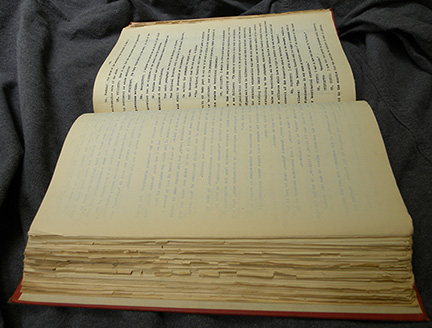
We book nerds all have favorite books in our assemblages. Here is mine: a set of original mimeographed (or carbon copy?) typescripts of the stenographic report of the Founding Convention of the Socialist Party in the summer of 1901, professionally bound in library buckram. God knows where it came from originally, but it has a $600 selling price marked up front on the pastedown by my friend John Durham of Bolerium Books in San Francisco. From Bolerium it was sold (or traded) to Herb Romerstein, one of the premiere private collectors of American radical ephemera. And then later Herb sold (or traded) it to me.

This collector-scum showboating has a point: YES, the 1901 Founding Convention of the Socialist Party was stenographically reported — a first for any American Socialist convention. And, YES, the stenogram has been preserved. And, YES, that stenogram is readily accessible to me for this project.

Cool.

typescript

Every word by every delegate at the Socialist Unity Convention of 1901 was preserved.

Now, do you want to know exactly what the co-founder of the American Railway Union, founder of the Social Democracy of America, co-founder of the Social Democratic Party of America Eugene Victor Debs said at this monumental four day session — this veritable linking of the political intercontinental railroad joining the “Western” Chicago SDP and the “Eastern” Springfield SDP into one unified organization?

He said nothing.

Debs said nothing because he did not go.

His wife and his mother-in-law and his mother were all sick, he said. He couldn’t possibly make it from Terre Haute, Indiana to Indianapolis, even for one day…

Here is biographer Bernard Brommel’s take:

Certainly Debs could have taken any one of several trains that daily made the 70-mile trip to Indianapolis and appeared briefly at the convention. He chose not to attend the convention. He said that illness in his family prevented his coming to Indianapolis. Both his wife and aged mother-in-law, who now lived with the Debses, were ill and suffering from the extreme heat…. A curious reporter checked and found both women ailing; however, Debs worked daily in his office and visited about town.

(Source: Bernard Brommel, Eugene V. Debs: Spokesman for Labor and Socialism, page 67, citing the Terre Haute Express, July 31, 1901.)

His brother Theodore, former National Executive Secretary of the Chicago organization, didn’t make a notable mark at the convention either, but he had been called away shortly after the start by the sudden death of his father-in-law.

That was a legitimate excuse.

•          •         •         •         •

The Proxy Voting System.

The so-called Socialist Unity Convention was called to order at 10 am on July 29, 1901. The Chicago SDP’s system of proxy voting — used previously at the regular convention of March 1900 and the special convention of January 1901 — was utilized. Under this system any party member could attend the convention as a delegate, with those not able to attend assigning their proxy votes to any party member they desired from the same state by means of a signed document.

Hillquit

Attorney Morris Hillquit (1869-1933) was a masterful tactician and diplomat as well as one of the first serious historians of the American socialist movement.

It was clear from the start that the Springfield SDP would dominate, holding 4,900 proxies to just over 1,500 for the Chicago SDP, with representatives of three state organizations that had previously stood aloof from either national group casting another nearly 350 proxy votes. (The DeLeonist SLP, predictably, did not attend, even though the call of the Chicago SDP specifically invited them.)

In other words, Springfield had Chicago outgunned by a ratio of more than 3-to-1 in terms of raw voting power and if it had organized into a disciplined faction through caucuses, it could have shaped the new party in any way it liked.

This they consciously chose not to do.

The delegates in Indianapolis were present according to the terms of parallel convention calls. While the Springfield delegation pledged to accept the results of the convention as final, come what may, the terms of the Chicago group’s participation specifically required a ratification vote of their membership through referendum after the convention’s conclusion. No amount of urging could move the Chicago delegates from this stance. They retained their veto power jealously. This was the Chicago party’s main strength — the implied threat of a veto of the entire convention, just as unity had been scuttled the previous year.

Facing this, in a diplomatic masterstroke the Springfield group agreed to equal representation of the two Social Democratic Parties on all committees, not only eschewing any attempt to crush minority participation but bending over backwards to give Chicago disproportionate power. This unforced and generous demonstration of goodwill had the effect of immediately unifying the gathering and defanging factionalism. The actual cost to Springfield of underrepresentation on committees was ultimately very small, the benefit of disarming the few remaining enemies of a united party in the Chicago party was massive.

This sort of calculated diplomatic move has Morris Hillquit’s fingerprints all over it.

•          •         •         •         •

The Inequality of Proxy Voting.

Iglesias-Santiago-Pantín-sm

The most proxies at the 1901 Unity Convention were held by Puerto Rican newspaper publisher and socialist activist Santiago Iglesias Pantín (1872-1939).

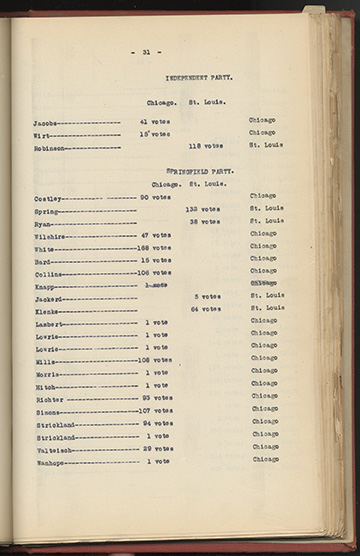
Party “stars” held dramatically more proxies than their lesser known peers, with Victor Berger controlling 349 votes of the Chicago organization (22.8% of the faction’s total). Springfield was dominated by Santiago Iglesias Pantín of Puerto Rico (483 votes); E. Lux from New Whatcom [Bellingham], Washington (347); Job Harriman (343); Max S. Hayes (341); Morris Hillquit (337); Henry Slobodin (334). Together those six Springfield delegates controlled 2,185 votes — more than the entire Chicago organization put together and about one-third of the total votes at the convention!

Is it possible that the Springfield SDP was somehow more efficient in gathering proxies than their Chicago SDP rivals? Perhaps. Here is the testimony of former Executive Secretary of the dissident SLP Henry Slobodin:

I represent 334 comrades who attached their signatures to my credentials. I assure you that when they attached their signatures they did not know who represented them. I got 300 votes, and they represented 1,100…. We had it announced in our papers that comrades could attach their signatures before delegates were elected. The signatures were collected by the officers, and after the delegates were elected their names were inserted into the credentials. Now you see how that system works.

(Source: Stenogram, 10th Session, pg. 68.)

The three heavy hitters from New York City were: Harriman (343), Hillquit (337), Slobodin (334) — 1,014 votes. The same mechanism was also clearly used in ultra-radical Washington, which appropriated all its proxies to the single delegate making the long trip to Chicago. A similar system must have also been used on behalf of Max Hayes in Cleveland and Victor Berger in Milwaukee.

•          •         •         •         •

What about the Chicago National Executive Board?

The list of Chicago NEB members and close associates who successfully short-circuited unity discussions in 1900 is a short one: Victor L. Berger and Frederic Heath from Milwaukee; Margaret Haile from Massachusetts; Gene Debs from Indiana and implicitly his brother, Theodore, the Executive Secretary; as well as Jesse Cox, Seymour Stedman, and party editor A.S. Edwards from Chicago. That’s close to a universal set of members of the leadership clique — a very small and closely organized faction.

Berger-1898

Victor Berger (1860-1829) in his home office, 1898. Along with Debs, Morris Hillquit, and later Norman Thomas, the Bernsteinian Marxist Berger was one of the iconic leaders of the Socialist Party.

These were able to sink unity negotiations in 1900, but by 1901 overwhelming support for unity had made itself felt from the bottom up throughout the entire Chicago SDP. Jesse Cox, a lawyer with other interests in life, quit the organization in May 1900 over impending unity, which he foresaw months in advance. He was replaced by Corinne S. Brown, also an opponent of unity with Springfield.

We know that Gene Debs was petulant about the situation in November 1900, ultimately making a lame excuse and skipping the convention the following summer, having gathered zero proxy votes in preparation.

What about the others members of the NEB? Did they march into the convention, at which the Chicago SDP promised to be outnumbered, with stacks of proxy votes at the ready? Or did they just show up with their own vote and their voice? And, if so, did they participate actively or were they merely present and biding their time, standing ready to take offense so as to gain the ammunition needed to sink a bad unity deal should one emerge?

Here’s the answer:

  • Victor Berger — 349 votes, participated very actively in the debate.
  • Corinne S. Brown — Did not attend convention.
  • Gene DebsDid not attend convention.
  • Theodore Debs — 1 vote, forced by circumstances to leave convention early.
  • A.S. Edwards — Was not a delegate, possibly attended as a journalist.
  • Margaret Haile — 1 vote, participated very actively in the debate.
  • Frederic HeathDid not attend convention.
  • Seymour Stedman — 87 votes, participated modestly in the debate.

Seen in this light, Gene Debs’s absence looks even more like a calculated decision, does it not?

We know that by the summer of 1901 Seymour Stedman, having been active in the upbeat, positive, ecumenical grassroots radical politics of Chicago, had already overcome his fear of the unknown and accommodated himself to the idea of organic unity between Chicago and Springfield.

wahrheit-ad

Before 1901, Victor Berger only published newspapers in the German language, with Die Wahrheit (The Truth) his party newspaper. In the aftermath of the Unity Convention, he acquired the former official organ of the Chicago SDP, The Social Democratic Herald, and began his English-language publishing empire.

For his part, Berger was clearly playing another game, and playing to win — which he ultimately accomplished when the new Socialist Party of America adopted the federation model of weak national organization with strong state organizations.  Decentralized power allowed Berger to continue to control the Social Democratic Party of Wisconsin unimpeded and little changed. The Wisconsin party never changed its name to Socialist Party, by the way, remaining the Social Democratic Party of Wisconsin for the entirety of Berger’s life.

Berger also fortified his position in the new organization by taking over publication of the floundering Social Democratic Herald, moving it and its factionalist editor, A.S. Edwards, to Milwaukee and launching his career as a English-language newspaper publisher and editor.

Viewed in hindsight, Margaret Haile’s participation at the Joint Unity Convention seems to have been more in the nature of obstruction and marked her swan song in American socialist politics. Haile relocated with her family to Toronto shortly after the convention, where in 1902 she would become the first woman to run for provincial office in Canada.

The Debs brothers? They were barely there and not there at all, respectively…

•          •         •         •         •

Impossibilism.

Simons-a-1902

Algie Simons (1870-1950) was the chief advocate of abandoning all immediate demands at the Socialist Unity Convention of 1901.

The ideological split of the convention, such as it was, did not fall along organizational lines, but rather was fought over the question of whether the organization should adopt a minimum program of ameliorative reform, with the “impossibilist” left wing represented by International Socialist Review editor A.M. Simons of Chicago and E. Lux of Washington (the latter of whom was formally bound by direct instructions of that radical state organization through the results of a referendum vote to oppose any short term demands).

Impossibilism was an emerging ideological perspective in these years, with the DeLeonist SLP deciding to abandon its immediate program for ameliorative reform at its 1900 National Convention. The desire for a similar abandonment of every demand short of a call for the establishment of socialism was obviously influenced by the SLP’s decision the previous year.

The basic argument went like this: due to the inherent and inexorable logic of capitalism, no lasting ameliorative reform was possible under that system. Any partial measures on behalf of the working class merely postponed the possibility of lasting social change by delaying the overthrow of capitalism. Therefore, all effort must be concentrated upon bringing about socialist revolution through capture of state power through the ballot box and the only program needed was that which elucidated this goal.

The debate over the question was lengthy although the final result never really in question, with the following result:

  • Springfield SDP — 1,012 votes for striking immediate demands; 3,936 (79.5%) opposed.
  • Chicago SDP — 142 votes for striking immediate demands; 1,247 (89.8%) opposed.
  • Independents — 171 votes for striking immediate demands; 175 (50.6%) opposed.

(Source: Stenogram, 6th Session, pg. 44.)

Impossibilism would continue in America as a trend in the early American communist movement, visible in the ideology of the Socialist Labor Party, as well as part of the fundamental ideology of sects such as the  Proletarian Party of America and the World Socialist Party.

•          •         •         •         •

Locating Headquarters.

stenogram-vote

Many delegates of the Springfield SDP to the 1901 Joint Unity Convention voted to locate headquarters of the Socialist Party in Chicago rather than St. Louis.

The vote taken on the location of headquarters was surprisingly close, with St. Louis edging Chicago in a roll call vote by 3,517 proxies to 3,096 — a margin of just 421 votes. More than 35% of the votes of the Springfield SDP were cast in favor of Chicago, with almost 85% of the votes of the Chicago SDP cast in favor of retaining that city for party headquarters.

The Springfield SDP never made an effort to locate the headquarters of the new organization on the East coast, acknowledging a central, Midwest location, while dividing surprisingly closely over the matter of getting headquarters out of Chicago to some other less factionally antagonistic location.

Headquarters would eventually arrive in Chicago, but it would be a process that took several years.

(Source: Stenogram, 10th Ses., pg. 69.)

•          •         •         •         •

My Collecting Acquaintance Herb Romerstein Remembered.

I will conclude with a personal digression:

I met Herb Romerstein by mail as a collector a few years before he died. He was selling off some of his duplicate pamphlets, and he was always trying to find something that he didn’t have. I was looking to buy some of his duplicate pamphlets and my collection was expansive enough that I had a few things that he needed. Herb was a very serious pamphlet collector. So am I.

Romerstein-Herb

Herb Romerstein (1931-2013) — politically “to the right of Attila the Hun,” but a nice person and one of the most thorough collectors of radical paper ephemera since Jo Labadie.

Herb had been a full-time Republican staffer for the House Un-American Activities Committee during the late 1960s and early 1970s, back when the notorious HUAC was finally being hauled to its well-deserved and long-overdue termination. The word “conservative” doesn’t quite touch the intensity of Herb’s political views. His politics, I like to tell my political friends, were “to the Right of Attila the Hun.” I’m sure he never voted for a Democrat in his life and probably thought the Democratic Party itself was some sort of Communist front.

Herb was pretty wacky that way. He was an anti-communist zealot, a man of McCarthy’s 50s… One of his earlier books was on the influence of the notorious Communist Party USA on impressionable American youth. (I believe he had briefly been just such a youth before flipping completely.) His later work dealt with Soviet espionage and subversion.

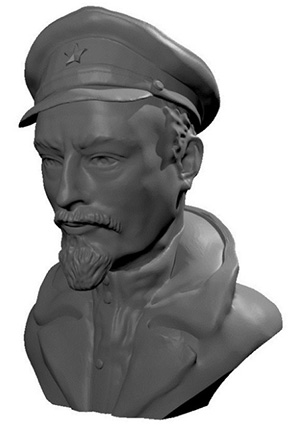
DzerzhinskiiHerb was the proud owner of a small bust of Felix Dzerzhinskii that he imported from Russia through an eBay auction. Yes, the terrible Dzerzhinskii — head of the Extraordinary Commission (Cheka), the revolutionary secret police during the Russian Revolution, when they were running firing squads.

The revolutionary tribunal says “guilty” — tie them to a stake, line up the firing squad…

Ready! Aim! Fire! Bang!!!  Quite Easily Done.

The Russian Civil War was ugly. The Bolsheviks were bad. The other side was worse.  Much, much worse.

So why would Herb Romerstein, the ultra-right wing Republican, own a statue of the notorious head of the dreaded Cheka, you ask?

“Because that Pole killed more Bolsheviks than anyone else in the Russian Civil War!” Herb chortled. Herb wrote that joke. He slayed himself with it. He told it to me at least three times in our three or four phone conversations, while talking about books and pamphlets that he was selling.

Herb traded me my copy of the stenogram to the Founding Convention. It was a direct hit on my collecting battleship while it had been a costly near miss on his. Such things can be parted with by all but the most obsessive collectors. We made a deal — I honestly don’t quite remember what it was. It probably involved my swapping him a little stack of rare postcards put out by Workers International Relief in the early 1920s as well as a couple hundred bucks. That sounds about right. That would put me into the deal for a manageable $250, my having picked up an even bigger stack of postcards on the cheap in an eBay auction. From his perspective he would have realized his $600 purchase price out of the exchange — such postcards being unobtainable rarities with big price tags if one were blundering into them and buying them piecemeal.

Fish-Hamilton

Hamilton Fish III (1888-1991) of New York. One of the fathers of modern Congressional red hunting, Fish was a real reactionary that would have been at home in today’s Republican Party.

Making that deal opened doors. Herb later helped hook me up with virtually complete bound printed records of the Fish Committee, the Dies Committee, the House Un-American Activities Committee, and the Senate Internal Security Committee. He had a friend (whose name I was never told) who was also on the HUAC staff who was wanting to sell part of his library. Herb brokered the deal. Money changed hands in that transaction, which happened over time and in parts. I ended up with half a bookcase of bound documents. It wasn’t a cheap proposition, but you just can’t find such things at all.

Herb seemed to be a really decent person, something you really can’t say about some modern conservatives. He had his political views and his obsession with Soviet spies. I had my diametrically opposite political views. We each had our own collecting interests, mine being getting as much early stuff as I could put out by the early American socialist and communist movements. We had plenty of room to talk to each other without pissing the other person off.

The Herbert Romerstein papers — that is to say, his collection and book research notes — are now at the Hoover Institution. Herb was initially going to donate his enormously important collection of radical ephemera to some obscure liberal arts school in Minnesota that had been really nice to him when he was a visiting speaker, or some such. I’m glad he changed his mind. I need to spend a week playing those boxes. I’ve been to Hoover three times already. Palo Alto is a pleasurable place for a book nerd to pass a few days.

I just noticed in his bibliography on Wikipedia that I put together that Herb co-wrote a token catalog with the legendary exonumist Grover Criswell. Herb attacked collecting books with a sort of numismatist’s precision, which is probably why I think we got along so well despite being people with diametrically opposite political views. I co-wrote a token catalog as well, an obscure volume which the intrepid handful of sales tax token specialists still use a quarter century later.

I collect political pamphlets now and I also attack them like a coin collector.

I wish I had a chance to talk about numismatics with Herb. It would have been interesting.

============

So after reading my perfectly good story here, the good (?) Bhagwan John Durham assures me I have this sequence of events precisely backwards: that it was he who obtained the volume from Herb Romerstein (who got it god knows where) and in that in 2006 he sold it to me for “$300 cash plus trade goodies plus promise of a soul” — and he’s got computer records to prove it.

Rats.

Far be it from me to let pesky details get in the way of a good story… Returning to the Carrite mantra: documents, documents, documents — never trust recollections or memories…


NewFiles

The deadline for Eugene V. Debs Selected Works: Volume 3 is October 15, 2018. I’m setting a soft deadline of August 1 to finish the document compilation phase of the project. This means there are now 9 more Saturdays after today to get the core content section of the book assembled, with a limit for publication of approximately 260,000 words.

  • “Battle Cry of Superstition” — March 10, 1902 — 1,194 words
  • “Capitalism Has Nearly Reached Its Climax: Speech in Denver following the Joint Convention of the WFM and WLU” — June 8, 1902 — 4,393 words
  • “A Narrow Escape: Letter to Julius Wayland in Girard, Kansas” — Aug. 23, 1902 — 196 words
  • “How He Stopped the Blacklist” — Sept. 1902 — 1,144 words
  • “The Barons at the White House” — Oct. 4, 1902 — 1,229 words
  • “Society Must Reap What It Sows: Interview with the Terre Haute Gazette” — July 11, 1903 — 1,234 words
  • “The Growth of Unionism in America” — Sept. 3, 1903 — 1,431 words

Word count: 184,526 in the can + 10,838 this week = 195,364 words total.

publishingupdate-header

haymarket-logoOn May 23 we received the proofread manuscript for Debs Selected Works Volume 1. I’m now going over this page by page to proofread the copy editor, as we fix and refine and polish. It’s a slow process. I will probably settle for 5,000 words in the can instead of 10,000 for the next week or two so that I have time to go over everything line by line. The manuscript for Volume 1 sits at 763 pages, excluding photos. Although this doesn’t actually correspond to the final printed version it nevertheless will probably be pretty close to the mark.

If I have to bend the August 1 soft deadline for completion of document compilation for Volume 3, I will bend it, of course. This project takes exactly as long as it takes. I think Haymarket would ideally like this to be a six month process per volume so that they could shoot out the volumes one per season (Spring, Fall) and build a little momentum. But it’s actually more like a one year process to get finished though and trying to move faster will only result in omissions and errors. After all, there are only so many free hours a week to read and write and type…

Posted in Uncategorized | Leave a comment

Hissing Snakes (18-16)

snakeheader

While I was searching the digitized papers of Newspapers.com for Debs speeches of 1901 I came across an absolutely fantastic direct quote in the pages of the Chicago Inter Ocean — one of the windy city’s major dailies. It’s a statement taken down during debate on the convention floor of the “snap convention” of the Chicago SDP held in January 1901. The issue at hand involved a pointed communication from the Springfield SDP to the Chicago gathering challenging the convention’s motives should be politely answered or ignored.

The Chicago leadership clique was testy over having been called out over the purpose of the convention, which the Springfield organization saw as having separatist, factional intent rather than being called in the kind-hearted spirit of future unity. According to the news report, Debs went off against Springfield in an bitter and sectarian manner.

Here are Debs’s reported words:

If the “kangaroos” desire harmony, as they profess to do, why do they insult us in this manner? I am in favor of having the committee on resolutions give this letter the most considerate attention, but in their reply, let it be made manifest who is seeking to disrupt the socialistic movement in this country.

Last summer I accepted the nomination for the office of President at their hands in the interests of harmony, because I felt it my duty to accept it. My experiences after that time were most humiliating. Instead of the expected harmony we took into our midst a lot of hissing snakes. However, for the sake of our principles I propose that every effort shall be made to conciliate the factions now at variance.

This acerbic epithet, that the Springfield SDP were “a lot of hissing snakes,” was duly reproduced in the pages of The People (William Street Version), the official organ of the Springfield SDP.

•          •          •          •          •

Who Were the “Hissing Snakes”?

The Free Thought Magazine

Beginning as a publisher of Unitarian literature in 1885, before turning to Populism a decade later and socialism in 1899, Charles H. Kerr (1860-1944) would become the leading publisher of Marxist literature in the United States during the Debsian era.

Although the surviving Debs correspondence and articles on the unity question are more akin to tea leaves than a diary, it is nevertheless clear that Debs (1) did not like certain individuals in the Springfield camp; (2) would have far preferred that the Chicago organization continue down its own independent path and let everyone else come to that organization rather than make nice and compromise with other organizations in a unity convention; (3) distrusted anyone having had anything to do with the Socialist Labor Party, even those who had broken personally and politically with Daniel DeLeon; and (4) harbored grudges about certain things he had read in Springfield SDP-affiliated newspapers during the fall campaign, including especially a couple letters to the editors about the Chicago organization being composed of [Debs] “hero worshippers.”

In other words, the quote above attributed to Debs calling the Springfielders “a lot of hissing snakes” is completely within the range of what he might have been expected to say in an unguarded moment.

So who exactly were these notorious ex-DeLeonist disruptionist “hissing snakes” of the Springfield SDP? I’ve made a very, very partial list:

  • Robert Bandlow, Ohio
  • J. Mahlon Barnes, Philiadelphia, future Executive Secretary, 1908 campaign head
  • G.B. Benham, San Francisco, newspaper publisher
  • William Butscher, Brooklyn, National Secretary of the Springfield organization
  • Julius Gerber, New York City, top leader of the New York SPA organization
  • Benjamin Feigenbaum, New York City, writer
  • Julius Halpern, New York
  • Ben Hanford, New York, writer
  • Job Harriman, attorney and writer, Debs’s 1900 running mate
  • Max S. Hayes, Ohio, newspaper publisher and trade union activist
  • George Herron, Christian Socialist professor
  • Morris Hillquit, NYC, future member of the NEC and party chairman
  • Charles H. Kerr, Chicago, publisher
  • Antoinette Konikow, Boston
  • Algernon Lee, Minneapolis, future head of the Rand School
  • Caleb Lipscomb, Kansas
  • Tommy Morgan, Chicago, top leader of Marxist movement in the city
  • Frank P. O’Hare, Missouri
  • Frank A. Sieverman, New York
  • A.M. Simons, Chicago, editor of International Socialist Review
  • May Wood Simons, Chicago, writer
  • Henry Slobodin, New York City, lawyer and writer
  • John Spargo, Vermont, author, future Marx biographer and member of the NEC
  • Hermon Titus, Washington, newspaper publisher
  • Ernest Untermann, future translator of Marx’s Capital
  • Gaylord Wilshire, Los Angeles magazine publisher

If that sounds like the essential core of the Socialist Party during the first decade of the 20th century, you are getting the point, with apologies to Victor Berger and his Wisconsin associates…

•          •          •          •          •

If it seems too good to be true, it probably isn’t…

Edwards-A-S

Alfred S. Edwards. In 1901 Edwards moved to Milwaukee to continue editing the Herald, eventually winding up editor of an IWW newspaper, in what must have been a stunning ideological flip.

Always eager to do whatever he could to sink organic unity with Springfield (and to thereby incidentally preserve his job as editor of the Chicago official organ), Social Democratic Herald editor Alfred S. Edwards took aim at The People in a post-convention editorial, claiming that neither Debs nor anyone else had made the “hissing snakes” comment and intimating that the editor of The People had made up the quotation from whole cloth.

Debs himself never denied having made the remark, mind you, but the vehemence of Edwards’s assertion that the statement had never been made certainly calls the authenticity of the remark into question.

Pity, that’s a really good quote. I will be including it, with a big asterisk, in volume 3.

•          •          •          •          •

A Note about Newspapers.

As I have previously lamented, almost no letters of the Debs brothers have survived from the 1898 to 1901 period. This also stands true for the other major figure of the socialist movement of the era for whom a systematic effort has been made to assemble a microfilm collection of papers, Morris Hillquit, whose papers effectively start in 1903.

The limited number of party pamphlets and leaflets issued by the two Social Democratic Parties are also poorly preserved or vanished, with the exception of the material produced by Charles H. Kerr & Co., which was distributed by both organizations and which has survived well.

Newspapers have fortunately been very adequately preserved on microfilm, even if availability of said film can be spotty.

Chicago SDP weekly newspapers

  • cover - Newspapers.com

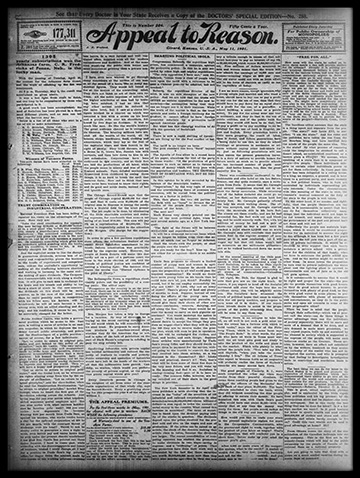
    Although not formally a factional organ, the editorial line of the Appeal to Reason, the largest circulation paper of the American left, was close to the perspective of the Chicago SDP. Wayland hated DeLeon and vice versa.

    Social Democratic Herald — Chicago — Est. July 9, 1898. Official organ. Complete, although issues from April to Nov. 1901 inadequately filmed and partially illegible. Paper moved to Milwaukee after the Joint Unity Convention and lost its status as official organ, becoming a privately-owned arm of Victor Berger’s publishing empire. Forerunner of Milwaukee Leader. Master negative held by State Historical Society of Wisconsin.

  • Appeal to Reason — Girard, Kansas — Est. August 1895. Privately owned Predates formation of the Social Democratic Party. Not formally factional but definitely closer in spirit to the Populist-rooted Chicago SDP than the Marxist-rooted Springfield SDP. Filmed multiple times, including by State Historical Society of Wisconsin and Kansas State Historical Society. Digitized as part of Newspapers.com. Later iterations as The New Appeal, Haldeman-Julius Weekly, and The American Freeman, terminating in the 1940s.
  • Vorwärts [Forward] — Milwaukee — Est. Aug. 21, 1898. Beginning as a special Sunday edition of a German-language socialist daily published in Milwaukee from 1887, this became a separate entity (the organ of the Milwaukee AF of L) in August 1898. Edited by Victor Berger, with a full run preserved on film, master negative held by the State Historical Society of Wisconsin. This paper continued to be published until 1932.
  • Die Wahrheit [The Truth] — Est. Aug. 21, 1898. Beginning in 1889 as the weekly summary edition of a German-language Milwaukee socialist daily, this became a separate entity in August 1898. Edited by Victor Berger, this was apparently his main German party publication, as opposed to the trade unionist Vorwärts. Broken run on film from the State Historical Society of Wisconsin.
  • Spravedlnost [Justice] — Chicago — Est. March 10, 1900. Czech-language weekly edited by F. Hlaváček, regarded as one of the key figures of Czech-American socialism. Only a few scattered issues of this paper, the circulation of which hit 6,000 in 1903, have survived. Terminated in 1914.
  • The Toiler — Terre Haute, Indiana — Establishment and termination date uncertain. Some articles are preserved in the Debs scrapbooks. Wisconsin Historical Society has a nice run of issues filmed for 1903-1904, but only a single issue before those dates.
  • Forverts [Forward, aka “Jewish Daily Forward” — New York — Yiddish-language daily.

Springfield SDP weekly newspapers

  • The People — New York City — Est. July 16, 1899. Official organ. Confusingly uses same volume and issue numbers and banner ornament as the regular SLP The People edited by Daniel DeLeon. Apparently exists in a full run, although I have only managed to locate the first year with master negative held by the New York Public Library. Forerunner of The Worker (est. April 28, 1901 using same numbering system), which later became the New York Call, finishing as the the New York Leader — which provided the name inspiration for the separate-but-similar The New Leader.
  • The Class Struggle — San Francisco — Establishment date uncertain, definitely earlier than 1899. Privately owned and edited by G.B. Benham. Publication became The Advance after formation of the Socialist Party and seems to have died in 1902. Master negative for 1900-1902 in three reels is held by Harvard University. I am in the process of obtaining a service copy of this otherwise unique print of film and will assess content when in hand.
  • The Workers’ Call — Chicago — Est. March 11, 1899. Edited by A.M. Simons, this newspaper started as a local Socialist Labor Party publication, becoming a voice of the Springfield SDP after the split of the anti-DeLeon faction in July. Continued through the end of 1901, when it was replaced by the Chicago Socialist in March 1902, going daily as the Chicago Daily Socialist c. 1907 and running until termination in 1912. The short-lived terminal name of the publication was the Chicago Evening World.
  • The Haverhill Social Democrat — Haverhill, Massachusetts — Est. Oct. 7, 1899. Privately published by the Social Democratic Publishing Association. Local coverage of the booming SDP of Massachusetts and a reliable source for pronouncements of the Springfield National Office. Renamed as The Clarion after the formation of the Socialist Party of America in the summer of 1901. Complete run filmed by New York University’s Tamiment Library and was extremely rare film until recently digitized by Marty Goodman of the Riazanov Digital Library Project.
  • The Socialist — Seattle, Washington — Est. August 12, 1900. Editor was the radical Hermon Titus, who started the paper in connection with the Debs campaign of 1900 and kept it rolling until 1910, moving at one point to Toledo, Ohio and back home again. Filmed by University of Washington (complete for early issues) and State Historical Society of Wisconsin (complete for later issues) — complete run when the filmings are considered together. First several years have been digitized, later years have not. After formation of the SPA, became the more or less official organ of the left wing.
  • The Missouri Socialist — St. Louis — Est. Jan. 5, 1901. Organ of the potent Social Democratic Party of St. Louis and that city’s labor movement, which had a strong socialist component from the German-dominated Brewers’ Union. Became St. Louis Labor. Long running paper issued into the 1920s. Two filmings, either individually complete but complete when taken together, by State Historical Society of Missouri and State Historical Society of Wisconsin.
  • International Socialist Review, the first theoretical magazine of the American socialist movement, should also be mentioned. This monthly launched in Chicago on July 1, 1900, with a strongly pro-unity orientation. Its hardcover books bore the logo of the Springfield SDP (the arm-and-torch). The publication was made into a glossy illustrated magazine at the end of 1907, when publisher Charles H. Kerr and his close associate Mary Marcy took control of the magazine from the academically-oriented A.M. Simons, who had been drifting to the right. Became an organ of the Left Wing. Suppressed during World War I, with Simons on the other side of the barricades by then.
  • Arbeiter Zeitung — St. Louis — Est. ???. German-language socialist weekly.
  • New Yorker Volkszeitung — New York — German-language daily.

•          •          •          •          •

A Kind Word for Leon Greenbaum.

Greenbaum-leon-1901

Leon Greenbaum (1866-19XX)

There is tendency for historians to treat Leon Greenbaum, the first National Executive Secretary of the Socialist Party, as a non-entity — a more or less random party member from the designated headquarters city, St. Louis, who was chosen for little reason more than his inoffensiveness, being free of factionalist taint by having avoided engaging in the bitter sectarian fisticuffs of 1899 and 1900.

This misses the rationale of the choice completely.

Actually, Greenbaum was the outstanding English-speaking member of Local St. Louis (a substantial organization with ties to the local trade union movement and affiliated with the Springfield SDP). Greenbaum had been the SDP’s candidate for Lt. Governor of Missouri in 1900 and headed the ticket as its candidate for Mayor of St. Louis in the city election of April 1901.

Greenbaum was a frequent contributor to the pages of the Missouri Socialist (the future St. Louis Labor) from its launch in January 1901. He was a logical choice and did a competent job getting the underfunded and greatly decentralized Socialist Party of America off the ground.

Greenbaum was not in the Executive Secretary’s chair for long, but his selection was fully understandable and his performance fully adequate.


NewFiles

The deadline for Eugene V. Debs Selected Works: Volume 3 is October 15, 2018. I’m setting a soft deadline of August 1 to finish the document compilation phase of the project. This means there are now 10 more Saturdays after today to get the core content section of the book assembled, with a limit for publication of approximately 260,000 words.

  • “Progress of the Social Revolution” — Nov. 26, 1900 — 1,195 words
  • “A Word About the ‘Independent’” — Dec. 8, 1900 — 537 words
  • “The Approaching Convention” — Jan. 12, 1901 — 746 words
  • “Fraud and Imposture at Modern Funerals” — March 30, 1901 — 1,430 words
  • “Twilight and Dawn” — Dec. 7, 1901 — 1,488 words
  • “Peace, Peace, There Is No Peace!” — Jan. 24, 1902 — 1,484 words
  • “No Compromise With Slavery: Speech in St. Louis” [excerpt] — May 1, 1902 — 746 words
  • “‘No Masters, No Slaves’ : Keynote Speech to the Joint Convention of the Western Federation of Miners and the Western Labor Union” — May 26, 1902 — 2,034 words
  • “The Western Labor Movement” — July 1902 — 4,025 words

Word count: 169,966 in the can + 14,560 this week = 184,526 words total.

I also typed up for background the 500 word official call for the January 1901 Special Convention of the Chicago SDP; a 2,400 word report of the National Executive Board to the January 1901 Special Convention; a 315 word call for the 1st meeting of the National Committee of the SPA, held in January 1902 in Chicago; a 2,100 word news account of the January Special Convention as well as an additional 1,300 word set of “Convention Notes” by A.S. Edwards.

Posted in Uncategorized | Leave a comment