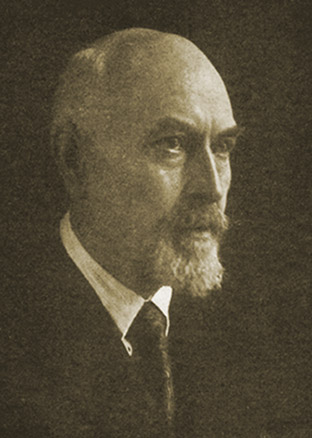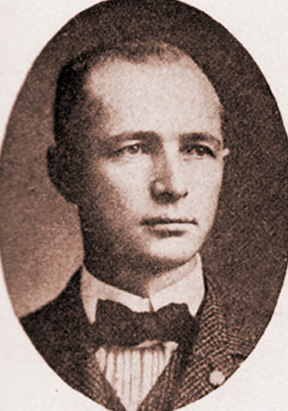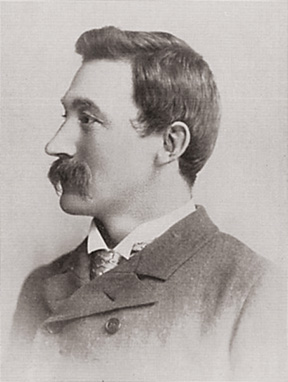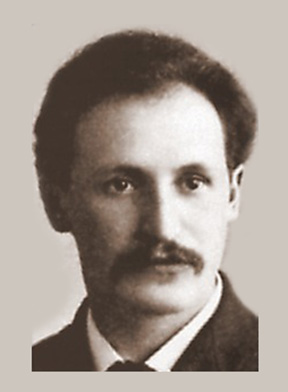
“Count me out.” (18-15)

COUNTMEOUT-header

The Snap Convention of January 1901.

The November 1900 elections represented the proverbial half-filled glass to the American socialist movement. On the one hand, the vote tally for Debs and the joint Social Democratic Party ticket, nearly 100,000 ballots actually counted, represented a marked increase over the totals generated by any socialist campaign of the past. On the other hand, the ticket of Debs and Harriman had failed miserably in such natural centers for the party as New York and Pennsylvania and had finished far short of every modest expectation for the campaign.

During the campaign, while the officialdom of the Chicago SDP stewed over their shotgun marriage with their upstart counterparts in Springfield, the rank and file of the rival organizations had joined hands in common electoral work, undercutting the anti-unity perspective of the Chicago National Executive Board and its aggressively anti-Springfield party editor A.S. Edwards. In the aftermath, when the Chicago officialdom began to cast blame on their east coast counterparts for the weak showing of the SDP ticket, the rank and file appears to have been unmoved.
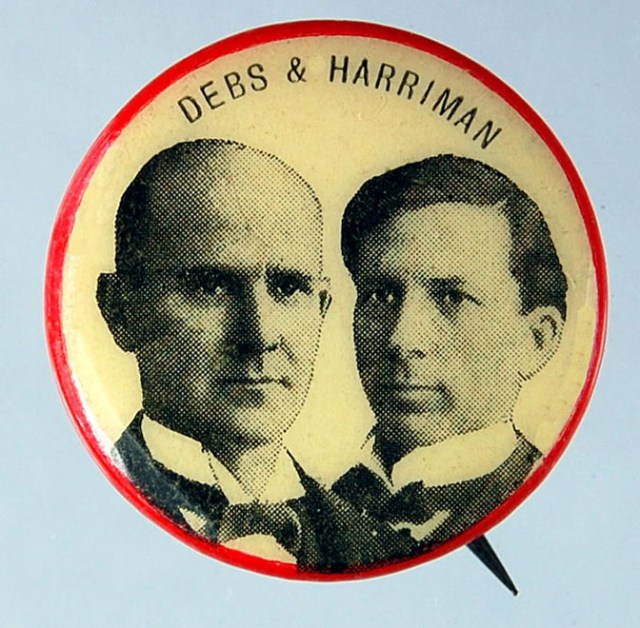
00-debs-harriman-litho-smActing in accord with a plan put in place during the fall campaign, the Chicago NEB called a snap convention of the organization for January 15, 1901. The ostensible purpose of the gathering, at least according to a cover story seeded to the press, was that the election of new officers was needed.

Indeed, a new 9 member National Executive Board was due to be elected in accord with the constitution which had been overwhelmingly passed the previous June, replacing the 5 member Chicago-Milwaukee body with a larger and more geographically diverse set of officers.

As a matter of fact, however, nominations for this new NEB had been already been conducted over the course of many weeks via nominations made by local branches of the party. A sufficiently massive list of candidates already existed and there was no practical reason for the holding of a costly and cumbersome physical convention to select these candidates — a referendum vote would have sufficed.

The ulterior motive for the convention, it would seem, was factional — a last ditch effort to staunch the rank-and-file drive towards unification of the two rival Social Democratic Parties by bringing the True Blue together in the urban center of their fief, Chicago. Faced with a growing “unity from below” through joint efforts between the rival organizations in a wide range of states, the convention marked a final effort for the Chicago leadership to undercut the national unity drive and to restore its own sovereign authority. Debs himself made mention of a plan for a “special convention within 30 days after election” in a November letter to Theodore, alluding to some sort of clearly factionalist “line of action” that had been “confidentially communicated” to the Chicago NEB’s supporters in the East. (Source: EVD to Theodore Debs, Nov. 9, 1900, Letters of Eugene V. Debs, Vol. 1, pp. 154-155.)

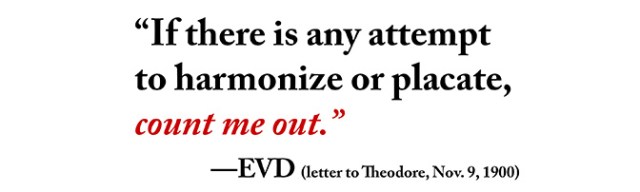
Lamentably, there is virtually no Debs correspondence from 1900 or 1901 to shed further light upon his evolving views on party unity. We have only his anti-unity public statements from the spring, a temperate letter to NEB member Frederick Heath from August in which Debs upbraided the “fanatics” on both sides of the unity question (closely followed by his own declination for reelection to the Chicago NEB), and the scoffing and sputtering letter to his brother Theodore mentioned above, written days after the shattering November electoral defeat. In this crucial communication Eugene had expressed surprise in fellow NEB member Seymour Stedman’s intimation that “we may have something to do with other factions [i.e. the Springfield SDP]” and that “if there is any attempt to harmonize or placate, count me out.”

Did he follow through on this threat?

•          •          •          •          •

The Mystery of the Missing Scrapbook.
FilmBoxes

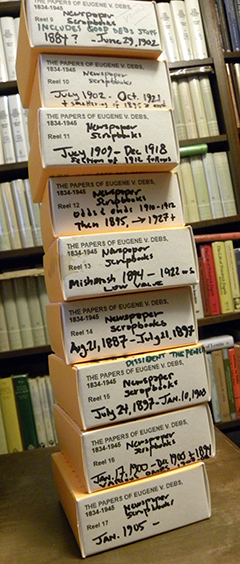
Q. Where are the 1901 records on the Debs film?    A. There aren’t any!

The year 1901 was absolutely pivotal in American socialist history — the year of the founding of the Socialist Party of America. Imagine my surprise to discover that Gene and Theodore’s meticulous scrapbooks of newspaper accounts of the activities of the Terre Haute orator, the Social Democratic Party, and the news of the day that Debs found to be important and worth preserving are nowhere to be found. After years of devoted scrapbooking and newspaper preservation that can only be described as “archival,” the spigot of fastidiously preserved publications abruptly shuts off.

My initial idea was that the material for 1901 was included in a scrapbook which was filmed and preserved out of sequence on the 21 reels of Papers of Eugene V. Debs microfilm. In an effort to test this theory, I invested a number of hours of spinning as yet unexplored reels out of sequence trying to find the missing 1901 fare. Despite my best efforts, I have as of this writing found no evidence whatsoever that the “lost non-sequential volume” theory has any basis in fact.

While it is hard to prove a negative proposition, one thing has become increasingly clear: There simply was no 1901 scrapbook. The Debs brothers went on intellectual hiatus.

From 1902 onward scrapbooks resumed and important newspaper pages were again saved, to be sure, although more haphazardly, catch-as-catch-can, with many years of clippings mishmashed into multiple volumes. But there is nothing, nothing at all, for the year 1901.

•          •          •          •          •

Jumping ahead with the story a little bit…
quint

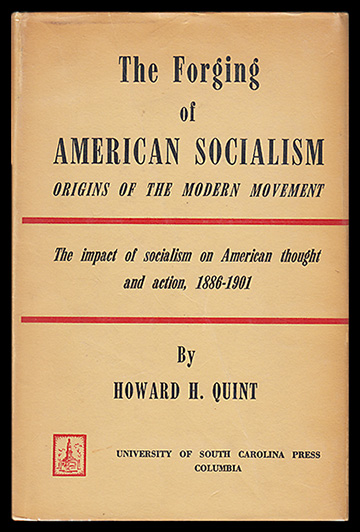
The Forging of American Socialism (1953) by Howard H. Quint (1917-1981) had its copyright renewed a few months before the historian’s death. That’s a pity but not an insurmountable obstacle for a Chicago publisher with sufficient motivation…

With the above in mind, ponder these words published in 1953 by Howard H. Quint, an excellent historian, in his book The Forging of American Socialism: Origins of the Modern Movement:

Illness in the family prevented Debs from attending the unity convention when it opened as scheduled on July 29 [1901] at the Indianapolis Masonic Hall. Sicknesses seemingly had a habit of coming to Debs or his family when unpleasantries at socialist gatherings threatened to develop. But an impressive total of 128 delegates from 20 states and Puerto Rico were on hand…

Representatives of the Springfield faction were in the majority, with 72 delegates holding 5,155 [proxy] votes. The Chicago group had 49 delegates with 1,403 [proxy] votes. Seven “independents,” claiming 382 votes, were also present. The convention was dominated by lawyers, editors, and writers. Representatives of the laboring class, as such, were almost distinguished by their absence. Likewise, the foreign-born element was definitely in the minority. *  *  *

The Indianapolis Journal, expecting to find visible evidence of the internecine socialist fight at the convention, was astounded to note the “warm feeling” which members of the Springfield and Chicago factions showed toward each other. It also noted that there was no separate seating of the two groups. The debates, moreover, were to disclose that both sides were in a mood to compromise…. The recriminations and personal vendettas which had appeared in the Social Democratic Herald and The People had no place on the convention floor. The whole issue of socialist unity was hardly discussed because it was, from the first, assumed. (Source: Howard Quint, The Forging of American Socialism, pp. 377-378.)

So it is clear that by the time of the Summer 1901 Joint Unity Convention, there had been a geological shift of ideas; unity was already assumed. In some places unity was already achieved in practice. In the city of Chicago itself, for example, ground zero of the Chicago NEB, rank-and-file activists had held their own snap convention immediately after the November election, joining forces under a “General Committee of the Socialist Party.”

The ostensibly dominant Chicago SDP — which only shortly before proudly trumpeted a circulation of 8,000 for its party organ and intimated a paid membership of only slightly less than this number — had in actuality fallen into distinct minority status vis-a-vis pro-unity Springfield. Victor Berger and Corinne Brown and Margaret Haile moved from a position of patent opposition to unity to a tactic of building a form of decentralized unity that they could live with, knowing full well they retained the future opportunity to torpedo any form of unity which they found untenable.

Meanwhile Debs, the demigod and founder of the Chicago faction, using the excuse of family illness (his wife, mother, and mother-in-law all sick, he said), had made himself conspicuously absent from the triumphant unity proceedings, unable to make it from Terre Haute to Indianapolis for even a single day of the four day event.

Again, those words: “If there is any attempt to harmonize or placate, count me out.”

•          •          •          •          •

The plot thickens…
EVD-cigars

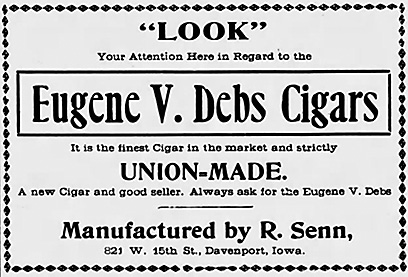
While it’s not clear that he made any money on the proverbial “back end,” it is a fact that one could buy “Eugene V. Debs Cigars” in 1901, as this ad from the Moline Dispatch of April 2 indicates. Debs was himself a cigar smoker.

The first thing I do when I take on a new year for the Debs Selected Works is closely examine the material for the year in my database of Debs’s published works — which currently sits at 3,918 pieces. There are “big” years and “light” years for Debs to be sure: 1894 was massive, as was 1895; so was 1897. The years 1896, 1899, and 1900? Not so much. But even those paltry totals eclipse Debs’s sparse output of 1901.

So what was there produced by Debs in that year? An obituary for Martin Irons. A courtesy note to Gaylord Wilshire thanking him for a copy of a new magazine, a response which was published by that great self-promoter in order name-drop, I am sure. A reprint of a short excerpt of an old speech made in St. Louis. Some back-and-forth with the Indianapolis press over the legacy of the late Benjamin Harrison, one of Debs’s least favorite people. Some replowing of old fields with respect to the sanctimonious library-builder, Andrew Carnegie, another member of EVD’s list of Enemies of the People.

Not a single major speech was made by Debs until one delivered to a SDP picnic in Chicago on the 4th of July. He also made another major speech for Labor Day in the town of Nashville, Illinois — speaking to a crowd larger than the community’s total population of about 2,200 — which was apparently not transcribed. He finally went on tour again in October, keeping ahead of the weather.

There was exactly one article about the unity question and the forthcoming convention was published in June, a positive enough piece which declared:

The convention for unifying socialists and converting jarring factions into a united party is now a certainty…. [T]he very fact that the convention was agreed to by practical unanimity would seem to indicate that the separate columns are ready to unite into a grand army, and that henceforth factional strife is to be silenced and the combined resources of the party are to be brought into concerted action upon the enemy.

After the unity convention that he pointedly missed, another positive article appeared cheering the provisions for “state autonomy” and pronouncing the move of the new united organization to St. Louis and the leadership of Leon Greenbaum (a former Springfield SDP adherent) as positive events — and endorsing ratification of the convention’s results by the self-liquidating membership of the Chicago SDP.

But beyond that, both public speaking and writing dwindled appreciably.

Gene Debs had effectively curtailed his political activity.

•          •          •          •          •

The Snap Convention of January 1901, redux.

The convention was called to order at Aldine Hall, located at 77 Randolph Street in Chicago, on Jan. 15, 1901. Seymour Stedman of the National Executive Board called the gathering to order was chosen as temporary secretary. Margaret Haile of Massachusetts, a fierce opponent of unity with the Springfield SDP, was elected temporary secretary of the gathering. Eugene Debs was in attendance as a delegate. The first day’s session was occupied with routine business. An estimated 200 people were in attendance. (Source: Wire report, Ottawa Daily Republic, Jan. 16, 1901, pg. 4.)

The tone was immediately set with the reading of a message from the Springfield SDP protesting the holding of the gathering. It was moved that the communique be returned to Springfield without action, but at the suggestion of Debs a committee of 16 on organization was elected, with Seymour Stedman the chair and including Debs, Margaret Haile, and Victor Berger, as well as Frederic MacCartney, George Strobell, G.C. Clemens, and a smatter of lesser luminaries from around the country.

Corrine Brown of the NEB read the report of the committee, which lambasted the Springfield SDP, calling it a “narrow, stagnating set which harassed and obstructed in the hope of ruining the party.” The evening session was occupied with committee meetings, with the chairs including Victor Berger (Platform), Margaret Haile (Constitution), Victor Berger (Publications), Frank Roderus of Illinois (Resolutions), and E. Ziegler of Wisconsin (Finance). (Source: “Debs for Harmony,” Chicago Inter Ocean, Jan. 16, 1901, pg. 5.)

There’s only one direct Debs quotation from the floor of the convention that I’ve located, and it makes clear that he was no gushing pro-unity enthusiast. In the debate on a motion to return unanswered an “objectionable” communication to Springfield, one which questioned the motives of the Chicago NEB behind the January snap convention, Debs declared:

While my personal feeling is such as would warrant me in voting for the resolution, yet in a convention of this sort I am the last man who will deny any man or men a fair hearing. If the “kangaroos” desire harmony, as they profess to do, why do they insult us in this manner? I am in favor of having the committee on resolutions give this letter the most considerate attention, but in their reply, let it be made manifest who is seeking to disrupt the socialistic movement in this country.

Last summer I accepted the nomination for the office of President at their hands in the interests of harmony, because I felt it my duty to accept it. My experiences after that time were most humiliating. Instead of the expected harmony we took into our midst a lot of hissing snakes. However, for the sake of our principles I propose that every effort shall be made to conciliate the factions now at variance.

January 17, the third day of the convention, was the most explosive day of the conclave. Delegates were divided between pro- and anti-unity perspectives and several competing strategic plans were vetted, amidst speeches that were both lengthy and heated. Former Populist G.C. Clemens of Kansas, an advocate of unity, called for a convention of all socialists, to be held before July 4, with the results of the gathering to be put to the membership of the party in a referendum vote. Debs was the proposer of a greatly similar convention plan, albeit one which favored formal alliance (i.e. political fusion), in the course of the debate making clear his opposition to organic unity and desire to preserve the Chicago SDP as an independent organization. Another approach was offered by George Strobell of New Jersey, which would place the future of the party directly in the hands of a National Committee, with no provision made for a unity convention.

The situation was tense, with two  delegates who differed on the unity question at one point coming to blows on the convention floor. Both were separated by their friends before serious damage could be done. During the protracted debate Debs was accused by one Illinois delegate of having “changed his views” on the unity question by allowing a final test of the issue at a convention, with the delegate likening the competing convention proposals to a choice between two ropes with which the party was to hang itself. (Source: “Fists on the Floor,” Chicago Inter Ocean, Jan. 18, 1901, pg. 4.)

On January 18, the fourth and final day of the convention, a modified version of the Debs plan was passed by the Chicago gathering, calling for a convention of all socialists to be held in Indianapolis, opening the second Tuesday of September 1901. Results of this unity conclave were to thereafter be submitted to the participating organizations for ratification by Jan. 1, 1902. (Source: Wire report, Indianapolis Journal, Jan. 19, 1901, pg. 1.)

This approach was a grudging acknowledgement that a unity convention was coming in 1901, with or without the participation of the Chicago SDP as an organization. By taking the initiative of issuing their own convention call, the Chicago administration was able to set certain terms for their participation, preserving a back door option to sabotage any result they disliked, controlling as they did the did the party press and having already demonstrated the ability to manipulate party opinion enough to swing a referendum vote.

Beyond the rough details above, as reported in the mainstream press, coverage of the January 1901 convention remains extremely sketchy. The conclave was completely ignored by the Workers’ Call, the weekly newspaper of the Springfield SDP in Chicago, which instead of offering critical convention coverage chose to run a “Special Labor Issue” of the paper in the week following the gathering. Nor did editor A.M. Simons deign to mention the Chicago convention in the next issue of his paper, instead running a coy front page “Socialist Pointer,” to wit: “Don’t worry about union; as the rank and file favor union, it is only a question of time.” This was followed by an if-the-shoe-fits-wear-it aphorism seemingly directed at the Chicago officialdom in an oblique manner: “Do not answer a fool according to his folly. Send him some literature and he may get over it.” (Source: Workers’ Call, Jan. 26, 1901, pg. 1.)

With no Debs scrapbooks preserving such accounts of the gathering made by the friendly press in such rare publications as the Chicago Chronicle, and no published stenographic report of the proceedings, sourcing remains meager indeed.

No Debs letters exist sharing his views of the situation facing the Chicago organization in the run up to the summer Joint Unity Convention with the “hissing snakes” of the Springfield SDP.  Morris Hillquit’s 1903 History of Socialism in the United States doesn’t even mention that a convention even took place in Chicago in January 1901!

Historians Kipnis and Quint do their best to tell the story, but large pieces of the puzzle inevitably remain missing. I can’t help but think there’s a good account of the gathering out there somewhere, but thus far it has not emerged.

The story of the socialist politics of 1901 remains but a partially told tale.


NewFiles

The deadline for Eugene V. Debs Selected Works: Volume 3 is October 15, 2018. I’m setting a soft deadline of August 1 to finish the document compilation phase of the project. This means there are now 11 more Saturdays after today to get the core content section of the book assembled, with a limit for publication of approximately 260,000 words.

  • “Aims and Objects of the Social Democratic Party” — Nov. 3, 1899 — 801 words
  • “Letter to Frederic Heath in Milwaukee” [excerpt] — Aug. 6, 1900 — 387 words
  • “Three Classes, Three Parties: Campaign Speech in Cincinnati, Ohio” — Oct. 4, 1900 — 2,411 words
  • “Convention Statement on Proposed Unity with the Springfield SDP” — Jan. 15, 1901 — 305 words
  • “Schwab’s Silly Advice” — March 31, 1901 — 264 words
  • “Socialists Who Would Emasculate Socialism” — April 20, 1901 — 1,529 words
  • “The July Convention” — June 15, 1901 — 691 words
  • “The Mission of Socialism is as Wide as the World: Speech to a Socialist Picnic, Hoerdt’s Park, Chicago” — July 4, 1901 — 4,844 words
  • Telegrams to the Joint Unity Convention Founding the Socialist Party of America” — July 29 & 30, 1901 — 170 words
  • “‘They May Shelve Me If They Like’ : Statement to the Philadelphia Times”
     — July 30, 1901 — 313 words
  • “The Indianapolis Convention” — Aug. 6, 1901 — 704 words
  • “Statement to the Press on the Shooting of President William McKinley” — Sept. 7, 1901 — 639 words
  • “The War for Freedom” — Dec. 11, 1901 — 814 words

Word count: 156,473 in the can + 13,493 this week = 169,966 words total.

I also typed up for background a 450 word document detailing the referendum questions on unity polled by the Springfield SDP in December 1900; an 800 word convention call and cover letter from Theodore Debs of the Chicago SDP to William Butscher of the Springfield SPD, as well as an 875 replay and set of ratified resolutions.

I also typed up a 1,400 word piece by Morris Hillquit written on the even of the Socialist Unity Convention that will be used in a future book project. I am pretty sure that I will be moving to Hillquit after Debs.

Posted in Uncategorized | Leave a comment

On the Campaign Trail (18-14)

chaffandgrain

I won’t say this was an off week for me, but it is a busy one in real life and I made a conscious decision to pour what limited time I had into typing up four rare background documents about the party controversy of 1900. Those don’t show up on the scoreboard but will be invaluable in the writing of an introduction and may be repurposed in a little project later.

I read quite a lot of Debs as well, sorting wheat from chaff and consolidating my database of Debs articles.

I have by now learned that just about everything by Debs that appeared in the Appeal to Reason during this period was a reprint from the press somewhere else — which means that, if possible, the original article remains to be located for use as a master source.  I have bumped into a couple cases in which the Appeal edited the original content for space.

•          •          •          •          •

The Electoral Debacle of 1900, Redux.

DebsPoster-sm

Debs for President poster from the 1900 campaign. This will be properly digitized as an illustration for Debs Vol. 3. An original copy of this in nice shape could easily be a $5,000 item to political ephemera collectors. Note the emphasis on location of party headquarters: “Chicago, not Springfield, dammit!!!”

I mentioned previously that the 1900 Debs/Harriman ticket of the two Social Democratic Parties very nearly got beat in New York state by an obscure Massachusetts machinist running on the ticket of the DeLeonist Socialist Labor Party. (DDL would have had fun with that…)

This got me interested in seeing just how bad the SDP’s electoral bloodbath was in other states. According to official results published by the Chicago Tribune on Dec. 20, 1900, Debs collected about 85,000 votes on just under 14 million votes cast — a bit over six-tenths of one percent. The SDP’s vote total was more than doubled by the tally for the Prohibitionists, the party which finished in third place.

In only one state did Debs and Harriman receive more than 2 percent of the vote — Massachusetts (2.3%). They received more than 1 percent of the vote in six other states — Washington (1.9%), Oregon (1.8%), Wisconsin (1.6%), Florida (1.5%), New Jersey (1.1%), and Montana (1.1%).

On top of the New York catastrophe, the tallies for West Virginia and Pennsylvania, where Debs had invested so much time on behalf of coal miners in 1897, had to be particular dispiriting. In Pennsylvania the Social Democratic ticket received just over 4,800 votes on almost 1.2 million cast, while in neighboring West Virginia the trouncing was even more complete, with Debs and Harriman winning just 220 votes out of about 220,000 — one-tenth of one percent!

The Social Democratic ticket was not on the ballot in 16 states, most notably California Maine, and Virginia. Had they been on the ballot in all 46 states, the SDP’s vote total likely would have been in the neighborhood of 100,000. They were expecting a million.

•          •          •          •          •

Another year down…

DebsHerron

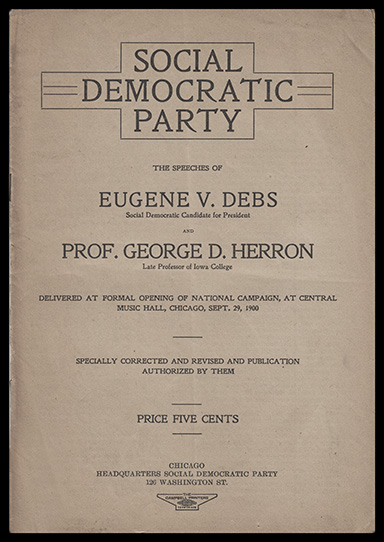
Debs’s September 29 speech in Chicago that launched the 1900 campaign was reprinted as a campaign pamphlet. Only three copies of this have survived. This, actually, is not the worst situation — there are five or six SDP leaflets with zero surviving specimens known.

I am basically done with Debs for 1900 — there are a couple speeches that I may or may not type up. In general the coverage of Debs on the Presidential trail was light and spotty and there are only a couple good examples of campaign speeches. It was only a six week process (compare and contrast to the two years spent by many candidates today) and there doesn’t seem to have been a ton of advance planning of the events, which typically filled the largest halls in the towns he visited.

There follows a list of cities that Debs visited during his whirlwind 1900 campaign tour. I don’t recall what the total count of speeches was, something like 80 — there were a number of short whistle-stop addresses made at train stations that were not reported in the press, or which received coverage in small papers that either did not survive or which are not yet digitized and easily available.

SEPTEMBER

29. — CHICAGO. Debs starts 1900 campaign with speech at Central Music Hall, Chicago. Joining him was Prof. George D. Herron. The widely reprinted speech was produced as a campaign pamphlet and is the best transcript of a speech from the 1900 election tour.

30. CHICAGO scheduled at New 12th St. Turner Haul, auspices Bohemian branches of Chicago, along with Victor L. Berger, A.S. Edwards, and several others.

OCTOBER

1. BATTLE CREEK, MI to an “immense” crowd at the opera house.

2. FORT WAYNE, IN before a large crowd at the Princess Rink. Introduced by a SDP member named Dr. Rauch.

3. MARION, IN scheduled.

4. CINCINNATI, OH scheduled.

5. LOUISVILLE, KY

6. INDIANAPOLIS, IN arrives at noon from Louisville. Speaks at Masonic Hall in the evening with Sylvester Keliher in the chair.

Oct. 7. OPEN DAY, HOME AT TERRE HAUTE.

8. — PANA, IL. Speaks to 600 people at 8 pm at the Hayward Opera House.

9. — ST. LOUIS, MO. Speaks at Lemp’s Hall. Later speaks to a crowd estimated as high as 6,000 people at the pavilion at Concordia Park. Preceded by a torchlight procession of 2,500. Speaks with Caleb Lipscomb of Liberal, MO, SDP candidate for governor of MO.

10. — KANSAS CITY, MO. G.C. Clemens, candidate for Governor of KS, also speaks to overflow crowd.

SEDALIA, MO. Five minute whistle stop speech.

11. PITTSBURG, KS.

12. FORT SCOTT, KS. Whistle stop speech. Speaks to about 200 at the Memphis depot.

12. WINFIELD, KS. Whistle stop speech. Three minute speech in a station.

12. WICHITA, KS. Speaks at Garfield Hall in the evening to an overflow crowd.

13. TOPEKA, KS. With G.C. Clemens, who introduced Debs. Met on stage by delegation of engineers and firemen, including founder Josh Leach of the B of LF. Crowd at the Auditorium estimated at about 1,500.

14. Afternoon: HERRINGTON, KS.

14. Night: ABILENE. “No political meeting allowed in KS on Sunday so Debs gave free lectures instead.” Title: “Ethics of Socialism.” Location: the Opera House.

ARMOURDALE, KS. Large open air meeting.

16. OMAHA, NE. Spoke for 2-1/2 hours.

17. CLINTON, IA. At least 500 people turned away from full house at the People’s Theater.

18. MUSCATINE, IA. Stein’s Hall, the largest hall in town, packed and hundreds turned away. Speaks with Charles L. Breckman, candidate for Congress and prominent Iowa socialist George A. Lloyd.

19. DAVENPORT, IA. Turner Opera Hall, 8 pm, capacity 1,800, packed to the rafters. Another estimate “at least 1,500.” Debs speaks for nearly 2 hours. A.K. Gifford presiding. The Vorwarts Singing Society sat on stage and sang several numbers. Charles Landon Breckon,SD Candidate for Congress from Muscatine, spoke.

20. BURLINGTON, IA scheduled.

21. SHEBOYGAN, WI. Born’s Hall, with Seymour Stedman and Howard Tuttle of Milwaukee, candidate for Governor. Large and enthusiastic meeting.

22. MILWAUKEE, WI at Pabst Theater. Filled to the rafters an hour early. Victor L. Berger presided. Debs spoke for two hours. Theater holds 2,400, an estimated 4,000 were packed in and hundreds more turned away. Overflow audience addressed by Chicago Socialist George Koop in the street.

23. CLEVELAND, OH at the Academy of Music, attended by 3,000 plus overflow. Max S. Hayes presided

24. WHEELING, WV at Arion Clubhouse. Debs speaks for 2:15.

25. PHILADELPHIA, PA at Academy of Music, packed hall with hundred turned away. J. Mahlon Barnes presided. Mother Jones also spoke

26. TRENTON, NJ where Debs spoke for two hours.

27. WHITMAN, MA spoke until 9:45 pm.

27. Later BROCKTON, starting at 10 pm after fast transfer from Whitman.

28. Afternoon: TAUNTON, MA, filling the largest hall in town.

28. BOSTON, MA Paine Memorial Hall, with Squire Putney in the chair, with FO MacCartney (Chicago) in one hall and Debs the other. Nearly 5,000 heard Debs, by one estimate.

29. ROCKLAND, MA Opera house packed. MacCarney presiding and making an introductory speech.

30. NEW YORK CITY at Cooper Union, audience estimated at 10,000.

31. ROCKVILLE, CT to overflow crowd.

NOVEMBER

1. HARTFORD, CT to overflow crowd.

2. ROCHESTER, NY at Fitzhugh Hall, “packed to suffocation.” Preceded by a parade of local unions.

[Nov. 2. SDP Election march in New York City, in which 5,000 participate, carrying red banners. March ends with a Madison Square Garden rally, addressed by Max Hayes and N.J. Giger of Cleveland, J. Mahlon Barnes of Philadelphia, and Ben Hanford, SDP candidate for Governor of New York.]

3. — Afternoon: TOLEDO, OH at Memorial Hall for two hours to an overflow crowd. Introduced by Byron A. Case, candidate for Congress.

4. — EVANSVILLE, IN to big crowd at Germania Hall.

5. — Afternoon: LINTON, IN.

5. — TERRE HAUTE, IN speech at the Casino to 1700 or 2000. Greeted at the depot by a band. Spoke for two hours.

•          •          •          •          •

A few observations about the 1900 campaign.

(1.) I’m not sure if it is Ray Ginger or Nick Salvatore — one of the major Debs biographers anyway — that indicated EVD was playing factional politics on the campaign trail, refusing to speak at events held under the auspices of the Springfield SDP. This is clearly incorrect. See, for example, Oct. 23, Cleveland, with Max S. Hayes presiding, and Oct. 25, Philadelphia, with J. Mahlon Barnes in the chair. Whatever Debs’s preferences and predilections, he clearly wasn’t trying to “freeze out” the Springfield crowd via a boycott.

(2.) The New York vote tally of just over 10,000 votes had to be a brutal shock after the party’s massive November 2 campaign event, with a parade of 5,000 and a rally at Madison Square Garden. One wonders if there might have been massive vote theft by Tammany Hall in the state; clearly the level of enthusiasm vis-a-vis the final count does not compute.

(3.) At a glance it seems that Debs spent an inordinate amount of time in Iowa and Kansas, concentrating 9 of his precious nights — about a quarter of his time — in those two states. Kansas has a strong tradition of support for the People’s Party and Debs honestly must of hoped to do well there, but Iowa remains a major mystery, since his first “Labor and Liberty” speaking tour in the state was more than a bit of a flop. One would have expected more effort in Massachusetts and New York, where the potential SDP voters were, rather seeing this much time wasted in the Midwest.


NewFiles

The deadline for Eugene V. Debs Selected Works: Volume 3 is October 15, 2018. I’m setting a soft deadline of August 1 to finish the document compilation phase of the project. This means there are now 12 more Saturdays after today to get the core content section of the book assembled, with a limit for publication of approximately 260,000 words.

  • “Outlook for Socialism in the United States” — September 1900 — 3,127 words
  • “Crimes of Carnegie” — March 30, 1901 — 695 words
  • “The Climax of Capitalism” — April 27, 1901 — 785 words
  • “Altgeld, the Liberator” — March 18, 1902 — 665 words

Word count: 150,733 in the can + 5,740 this week = 156,473 words total.

I also typed up for background a 4,000 word account of the March 1900 Social Democratic Party convention in Indianapolis by one of the four dissident SLP members of that party’s joint unity committee to attend the gathering, and another 8,240 word account of the same gathering by Will Mailly of the Haverhill Social Democrat, a pro-unity member of the Chicago SDP that jumped for Springfield. Also a 1,275 word reply by the Chicago SDP Unity Committee majority to the Manifesto of the NEB sabotaging unity in 1900, and a 1,085 word set of minutes of the second meeting of the joint unity committee.


Posted in Uncategorized | Leave a comment

Frenemies: The 1900 Social Democratic campaign (18-13)

pinevalley

The Socialist Soap Opera revisited…

The March 1900 national convention of the Social Democratic Party had nominated a ticket of Eugene V. Debs and Job Harriman for the November Presidential campaign, the latter having formerly been the Presidential nominee of the January 1900 convention of the dissident Socialist Labor Party’s convention in Rochester, New York. It seemed at the time that organic unity between the two groups would follow immediately thereafter. Instead, an orchestrated campaign by SDP leaders had sunk the Joint Unity Committee’s proposal before it had even been properly made.

The snap referendum killing organizational merger had been viewed as an illegal action by the majority of the SDP’s Joint Unity Committee, and together with their SLP counterparts the merger process had been carried through to completion — an action which the SDP leadership and a majority of the organization’s rank-and-file had themselves considered illegal.

The chief complaint of the notorious “Manifesto of the National Executive Board” which had started the internecine war was that the SLP dissidents had duplicitously refused to accept the name “Social Democratic Party” for the merged organization — a red herring for the actual complaints of the Chicago-based organization, which involved headquarters city and the related matter of party leadership, and official publication of the joint organization. When the SLP dissidents and the pro-unity elements of the SDP with whom they joined immediately liquidated the so-called party name controversy by christening themselves the “Social Democratic Party,” with new headquarters in Springfield, Massachusetts, another round of wailing was emitted from Chicago…

•          •          •          •          •

Saber-rattling in Chicago.

Theodore

Theodore Debs (1864-1945) was Executive Secretary of the Chicago SPD and one of Gene Debs’s closest political friends.

National Secretary Theodore Debs issued an “Official Notice” to Chicago SDP members in the name of the National Executive Board on August 20 noting that his brother the Presidential nominee had “accepted the nomination by another party and subjected himself to severe criticism…in the interest of political harmony and socialist success.” No merger of the two groups was in the offing, the younger Debs insisted, with the Chicago SDP opposing any unity based upon “the surrender of our party to the dominant element of an SLP faction with whom we have neither desire nor ambition to cope in party trickery and sharp practice.”

Even now, the SLP dissidents were “secretly stabbing our candidate for President and among themselves expressing the hope that he will not get a large vote,” the National Secretary of the Chicago SDP darkly warned. A conspiracy was at work against the Chicago faithful:

Where their “organizers” failed to inveigle our branches into their fold, and they are failing almost everywhere, they advised them to “withhold dues from all parties” until union is affected. Comrades, this is another trick of theirs to destroy our party. They hope to cut off our revenue and compel our surrender. This is not a time for any loyal branch to be neutral.

…If you think they are right, we say join them and support them. If you believe we are right, it is your duty to stand by our party and support it. *  *  *

Our party is going to the front… It is a party that cannot be transferred from Chicago to a town in New England without the consent of its members. *  *  *  We are confident that the few wavering branches, temporarily misled, will now promptly and emphatically prove their loyalty by their support of the party…   (Source: Theodore Debs, “Official Notice,” SD Herald, Aug. 25, 1900, pg. 3.)

Despite the warlike official rhetoric, the iron logic of the joint ticket in the fall campaign pushed the Chicago and Springfield parties into collaboration. On August 26 a joint meeting was held in Chicago in an attempt to organize a joint effort in Cook County for the fall campaign. The two organizations, joined by other political groups from the city, agreed upon unified action with “not a single dissenting vote being heard.” A joint county ticket, already nominated on the Fourth of July, was re-endorsed and a 21 member Cook Country Campaign Committee elected, including 7 members of the Chicago SDP, 7 members of the Springfield SDP (still called the “Socialist Labor Party” in the SDP’s press), and 7 members of other organizations represented at the convention, such as the Workmen’s Sick and Death Benefit Association, the Cigarmakers’ Union, the Turners’ Society, the Lassalle Club, and Socialist Sangerbund, among others. (Source: “Political Union is Effected in Illinois,” SD Herald, Sept. 1, 1900, pg. 3.)

This united front activity was even cheered by A.S. Edwards, long a unity opponent, in a Social Democratic Herald editorial, with congratulations offered “all comrades and friends, irrespective of individual affiliations, upon this most happy outcome of the situation in Illinois.” (Source: “The Illinois Situation,” SD Herald, Sept. 1, 1900, pg. 2.)

The situation remained tense, but common action continued, powered by the needs of the moment and the desires of rank-and-file activists.`

•          •          •          •          •

The Massachusetts Split.

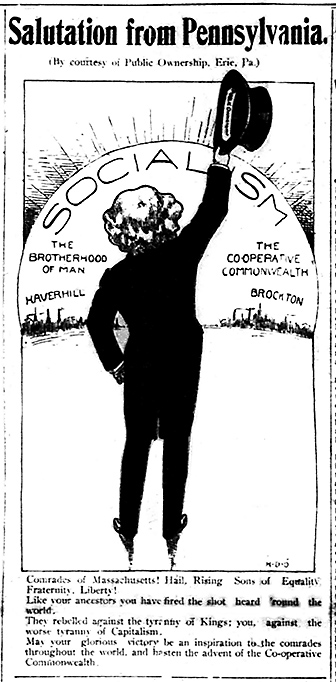
Massachusetts-cartoon-991223-smIn Massachusetts the joint state convention of the SDP and the SLP dissidents (Springfield SDP) on July 8, 1900, had elected a new State Committee dominated by the latter faction. Former State Secretary Margaret Haile seems to have played a key role in organizing a formal split of the newly merged organization, which she depicted a new governing organization of “loyal branches” acting in “protest against the corrupt methods by which a few have attempted to override the decision of the majority of the party and against the degradation of the sacred cause of socialism.”
At the heart of Haile’s complaint was slate voting for the State Central Committee at the convention and a subsequent circular letter offering the exchange of state charters, as well as direction of the proceeds from the sales of dues stamps from the Chicago headquarters, headed by Theodore Debs, to the new Springfield Headquarters, headed by William Butscher.

The split convention was called by the Rockland and Whitman branches of the Massachusetts party and was held on Sunday, September 2, just 10 days after the convention call was issued. According to Haile there were 23 branches represented at the gathering, with another 9 unable to send a delegate but allegedly supporting the new organizational initiative.  The gathering elected a 9 member Central Committee for the faction, which included most notably Rep. F.O. MacCartney, Mayor Charles H. Coulter, and Haile herself.

S.E. Putney, new Massachusetts State Secretary, was in attendance, where he made the claim that the previous quarter’s dues had been paid to Chicago rather than Springfield, while acknowledging that future money would be directed to Springfield, despite his personal objection to the change. Despite the division, Haile and her shadow Central Committee buried the hatchet by passing a resolution reaffirming their support for the Debs/Harriman joint national ticket as well as supporting the Massachusetts mixed slate of candidates nominated in Boston on July 8. (Source: Margaret Haile, “Massachusetts’ Loyal Branches Heard From,” SD Herald, Sept. 15, 1900, pg. 3.)

•          •          •          •          •

The Haverhill Defeat.

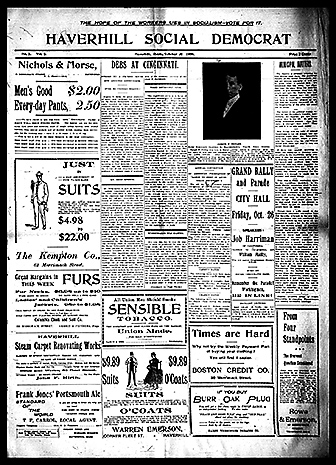
hsd

The Haverhill SDP maintained a weekly newspaper. Only two copies of the microfilm exist but my friend Marty Goodman is in the process of digitizing one of them for the world. 

The Haverhill organization, headed by two-term Mayor John C. Chase, was the crown jewel of the Springfield SDP. When in the election of November 1900 Chase was defeated in his bid for reelection, as were two socialist alderman seeking another term, the Chicago SDP crowed about the result. They were bolstered in their smugness upon learning of the  reelection of Brockton Mayor Charles H. Coulter by a plurality of 35 votes in a three-way race.

Elizabeth H. Thomas, recently of Haverhill and future top political associate of Milwaukee publisher and party boss Victor L. Berger had no doubt as to the cause of the massive setback:

The most flourishing branch, if it is cut from the parent tree, withers in a few hours. The sturdiest arm, if amputated from the body, loses its strength forever.

One year ago the whole Social Democratic Party stood behind the comrades of Haverhill. From Wisconsin, from New York, from the most widely scattered places, contributions poured into the campaign fund, till it reached over $1,200. *  *  *

But in 1900 Haverhill saw fit to cut herself off from all these sources of moral and material aid. By severing her connection with the Social Democratic Party she asserted her ability to rely on her own resources, with such little assistance as she might receive from the small body at Springfield, with which she allied herself. The result has been disastrous for her and needs no comment. (Source: E.H.T., “The Haverhill Defeat,” SD Herald, Dec. 15, 1900, pg. 4.)

•          •          •          •          •

The Debs Debacle.

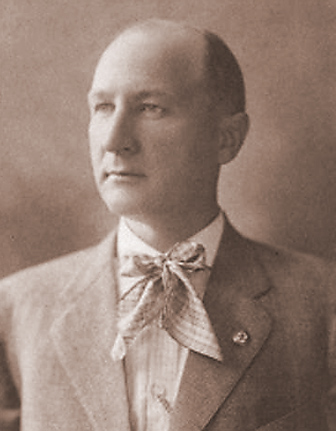
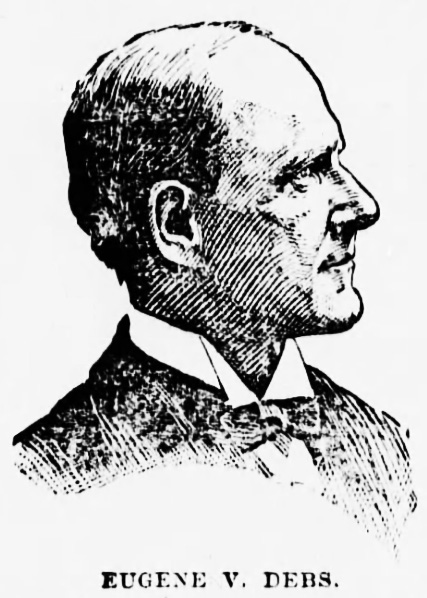
Debs-engraving-Barre-Telegram-000307

An unusual newspaper engraving of EVD, from the Barre Telegram, March 7, 1900.

John C. Chase was not the only Social Democrat who failed to meet expectations in the November 1900 election. Although Gene Debs was consistently an upbeat “glass half full” sort of guy, no amount of happy talk and spin could disguise the fact that he and his beloved SDP had been delivered a severe rebuke at the polls. Crowds had clambered to hear him during the six week campaign of whistle stops and two hour long evening lectures — halls were filled to capacity, hundreds turned away, and the level of enthusiasm high. Yet, when the smoke of battle lifted and the ballots were counted (or not counted, as some contended), the results were extremely poor in key electoral districts.

Debs was handed a most humiliating loss, collecting a mere 12,869 votes in New York state, versus 12,622 for Joseph F. Maloney, an unknown machinist from Massachusetts who stood as the candidate of the DeLeonist Socialist Labor Party. (Source: SD Herald, Dec. 22, 1900, pg. 4, quoting the official count of the New York State Board of Canvassers.)

In Massachusetts the Debs/Harriman ticket ran more than 3,500 votes behind the SDP’s candidate for Governor and failed to match the total delivered for any candidate on the statewide ticket. (Source: SD Herald, Dec. 22, 1900, pg. 4.)

Blaming the distraction associated with the split of the Springfield SDP for the poor showing of the Social Democratic Party in the election of 1900 was diversion for party members looking to avert their eyes from the thrashing. Debs was bitter. Immediately after the close of the election he wrote his best friend and political confidante, his brother Theodore:

Thus closes the campaign — and the results show that we got everything except votes.

I am serene for two reasons:

1st. I did the very best I could for the party that nominated me and for it s principles.

2nd. The working class will get in full measure what they voted for.

And so we begin the campaign for 1904. (Source: EVD to TD, Nov. 9, 1900, Letters of Eugene V. Debs, Vol. 1, pp. 154-155.)

With respect to the question of party unity, Debs was even more aggravated, commenting:

I am surprised at [NEB member and close ally Seymour] Stedman’s intimation that we may have something to do with the other factions. Great heavens, haven’t we got enough?

If there is any attempt to harmonize or placate, count me out. We must go forward on our own lines and those who don’t choose to fall in need not do so. There must be no wobbling at this time.

I thought our plan of action was clearly understood and now I am overwhelmed with pleas to attend a conference etc etc etc etc.

Hell! Don’t we know what we want? Or are we crazy?

We held a deliberate board meeting and went over the whole ground in detail and agreed to call a special convention within 30 days after election. I wrote the call and mailed it to you. Stedman should have written [George D.] Herron all about it as he agreed to do. We could all reach Chicago 2 or 3 days before convention and then hold the conference, but I don’t see the necessity of a conference now and a convention in 3 weeks….

I am well and in good spirits, but 30 hours a day for 6 weeks has told on me and I’m run down. I’ll not go to Chicago, nor attend any conference till I’m rested. I would not be fit for service in my present condition. If the convention has been called off I feel as if I ought to pull out and let the whole thing go and attend to my own business, but I won’t. I’ll stick to the party, through the gates of hell, till it stands on rock and defies the thunderbolts of Jove. (Source: Ibid.)

•          •          •          •          •

Chicago Unionist campaign of 1900.

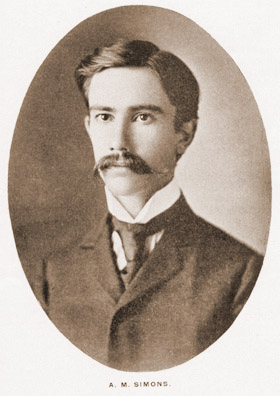
Simons-a-1902

Algie M. Simons (1870-1950), editor of the dissident SLP/Springfield SDP weekly The Workers’ Call. Simons was also the first editor of the International Socialist Review.

The so-called “Unionists” of the Springfield SDP spearheaded a drive for a united Social Democratic ticket for the spring elections in 1901, holding a nominating convention on December 15, promoted by Algie M. Simons and his Chicago weekly, The Workers’ Call. The Chicago “Unionists” sought to run their joint slate under a new moniker now that the fall election was over, fielding their candidates under the name “Socialist Party.”

Predictably, the Chicago leadership group unleashed a barrage against the unification effort,  with Social Democratic Herald editor A.S. Edwards accusing the “revolutionary” socialists (scare quotes were his) of having “slipped a cog somewhere in their deliberations” in deleting any municipal ownership plank from their platform.

“A party that refuses to adopt in its program of immediate political demands one declaring for socialization of that large class of public utilities operated for private profit in cities…is neither a socialist nor a revolutionary party,” Edwards scolded. (Source: “Confusion Among Unionists,” SD Herald, Dec. 29, 1900, pg. 2.) 

Even before unification, the outlines of conflict in the early Socialist Party over the desirability and limits of a minimum program had already begun to emerge.

•          •          •          •          •

A Tidbit about Party logos.

SDP-pinback-sm

This button was made for the Milwaukee SDP for the 1900 fall campaign.

The shaking hands superimposed over a globe motif was first used as the “national emblem” of the Social Democratic Party of America in October 1900, published for the first time in the Social Democratic Herald issue of Oct. 27, 1900, pg. 2. The design was created by the National Campaign Committee for use in the Debs/Harriman campaign. It should be noted was the emblem of the Chicago SDP, not its Springfield-based counterpart.

The “Social Democratic Party” buttons featuring a red flag design were created by the Milwaukee local branch of the SDP for the 1900 campaign. They were sold at the price of 2 buttons for a nickel. (Source: “Notes from the Field,” SD Herald, Oct. 27, 1900, pg. 4.)

The SDP published a series of six campaign leaflets out of the national office in Chicago.

No. 1 — Address to Unorganized Socialists.

No. 2 — An Open Letter to the Average American Workingman.

No. 3 — Machine Production, Where Profits Go.

No. 4 — Toilers of America, Vote for Your Freedom.

No. 5 — Industrial Crises — Cause and Cure.

No. 6. — Platform and Debs Epigrams.

They also produced a pamphlet featuring the initial speech of the 1900 campaign by Debs, delivered in Chicago on Sept. 29, 1900 and another speech by Rev. George D. Herron made at that same campaign event.

The SDP in Chicago produced their own four page leaflet for the campaign that was distributed nationally through the National Office.

All of this ephemera is hella rare or lost to history.


NewFiles

The deadline for Eugene V. Debs Selected Works: Volume 3 is October 15, 2018. I’m setting a soft deadline of August 1 to finish the document compilation phase of the project. This means there are now 13 more Saturdays after today to get the core content section of the book assembled, with a limit for publication of approximately 260,000 words.

  • “Prospects of the SDP: Interview with the Haverhill Social Democrat” — Nov. 27, 1899 — 852 words
  • “The Haverhill Municipal Campaign: Speech in Haverhill, Mass.” — Nov. 27, 1899 — 5,985 words [full version, replacing an earlier excerpt version]
  • “Warning Notice” — Sept. 21, 1900 — 426 words
  • “The Downfall of Capitalism” — Sept. 29, 1900 — 283 words
  • “The Democratic Party Will Not Deceive and Destroy the Social Democratic Party“ —Sept. 29, 1900 — 569 words
  • “You Are Doomed to Be a Sorely Disappointed Man” : Letter to Samuel M. Jones” — Oct. 8, 1900 — 1,174 words
  • “A Final Word” — Nov. 3, 1900 — 824 words
  • “The Republican Party Continues in Power” — Nov. 7, 1900 — 199 words
  • “Martin Irons, Martyr” — Dec. 9, 1900 — 941 words

Word count: 140,672 in the can + 10,061 this week = 150,733 words total

I also typed up for background a number of long documents on the SLP split of July 1899: a 2,100 word exchange of letters between SLP Organizer Lazarus Abelson and dissident SLP leader Morris Hillquit from June 1899; a 2,800 word announcement from July 1899 on the effort of the dissidents to overthrow DeLeon, Kuhn, Vogt & Co. by Henry Slobodin, the acting National Executive Secretary of the dissidents; and a 2,600 word account of the battle between July 8 and 10, 1899 published by the dissidents in their official organ shortly thereafter.


THE BIGGEST REPOSITORY OF DEBS MATERIAL ON THE INTERNET is located at Marxists Internet Archive, curated by David Walters. Here’s the link if you want to track down an article or explore the Debs body of work…


Posted in Uncategorized | Leave a comment

Kangaroos and SDP politics (18-12)

kangs

First, let us be clear about one thing — the term “Kangaroos” used in the context of the dissidents who fought a losing battle for control of the Socialist Labor Party in 1899 was an epithet, not a self-description. While it may be the name by which the history of the SLP has remembered them, it is not an appropriate name for description of the faction. “Kangs” was an insult.

The origin of the defamatory jibe is unclear, other than a certainty that use of the term sprung from the SLP’s hardline Kuhn-DeLeon leadership group in New York. Some believe the phrase to be a reference to the “Kangaroo courts” of the old West, in which process and the rule of law was set aside for the preordained result — a slick commentary about the way the faction attempted to seize power by deposing the sitting National Executive Committee through semi-legalistic shenanigans.

An alternative theory, one that I personally favor, posits that the kangaroo was made a naturalistic analogy for the SLP dissidents, madly jumping from one organization to another.

In any event, 120 years after the events described here, it is time to set aside the name used to mock the anti-DeLeon split group of 1899. We shall instead refer to these elements as the “SLP dissidents.”

•          •          •          •          •

Hillquit-Morris-kheelcenterportrait-color

The top leader of the SLP dissident faction of 1899 was Morris Hillquit (née Moishe Hilkowitz, 1869-1933). A founder of the United Hebrew Trades in New York, the Riga-born Hillquit was a native German speaker, educated in Russian schools before emigrating to the United States, where he learned English and Yiddish and passed the New York bar. A thorn in Debs’ side in 1900, the two would eventually become personal friends.

I was originally planning on spending a whole week on the SLP split of 1899, breaking down the personalities and the issues. It didn’t take me long to figure out that if that’s where I went in terms of subject matter, it would mean getting nothing done on Debs — spinning microfilm reels of The People, the SLP official organ, and The People, the dissident SLP official organ, would have allowed the subject to be explored, but at the cost of time spent looking at the publications that Debs actually wrote for.

So instead I will merely presume this basic knowledge of that split: (1) the New York-based SLP leadership attempted to take over the Knights of Labor organization in the name of socialism, (2) got tossed out, and (3) started a rival umbrella industrial union, (4) thereby alienating virtually all of their members with union ties. Simultaneously (5) the German-language New Yorker Volkszeitung fought over control of its staff and content of its pages (only partially related to the union conflict), while at the same time (6) membership outside of the SLP’s centers of power seethed at the New York leadership’s undemocratic ways… (7) A huge, dramatic split followed, with (8) the Daniel DeLeon faction winning control of the party name and ballot line and (9) two organizations putting out rival editions of The People as their official organ.

See Kipnis and Quint for further information…

•          •          •          •          •

After losing a battle in the courts for control of the Socialist Labor Party name, ballot line, and assets, a strong desire for unification with the SDP followed.

The dissident SLP — which was as much a New York City-centered organization as was the official party — held its organizing convention upstate in the city of Rochester from January 27 to February 2, 1900. This conclave was the object of flirtation by the National Executive Board of the SDP — based in Chicago — which sent the gathering a telegram inviting its members to join forces with the SDP.

The SDP leadership wanted to pick and choose individual applicants, retaining the party name, city headquarters, official publication, and control of the central leadership.

The SLP dissidents wanted to combine forces en bloc, establishing a new organization with a new party name, a new headquarters city that was neither New York or Chicago. They also, problematically, would soon suggest a survival of the fittest policy with regard to official publications, with members of the combined organization free to choose either or both the SDP’s Social Democratic Herald or the SLP dissidents’ The People.

Both organizations, it should be noted, were political action-driven organizations at this juncture, seeking to implement immediate ameliorative reforms en route to socialist revolution through the ballot box, and working within actually existing unions to win both immediate gains in wages and working conditions as well as to win support for the socialist cause through participation and persuasion.

There was precious little difference in either the program of the two organizations or the basic strategy for its implementation. The big differences, as noted above, surrounded personalities and practical details like name, headquarters, and publications.

•          •          •          •          •

Haile-Margaret

Margaret Haile, the former SLP State Secretary of Rhode Island, filled a like role for the SDP’s booming Massachusetts state organization. The most influential woman in the SDP, Haile wrote frequently for the party press and did as much as anyone to delay unity between the SDP and the SLP dissidents in 1900.

As you will recall, Social Democratic Party, established in June 1897 as the Social Democracy of America,  was a heterogenous amalgam of reformers seeking to build socialist industrial colonies in the wilderness (sadly without a benevolent millionaire or five to finance the operation) with focused efforts that would enable them to take over a state government in the sparsely populated West.

They instead put on display for all to see 12 months of a scatterbrained and unfocused Colonization Commission that ran hither and yon pursuing crackpot schemes like becoming railroad contractors or selling shares of land deals or establishing Colorado gold mines to fund their operations. The SDA and their political actionist cousin, the Social Democratic Party had as a result been on the receiving end of a torrent of ridicule and scorn from the SLP, with party editor Daniel DeLeon and his co-thinkers delivering a thick layer of their patented insults and mockery.

This was deeply resented by the individuals who became the leadership of the SDP, including particularly the grouchy German-language newspaper publisher Victor Berger and his English-speaking protegé Frederic Heath; touring orator Gene Debs and his brother,  Theodore, the SDP’s National Secretary; young attorney Seymour Stedman, a Debs worshipper from People’s Party days; Jesse Cox, an aging veteran of Chicago progressive politics; party editor Alfred S. Edwards, a veteran of the failed Ruskin colony of Tennessee who had only recently come to Jesus as a committed political actionist; and Margaret Haile, a powerhouse activist who was the nominal head of the party’s successful Massachusetts organization.

After the SLP dissidents fought so long and hard to retain the name and apparatus of the Socialist Labor Party, going so far as to launch a rival official organ with the same name and banner logo, they unwittingly became the inheritors of a great part of this enmity.

Substantial identity of program and strategy was seen and appreciated by the SLP dissidents; depth of partisan antipathy towards them on the part both the top SDP leadership and a majority of the rank-and-file was grossly underestimated. Good faith was in short supply; outright hostility or, at best, deep suspicion was commonly held by their prospective suitors.

This set the stage for organizational chaos.

•          •          •          •          •

Harriman-job-1902

Job Harriman (1861-1925) was a California attorney and Presidential nominee of the Socialist Labor Party dissidents at their convention in January 1900. He stepped aside in favor of Gene Debs at the SDP’s convention in March of that same year, running instead for Vice-President on a joint ticket.

The SLP dissidents had moved first at their January 1900 convention, nominating California attorney Job Harriman and Cleveland radical newspaper publisher Max S. Hayes as the “new SLP” candidates for President and Vice-President of the United States, respectively. The convention had also, by a 55 to 1 vote, approved and named a nine member Unity Committee, to attempt to broker organic unity of the two organizations.

Four members of the committee were dispatched to the SDP’s regularly scheduled nominating convention, held in Indianapolis from March 6 to 9, 1900. This delegation consisted of multilingual Morris Hillquit, an urbane intellectual, union organizer, and attorney; both members of the Presidential slate of Harriman and Hayes, both very personable individuals, and another Californian, G.B. Benham of San Francisco, who seems to have been the party’s top leader in the state’s biggest city.

The visitors were granted the floor of the SDP convention, spoke positively, and were received warmly. Job Harriman graciously offered to stand aside for Debs to assume the top spot in a unity ticket. A “peace conference” was held between three of the SLP dissidents and a group of ranking SDP members at which promises about continuing the “Social Democratic Party” name in a unified party were either made or not made.

Victor Berger, Fred Heath, Margaret Haile, Seymour Stedman, and A.S. Edwards found themselves facing a tidal wave of pro-unity sentiment at the convention. They astutely bided their time, seeing that Berger, Stedman, Heath, and Haile were all elected to the 9 person Joint Unity Committee by the gathering. It seems that no anti-unity rhetoric was part of the election process, all were widely respected and trusted leaders of the party capable of winning election through power of their personality, combined with a thick stack of voting proxies.

At the 11th hour a recalcitrant Debs was persuaded to put his hat into the Presidential ring, narrowly averting an SDP endorsement of the dissident SLP ticket of Harriman and Hayes. Debs of the SDP would be the nominee for President and Harriman of the SLP the nominee for Vice-President — a fortuitous situation which helped keep factional trouble from spiraling into an irreconcilable split in coming months.

•          •          •          •          •

The two 9 member Unity Committees met in New York City from March 25-27, 1900. Never was the old expression “the devil is in the details” more true. The division between the SLP-hating Milwaukee-Chicago crew and the rest of the delegates became instantly clear over matters of party name, organizational headquarters, and official publication. Berger, kept home by illness, missed the session, and the SDP delegation split 5-3, with the pro-unity majority led by William Butscher of Brooklyn and Mayor John C. Chase of Haverhill, Massachusetts.

The gathering attempted to stifle publication of a minority report to no avail. Stedman and Heath hurried home to Chicago and set to work undermining the formal unity proposal agreed upon by the other 14 delegates. A “Manifesto of the National Executive Board,” written on April 2, was published in the Social Democratic Herald in the issue of April 7 — a full week before the majority report saw print for consideration, debate, and referendum vote. Signed by four of the members of the NEB, but not by Debs, the document accused the SLP delegates to the SDP convention of having practiced deception and exceeded the bounds of their authority. The specter of a devious takeover by the nefarious Socialist Labor Party was promoted. A referendum was rushed to vote of the party on whether unity was possible at all ahead of the vote on the majority report and an agitation campaign to defeat the unity effort begun in the party press.

Debs made his own contribution to the anti-unity hysteria on April 21, urging that the unity effort be halted and the majority report defeated in a lengthy and bitter article, “The Lessons of Unity.” In it Debs repeated his previous statements that the dissident SLP continued to mock and criticize the SDP and that their efforts at unity were made in bad faith. He nevertheless continued to stand as the two parties’ nominee for President and never called for the removal of Harriman as his running mate, despite the criticism.

On May 12, 1900, the results of the NEB’s unity referendum were announced by National Secretary Theodore Debs: For Unity, 939. Opposed to Unity, 1,213. The matter was considered closed by the Chicago-based leadership.

•          •          •          •          •

In fact, the NEB’s snap referendum on unity was regarded as being of dubious legality by pro-Unity members of the SDP, who further resented the biased editorial content of the Social Democratic Herald, with bitter unsigned editorials by A.S. Edwards written in the party voice, skewed content in which two anti-unity statements were printed twice while pro-unity comments were delayed, abbreviated, or not printed at all. The “election,” ironically, was run straight out of Daniel DeLeon’s SLP playbook — the party press, sole source of information for many members around the country, was played like a musical instrument by the Herald editor (an individual who had a financial stake in the outcome of the vote, it should be noted.

Pro-unity forces headed by Butscher and Chase were not deterred, however, and a second meeting of the Joint Unity Committee was held in New York on April 20, attended by Debs by invitation. Haile, Berger, Stedman, and Heath protested that the meeting was unofficial and exploratory; the SDP committee majority and the SLP dissidents proceeded with unity preparations.

The name “Social Democratic Party” was conceded by the SLP dissidents, and a new headquarters was established in Springfield, Massachusetts — outside the rival urban centers of New York and Chicago. William Butscher was elected National Secretary of the new, unified organization.

A split of the anti-unity SDP right feared by Debs had, after the set of dirty machinations made to prevent it, had been transformed into a split of the pro-unity left. The SDP stood on the verge of civil war.

•          •          •          •          •

Unity from Below.

Antipathy of the Chicago-based leadership of the Social Democratic Party notwithstanding, there was authentic pressure from below to achieve organizational unity between the SDP and the SLP dissidents.

In New Hampshire a joint convention bringing together members of the Social Democratic Party and the Socialist Labor Party dissidents took place on May 12, 1900. The gathering at Manchester City Hall, called by the state affiliate of the Chicago SDP, passed a resolution recognizing “the necessity of a union state ticket” and agreeing to meet in joint session without preconditions. Local branches were urged to establish “union caucuses in each locality” to implement joint nominations, thereby avoiding nomination of rival tickets for the November election.

The gathering nominated Sumner F. Claflin for Governor and Benjamin T. Whitehouse, of Dover, for Congress. “The most perfect harmony and good feeling prevailed,” according to an account of the conclave in the socialist press. (Source: “Socialists Unite!” Haverhill Social Democrat, May 19, 1900, pg. 1.)

Edwards-A-S

Alfred Shenstone Edwards (1848-19XX), was the pugilistic editor of Social Democratic Herald. He was instrumental in scuttling unity with the SLP dissidents in 1900, using press tactics straight out of the Daniel DeLeon playbook.

In New York state a unity convention was held June 16, 1900, the big majority of which were former SLP dissidents but with a contingent of members of the pro-unity SDP also in attendance. Social Democratic Herald editor A.S. Edwards was at his neo-DeLeonist best when he headlined coverage of the gathering in the June 30 edition “The New York Outrage.”

In coverage elsewhere in the same issue, James Allman, a fanatical opponent of union with the SLP dissidents, described the scene as follows:

Its make-up consisted of some very good beer, some very bad shyster lawyers, 30 delegates from the SLP, six delegates from an alleged SDP, and a few hysterical females who always most do congregate in SLP joints. Of the six delegates present from the SDP, two were from newly founded branches up the state and four were form this city, where the convention is being held…. Brooklyn, Butscher’s own borough, sent only one delegate, and that one from Butscher’s own local, which meets in Butscher’s own house, and Butscher himself was that one delegate…. The comrades here refuse to be transformed into the “tail of a kangaroo.” (Source: James Allman, “Allman on Situation in New York State,” Social Democratic Herald, June 30, 1900, pg. 3.)

In Connecticut, a joint convention of the SDP and SLP was held in New Haven on the 4th of July, the gathering open to “all socialists believing in social democratic principles.” The meeting went off a hitch, passing a resolution which declared that “the SDP and the SLP unite on Presidential, state, and local candidates, platform, and state campaign committee in the state of Connecticut.” (Source: “Connecticut State Ticket, SD Herald, July 21, 1900, pg. 1.)

William P. Lonergan of Rockville, a member of the Chicago SDP’s joint unity committee, was elected permanent chair of the convention. The 50 delegates endorsed the platforms of both constituent parties and nominated a joint slate of candidates for state office, headed by George A. Sweetland of Bristol for Governor. (Source: “Nominate State Ticket,” Hartford Courant, July 5, 1900, pg. 11.)

In Ohio, according to the testimony of Toledo activist Charles R. Martin, most of the active SDP branches in the state shifted allegiance to Springfield in the aftermath of the Chicago NEB’s manifesto, but nevertheless “worked in perfect harmony” by jointly supporting the state organization with a portion of their dues. “This united force footed the bills of the State Committee” and were ready to work together to gain joint ballot access, Martin noted in a letter to the New York socialist press. (Source: “Doesn’t Like New Jersey Plan,” The Worker [NYC], vol. 11, no. 13 (June 30, 1901), pg. 4.)

Chase-John-C

Haverhill Mayor John C. Chase (1870-1937), himself a former member and candidate of the SLP, was a leading force for the unification of the SDP with the SLP dissidents, a process which ended with the formation of the Socialist Party of America in August 1901.

The unity sentiment burned strongest in Massachusetts, the crown jewel of the Social Democratic Party in 1898 and 1899. This situation was despite the fact that State Secretary  Margaret Haile was among the fiercest opponents of unification, more  vocal in the official organ than Berger, Heath, Cox, or Stedman. Despite the State Secretary’s adament opposition, on June 12, 1900, the Massachusetts State Committee nevertheless voted to open up their July 8 state convention to members of the SLP on an equal basis.

Haile noted that the two powerful locals of Haverhill and Brockton had gone separate directions in the dispute, with Mayor John C. Chase and the Haverhill organization lining up with the future “Springfield SDP” and Mayor Charles H. Coulter and the Brockton organization standing with Chicago. The two Massachusetts SDP state representatives similarly split, with James F. Carey aligning with Springfield and Frederic O. MacCartney remaining with Chicago.

By Haile’s count (and do consider the source) some 25 local branches were aligned with Brockton/Chicago and 14 with Haverhill/Springfield. Another three were evenly split and eight remained undetermined. Her editorializing in the official report of the convention makes it clear that the actual correlation of forces was likely different, with the gathering splitting 107-107 on a test vote for temporary chairman, with Haile casting the tie-breaking vote for her faction.

A joint ticket was named, with a substantial component of Springfield SDP candidates elected to the State Committee. Haile contributing more pious squalling after the fact about “machine” tactics in the battle between “those who stood for loyalty to the national organization and for the principles of Democracy” and “the others.” (Source: Margaret Haile, “Cause of Socialism is Disgraced in Massachusetts,” SD Herald, July 28, 1900, pg. 3.)

In Iowa the 1900 state SDP convention was also held on a joint basis, with the Aug. 10 gathering at Oskaloosa to be delegated by one representative from each local branch of the SDP or section of the Socialist Labor Party, with each delegate to cast as many votes as there were paid members of that branch or section. (Source: SD Herald, July 14, 1900, pg. 3.)

•          •          •          •          •

Berger-Victor-98

Victor L. Berger (1860-1929), was editor of the Milwaukee weekly Wahrheit [Truth]. Far and away the most influential Wisconsin socialist, Berger helped scuttle unity talks with the SLP dissidents in 1900, a group closely linked to his rivals and political foes of  the New Yorker Volkszeitung [New York People’s News].

Rank and file desire for unity was far from universal. Clearly at the other end of the spectrum was Wisconsin which announced in a July 3 report of its affairs

Wisconsin stands pat. The slanders that the “purified” SLP papers are printing shows us that it is the same old SLP after all. We are not adverse to political affiliation, but an organic union so long as the SLP still holds on to its old stagnating, heresy-hunting, and narrow habits of agitation  would mean simply the turning over of the splendid Social Democratic movement into the control of men not at all in sympathy with its broadness, and put the American socialist movement back to where it was when the SLP was the only party and ruled despotically. Men who were inclined to join the movement were repelled with slanderous treatment, its spy system methods, etc. (Source: “Badger State Progress,” SD Herald, July 14, 1900, pg. 3.)

Despite some saber-rattling from Debs and the NEB there were no mass expulsions of those participating in “unionist” state conventions. Instead, a happy face was worn, and the period was touted as one of great growth for the Chicago SDP, with an all-too-round membership of 6,000 somewhat implausibly claimed by August 1900.

[TO BE CONTINUED…]


NewFiles

The deadline for Eugene V. Debs Selected Works: Volume 3 is October 15, 2018. I’m setting a soft deadline of August 1 to finish the document compilation phase of the project. This means there are now 14 more Saturdays after today to get the core content section of the book assembled, with a limit for publication of approximately 260,000 words.

  • “Speech of Acceptance of the Nomination for President of the United States” — March 9, 1900 — 1,198 words words
  • “The Issues of Unity” — April 16, 1900 — 3,624 words
  • “Speech at the Second Joint Unity Conference” — May 20, 1900 — 819 words
  • “Social Democrats, Stand Pat!” — June 30, 1900 — 1,094 words
  • “No Organic Union Has Been Effected” — July 21, 1900 — 1,081 words
  • “Declination of Nomination for the National Executive Board of the SDP” — Aug. 18, 1900 — 339 words
  • “Wilhelm Liebknecht, the People’s Tribune” — Aug. 18, 1900 — 465 words

Word count: 132,325 in the can +  8,347 this week = 140,672 words total

I also typed up for background a 2,815 word set of minutes and commentary by Margaret Haile on the joint unity conference of the Committees of Nine of the SDP and SLP held in New York from March 25 to 27, 1900. Also I rendered into editable text via OCR a 10,900 word reply to the anti-unity onslaught published as a tabloid newspaper by the majority of the Joint Unity Committee during the merger debate in the spring of 1900.

Here is the original version of that latter document, a scan of a rare piece from my collection.

THE BIGGEST REPOSITORY OF DEBS MATERIAL ON THE INTERNET is located at Marxists Internet Archive, curated by David Walters. Here’s the link if you want to track down an article or explore the Debs body of work…


whatsnewinthelibraryz-

carr-whatishistory

The dust jacket of the first edition is blue. Subsequent early hardcover editions used the same jacket but in scarlet red.

★ I’m happy as a pig in slop — I just got a First American Edition of one of the most important books in my life, E.H. Carr’s What Is History? This was a series of lectures delivered eight or nine months before I was born (October 1961). Carr was an English historian and the true first was a UK edition published by Macmillan that same year.

The American first was published by Alfred A. Knopf in January 1962. Mine is a gorgeous VG+ copy with an itty bitty bit of concealed water damage to the inside of the dj and the top of the back board — honestly does not detract. It was pretty cheap, too, like $15 on eBay. I blundered into it…

I write on Wikipedia as “Carrite,” guess where that comes from…  I not only own but have read cover-to-cover his 14 volume History of Soviet Russia and the 1-1/3 related volumes that he published right before his death in 1982 at the age of 90. Carr was a working historian right up until the time of his death — he didn’t really get started until he was about 50, he was a career foreign service officer. Suffice it to say he is a personal inspiration in addition to a foundational influence in the philosophy of history and prototypical history writer.

carr-eh

E.H. “Ted” Carr (1892-1982)

Carr’s biography on Wikipedia is one of he largest — and I contributed almost NOTHING to it beyond inserting his commonly used nickname into the lead… I’m clearly not the only fanboy out there.

Here’s a quick dose of neo-Carrism-a-la-Timbo: (1) Facts are a real thing. (I wouldn’t have wasted those words a few years ago, but it is something that bears mention in this brave, new world of Trump and his reactionary enablers.) (2) Millions of facts exist. Facts must be selected by historians — this is the stuff of history writing. The choices made change over time to populate evolving historical narratives. (3) Historians are a product of their time and place. Pay close attention to the historian and his circumstances.  (4) Documents. Documents. Documents. Documents. Don’t trust memories. (5) Go big or go home. (6) History has no end and there is no such thing as “definitive.”

Posted in Uncategorized | Leave a comment

A set of more or less vaguely related observations about the Socialist Labor Party of America (18-11)

newyork-chicago

Even though I’ve been paying attention to his writing for years, I still feel like sort of a drop-in on Debs, learning as I go. My real subject of expertise, developed from a crazy amount of reading microfilm and typing up documents done over the last 15 years or so, is the history of the American socialist and communist movement for the years 1916 to 1924. One recurring theme from this focus period — particularly strong in the communist movement — is an ongoing tug-of-war between New York and Chicago as the nexus of party organization.

Here is an observation about two partisan rivals, for what it is worth and without further comment: the Socialist Labor Party of America was a New York organization. The Social Democratic Party of America was a Chicago organization.

•          •          •          •          •

Anti-fusionism as an ideological principle.

One of the biggest, mostly unrecognized, impacts of the Socialist Labor Party upon the Socialist Party of America was the transference of its hardline and utterly uncompromising antipathy to cooperation with other parties in order to advance specific political objectives — behavior characterized as commission of the party-crime of “fusion.” Orthodox acceptance of the doctrine of “anti-fusionism”  was pervasive — far bigger than the personality of party editor Daniel DeLeon, to which the story of the SLP is commonly reduced by the organization’s detractors and devotees as they have written history.

kuhn-henry

Henry Kuhn, Executive Secretary of the SLP from 1891 to 1906, was among the most important figures in the party’s New York hierarchy.

An extremist antipathy towards any cooperation with other political parties was one of the most important ideological principles of the SLP, from the top leadership down to true believers in the rank and file.

Here is party National Secretary Henry Kuhn’s harsh official statement on behalf of the NEC in the matter of Boston “American Section” member P.F. O’Neil and others participating in a conference with representatives of the Prohibition Party and the People’s Party in advance of O’Neil’s being placed on the ballot as a candidate for Boston City Council in the elections of 1895:

The purity of a man’s motive in making an error will not mitigate or efface the effects of that error, and the SLP can certainly ill afford to be swayed by such purely personal considerations, when the well-established policy of the party is at stake. Nor can the party afford to wait until in the language of the Section’s [explanatory] statement a member finds out himself that he is mistaken. For all the party knows, he may never “find out” and it is the plain duty of the Section to call him to account and make him understand that the SLP must not be drawn into fusion with the freakish political movement of the Prohibitionists, nor the middle-class capitalist movement of the Populists, nor in fact with any other political party…

The policy of our party is based upon the recognition of the historic struggle of the working class against the capitalist class and upon the consequent deduction that the working class — and it alone — has a live interest and is in fact destined to solve the social problem, for the solution of which the SLP is striving, and for which it has been formed.

The capitalist class cannot do this because its interests are opposed to any solution that threatens its existence as a class and the middle class cannot do it, because its interests are opposed, and because it is a class in waning, and that must in the course of the further evolution of capitalist system disappear and cease to be a factor in our social an political life.

From this point of view all fusion is not only fruitless and impotent to advance the cause of Socialism one whit, but it is decidedly harmful, inasmuch as it blurs the issue, detracts attention from the real purpose of our movement, and makes of it a weak and oscillating thing, desirous at all times of finding something or somebody to lean upon. Such a course never can nor will gain for us the respect and the confidence of the class which we represent, and from which we must draw our strength. (Source: The People, Dec. 15, 1895, pg. 3.)

The almost religious devotion to anti-fusionism in the Socialist Party of America is sometimes viewed as a direct response to the mortal wounding of the People’s Party by fusing with the Democratic Party in the election of 1896. In fact, the doctrine was a direct continuation of the fundamental policy, long established and firmly instilled, by the SPA’s true political antecedent — the Socialist Labor Party.

•          •          •          •          •

Anti-fusionism in actual practice, 1895.

While widely accepted by the orthodox element in the SLP, such anti-fusionist extremism was not universally accepted within the party — which was for most of the 1890s an electorally-oriented institution which simultaneously and secondarily engaged in union-related activities inside the declining Knights of Labor.

Hayes-max-1910

Max S. Hayes (1866-1945) was the publisher of the Cleveland Citizen and the most important figure in Section Cleveland SLP. Hayes left that party during the 1899 split.

Early in 1895, prior to the date when Kuhn made the above remark about the apparent opportunism of key members of Section Boston, Section Cleveland had been suspended by the NEC for violation of Article IX, Section 9 (“…no section shall enter into any compromise with any other political party…”). Their great party crime? They participated in a city campaign as the leading element of an umbrella group called the Independent Labor Party (ILP).

Despite the ILP’s socialist platform, borrowed in large measure from that of the SLP, on March 12, 1895, Section Cleveland was suspended by the NEC. This decision was appealed to the National Board of Grievances — a geographically-determined body which ironically (or suggestively?) consisted of a subset of the members of Section Boston.

This appeals board on April 19, 1895 found that Section Cleveland was “not guilty of any violation of the spirit and purpose of Article IX, Section 9” since the umbrella group made use of the SLP preamble and platform and did not practice fusion “with either of the boodle capitalist parties, nor even with a quasi-capitalist party, but with fellow workingmen who, although not members of our party, are in sympathy with socialist principles…” Section Cleveland was therefore restored to membership. (Source: “Party News: Section Cleveland,” The People, May 12, 1895, pg. 3.)

In short, there was political tension within the SLP over the issue of fusion. Anti-fusion was a universally accepted proposition, but there was considerable divergence in the practical application of this principle in the real world of retail politics, in which the SLP actively participated as an organization putting forward slates of candidates and trying to gain election.

•          •          •          •          •

Pop quiz: In which Eastern state did the Social Democratic Party explode onto the scene with electoral victories in the fall of 1898?

A: Massachusetts.

•          •          •          •          •

The burning question of trades unionism.

There were also strong contradictions which manifested themselves within the SLP on the matter of trade unionism.

453px-Sovereign-J-R-1894

James Sovereign, General Master Workman of the Knights of Labor from 1893 to 1901, was a more strike-friendly leader than his predecessor, Terence Powderly.

In 1893 the Socialist Labor Party of America (SLP), working in concert with the United Hebrew Trades of New York City, effectively took over District Assembly 49 of the Knights of Labor (KoL), sending a group of socialist delegates to the General Assembly (national convention) of the KoL organization. There the conservative leader Terence Powderly was deposed and elected in his stead was James Sovereign, who ran as a much more militant and strike-oriented union leader.

Over the next two years the SLP followed a strategy of “boring from within,” attempting to radicalize the Knights of Labor through participation in its ranks.

While the SLP was successful in taking over District Assembly 49 of the KoL, it wasn’t a pretty process. It involved winning control of the executive followed by a host of expulsions of “paper” and hostile local councils. This, of course, generated a reaction by the friends of those who had been summarily expelled, with the result that DA49 was denied a place at the national convention of the Knights of Labor by the national leadership.

The SLP leadership was big on rage and vengeance. A retaliatory foray soon followed, with the party abandoning the KoL to pursue the strategy of dual unionism, launching in December 1895 a rival trade union umbrella organization to the “reactionary” American Federation of Labor and the “fakir-led” Knights. This dual unionist tactic was an accelerant to flame, alienating party members who sought to participate in the actually existing unions of the day and was a primary cause of the massive 1899 split.

•          •          •          •          •

The Yiddish press.

Factional strife within the Yiddish-speaking sections of the SLP was rife in 1895. Central to the dispute was the management of three newspapers — the Dos Abend blatt (The Evening Paper), Die Arbeiter Zeitung (The Worker News), and Der Emeth (The Truth). A convention of Yiddish-speaking members of the SLP called for the National Executive Committee to appoint a Board of Arbitration with “full power to fully and finally determine all matters in controversy.”

Miller-Louis-E

Louis E. Miller (1866-1927), née Efim S. Bandes, was co-founder with Abe Cahan of the Jewish Daily Forward and a defector from the SLP in the 1897 split.

In accord with this request, the National Executive Committee appointed a three member Board of Arbitration at the end of 1895. This special committee included Daniel DeLeon loyalists Hugo Vogt as chair, Henry Kuhn as secretary, and Charles B. Copp as stenographer. This Board of Arbitration first met on Jan. 9, 1896 at the New York Labor Lyceum, 64 E 4th Street, to organize itself before sitting to hear evidence on Jan. 11, 12, and 15. (Source: “Party News: Board of Arbitration,” The People, Jan. 19, 1896, pg. 3.)

One of the leading figures in the SLP’s New York leadership at this juncture was Abraham Cahan, a member of the National Executive Committee in 1895. According to the published summaries Cahan rarely attended the weekly meetings of the committee however.

The first big Yiddish-language split in the SLP happened in 1897, with a group of key intellectuals exiting the party and joining the newly minted Social Democracy of America. These included such major forces as Cahan, Morris Winchevsky, Meyer London, and Louis Miller.

As an aside, I think there was bad blood between these “Class of 1897” New York Jewish SLP expatriates and those who left the party as part of the “Class of 1899” — Morris Hillquit, N.I. Stone, Henry Slobodin, Julius Gerber, and the Volkszeitung group. If I were writing a book and knew Yiddish, I’d spend a couple months on the question…

•          •          •          •          •

Centralization.

Was hyper-centralization a fundamental ideological principle of the SLP? Was it merely a convenient rationalization for dictatorial behavior by the Great Grey Eminence, party editor Daniel DeLeon? Or was something else at play?

ddl

Obligatory portrait of Daniel DeLeon (1852-1914), editor of the English-language official organ of the SLP and designated bogeyman of history. A key figure in the history of the SLP, but only one element of a complex story…

I don’t see evidence that centralization-as-a-principle had anything like the importance to the SLP leadership that it did to Lenin or Trotsky, for example. I would argue the extreme centralization of decision-making authority exhibited by the SLP over the course of its history was the inevitable byproduct of the party’s organizational structure.

The SLP’s leadership was geographic, with the Sections (primary party units) of certain cities elected to certain functions by the organization at their quadrennial conventions. One city would host the National Executive Committee. Another the Board of Appeals, intended in part as a check-and-balance upon the NEC’s administrative fiat.

New York City, home to hundreds of thousands of immigrants, some of whom were already radicalized, was the strongest nexus of organization for the SLP as well as the site of the party press and its book distribution operation. It was, quite naturally, the section from which was drawn the National Executive Council. This focusing of the NEC on a single city allowed for regular weekly meetings of the executive, which had the positive aspect of strong, timely, and active direction of party activities — but was a situation which also inevitably fostered the emergence of a self-important, antidemocratic, centralized leadership group with a low tolerance of dissent.

Sections at the perimeter felt themselves excluded from the party’s decision-making process. This proved to be one of the fundamental contradictions within the SLP, a driving force behind a seemingly unending series of splits. A certain duality was seen within the party’s active membership, with some being enthusiastic loyalists to the New York leadership, while others disagreed with New York’s policy mandates and felt growing frustration in trying to seek alternatives in the face of a micromanaging party center. It was not a stable situation.

In the final analysis, I feel that Daniel DeLeon was the product of the party machine as much as its creator and conductor. Nothing illustrates this better than the group’s subsequent history after DeLeon’s death during the regime of DDL’s handpicked successor, the Danish-born Arnold Petersen. Under the micromanaging and intolerant Petersen the same form of centralized party control continued unabated for another 55 years.

•          •          •          •          •

The last ditch of decentralization.

Dissatisfaction over the strong central leadership lead to an constitutional referendum in the fall of 1895 proposed by Section Syracuse, NY and endorsed by Sections St. Paul, Rochester, Passaic County, and Indianapolis. This proposal sought to replace the New York City based NEC with a more representative body that included one member from each state organization — a form later emulated by the early Socialist Party with its “National Committee.”

This proposal brought the inevitable objection of the New York NEC, headed by National Secretary Henry Kuhn (a figure as important as Daniel DeLeon in the 1890s and first half of the 1900s), who replied for them in the party press:

Section Syracuse has failed to point out how this new arrangement is going to work; whether the National Executive Committee thus constituted is to hold sessions with any degree of regularity, and for that purpose draw its members together from all over the country, or whether the business of the national organization is to be conducted by the National Secretary alone, making him, as it were, the boss of the whole concern.

Kuhn added that the Syracuse model emulated “the manner the old parties are constituted, where representation of states is insisted upon, because all want to have a voice in the division of the spoils.”  (Source: “Party News,” The People, Sept. 15, 1895, pg. 3.)

The proposed reform was defeated. Major party splits in 1897, 1899, and 1902 followed, essentially sealing the deal, as reform-minded activists from the periphery voted with their feet. The organization was left to devoted followers of DeLeon and the central leadership. All hope at establishing a serious political party was abandoned. A pedantic, impossibilist sect was born.

•          •          •          •          •

The history of a party logo.

The Socialist Labor Party of America, as an organization making use that name, dates back to 1877. (N.B.: The early organization was almost exclusively German so they translated the first word of the party name as “Socialistic” rather than “Socialist” for about a decade.) The SLP are known for a ubiquitous party logo that featured a heavily muscled male arm wielding a heavy blacksmith’s hammer. Yet, as fellow political pamphlet collectors will attest, that very distinctive logo is nowhere to be found on early party publications.

It suddenly starts appearing during the second half of the 1890s and then never goes away for the next 100 years… Whence did it emerge?

slp-logos

I’ve bumped into the answer to this very minor question of history in the pages of The People. As I’m not quite sure whether this factoid has ever been documented in the limited literature on the party — the SLP remains a very unfashionable topic for historians — and I figured I might as well put the answer into play here.

The logo first appeared in the Socialist Labor Party context in 1883 when it was used as a motif of the nameplate of The Workman’s Advocate of New Haven, Connecticut, one of the pioneer Marxist newspapers in the United States published in EnglishIt was never a party logo per se, but was rather an emblem of the privately-held, more or less official SLP newspaper. When The Workmen’s Advocate was absorbed by a new party-owned newspaper, The People, in April 1891, the arm-and-hammer logo was very nearly retired, used only as a microscopic illustration for the regular “Workmen’s Advocate” column running inside the merged publication.

At 10:15 am on July 10, 1895, the New York State Convention of the SLP was called into session at Germania Hall in Troy, New York by Hugo Vogt, Secretary of the State Committee. The mandates of 24 delegates were recognized by the Committee on Credentials of the convention, including the four core political figures of the national party — People editor Daniel DeLeon, the aforementioned Vogt, National Secretary Henry Kuhn, and former party editor and intellectual-without-portfolio Lucien Saniel.

The convention was called to nominate candidates for the state ballot. During the debate the Committee on Nominations pointed out that a ballot logo was needed in accordance with a new New York state law, under which the names of the complete slate of nominees of the party would appear. Debate about what logo to use on behalf of the SLP followed.

The Nominations Committee made the recommendation that the party’s logo be a “lifted arm and hammer.”

Frank A. Sieverman from the “American” section of Rochester counter-proposed a more complex logo consisting of “two men in workingman’s attire, grasping hands to symbolize unity, and some machinery in the rear,” which he favored “because it accentuated the necessity of unity.”

slp-webcapture

More than 120 years later, the arm-and-hammer logo is still being used by the now moribund SLP…

Daniel DeLeon liked the arm-and-hammer. Henry Kuhn opined that the Sieverman idea “did not seem aggressive enough, while the uplifted arm-and-hammer denoted that that hammer would some day come down upon and crack the head of the beastly capitalist system.” Hugo Vogt argued that the arm-and-hammer was “so unqualifiedly distinctive of labor that no other party would dare to adopt it, much as such party might be inclined to otherwise throw deceptive sops to the workmen to catch their vote.” Other delegates pointed out the already common use of shaking hands in the labor movement as well as a certain similarity of Sieverman’s suggestion to the official logo of Tammany Hall.

So after discussion on July 10, 1895 the arm-and-hammer was unanimously chosen by the 24 delegates as the official SLP ballot logo for New York state — far and away the largest and most influential state organization of the party. Shortly thereafter the design was adopted for use on a national basis, first appearing in The People with the caption “Our Emblem” in the issue of September 22, 1895. By the end of October a Peter E. Burrowes poem, “The Hand with the Hammer,” had been set to music and the sheet music run on the front page of The People. The arm-and-hammer had been permanently established as the rallying emblem of the SLP…

(Source: The People, July 14, 1895, pg. 3.)


NewFiles

The deadline for Eugene V. Debs Selected Works: Volume 3 is October 15, 2018. I’m setting a soft deadline of August 1 to finish the document compilation phase of the project. This means there are now 15 more Saturdays after today to get the core content section of the book assembled, with a limit for publication of approximately 260,000 words.

  • “The Degradation of Mine Labor” — May 5, 1897 — 1,559 words
  • “Mine Managers Culpable in Leadville Strike” — May 12, 1897 — 1,372 words
  • “Speech of Acceptance of Nomination for President of the United States” — March 9, 1900 — 335 words
  • “Manifesto of the National Executive Board” [APPENDIX ITEM] — 3,271 words — April 2, 1900.
  • “Letter of Acceptance of the Nomination for President of the United States” — July 31, 1900 — 487 words

Word count: 124,696 in the can +  7,629 this week = 132,325 words total

I also typed up for background a 460 word piece, “How to Organize a Section of the Socialist Labor Party of America,” detailing minimum requirements, officer structure, order of business, dues rates, and reporting requirements. (Dues were 10 cents per month to the NEC plus whatever local rate was fixed by the primary party unit, the “section.”)


THE BIGGEST REPOSITORY OF DEBS MATERIAL ON THE INTERNET is located at Marxists Internet Archive, curated by David Walters. Here’s the link if you want to track down an article or explore the Debs body of work…


Posted in Uncategorized | Leave a comment