Eighteen Ninety-Eight (18-05)

1898header.jpg

If one glances at the scoreboard of articles typed up, it doesn’t look like I put in my hours this week. I actually did. The year 1897 was a huge moment in the public eye for Gene Debs — 1898 feels almost silent by comparison. Why the difference?

Debs was in the news constantly in 1897. At the start of the year, he boldly and loudly declared himself a socialist, announcing to all and sundry that he was finished forever with the People’s Party. That was news. Then he spent nearly two months touring the West in support of the strike of the Colorado hard rock miners — and that was news. Then he held his regularly scheduled convention of the American Railway Union and switched up the organizational name and focus to the Social Democracy of America, complete with a sensational scheme to colonize and take over the government of an unnamed Western state. That was also news. Then he went East to Pennsylvania and West Virginia to agitate in support of the strike of coal miners, earning yet another judicial injunction for his efforts — and that, too, was news.

Debs was in the paper with astonishing regularity. Busy, busy, busy…

But then comes 1898 and things get quiet. Why?

•          •          •          •          •

The biographies and history books won’t help us to figure this out. A cache of revealing Debs letters for 1898 simply do not exist. The biographers, of necessity, all pretty much fake their way through the years 1898 to 1900, hemming and hawing and subtly sliding ahead to the better documented years after the formation of the Socialist Party of America in 1901. There is absolutely nothing in the way of Debs correspondence for 1898 to provide grist for the historian’s mill and so the historians did not mill.

newspapersTell ya what though, there’s a new resource available in 2018 that wasn’t even a thing back when Salvatore and Constantine and Brommel and the others were writing their books. The website Newspapers.com now has damned near 350 million pages of digitized newspapers hooked up to a killer search engine (and they are adding more and more every week). It is now possible to do something that was never possible before — to search a significant fraction of the newspapers of the country, not just a couple big papers from big cities, and to thereby figure out exactly what Gene Debs was doing in the “silent year” of 1898.

•          •          •          •          •

Unlike 1897, Debs’ every doing was not newsworthy, but there is enough local coverage to draw lines from A to B to C. The year 1897 ended with a Canadian organizing trip — apparently he sought to make inroads for the Social Democracy of America north of the border, with speeches in St. Thomas, London, Brantford, Hamilton, and Toronto, Ontario during one week of December. Then he seems to have gone home for Christmas, a road warrior who had been living from a suitcase for most of the year finally found his own bed.

After New Year’s 1898 Debs did the rational thing, hitting the road again but moving South, where the weather was relatively warm. He apparently spent about six weeks in the dead of winter touring Georgia, Alabama, and Louisiana for the SDA before cutting back home through Kansas. Local coverage of these speeches was extremely spotty and on top of that Newspapers.com in its 2018 iteration misses most of these. But we at least know that’s where he was.
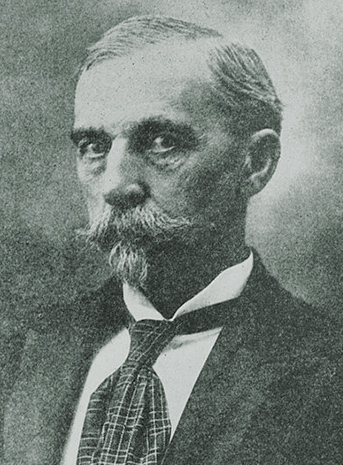
Rogers

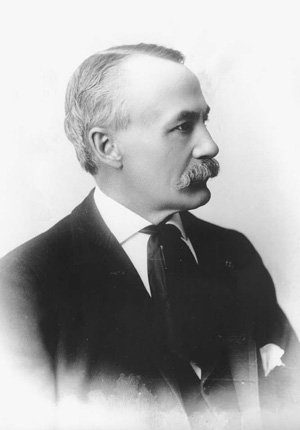
Washington Gov. John R. Rogers (1838-1901)

The SDA wasn’t just a political party trying to get off the ground, however. It was a dual organization, equally dedicated to demonstrating socialism by example through the formation of socialist colonies to promote socialist industry — with a view to socialist migration to a relatively unpopulated Western state such as Washington, where the influx of enthusiastic newcomers could win political control of the state.

That was the plan and it really wasn’t that far-fetched, at least on paper. The Governor of the state, John R. Rogers, was himself a member of the People’s Party, and he welcomed the effort.

Unfortunately, the two journalists and one construction engineer in charge of the SDA’s largely independent Colonization Commission were unequal to the task. Their eyes were “too big for their bellies,” as my old man used to say about gluttonous children: they became distracted with a series of grandiose crackpot schemes. A massive project constructing 75 miles of train tracks for the city of Nashville funded by government bonds… A multi-million dollar deal for 400,000 acres of land in Tennessee, to be underwritten by capitalists selling bonds backed by the value of the property… A tour of Georgia because somebody said there might be a good place for a colony there… A gold mine in Colorado, the 5% interest bearing bonds needed to make the deal possible to be financed by the metal (hopefully) to be mined in the near future….

The Colonization Commission of the SDA was, pardon my french, an absolute shit-show. By the time they refocused on the original plan, establishing a colony in Washington state with a view to taking over the state government, as the friendly rival Brotherhood of the Cooperative Commonwealth was already doing, it was already too late. The organization had split, enthusiasm had waned, and what little money had been raised for the effort had already been spent.

The SDA colonists reincorporated and changed their name to The Cooperative Brotherhood and played with log cabins in rural Washington for a couple years until the money ran out.

The end.

•          •          •          •          •

The June 1898 convention of the Social Democracy of America was a news story, but not a big one. It was the scene of a split. The political actionists, who favored a European style electoral Socialist Party, were frustrated with the stream of ridiculous schemes of the colonizationists. They claimed that the latter had packed the convention with a dozen hastily constructed new Chicago Local Branches, each with the minimum of five or maybe six members — thereby ensuring a focus on colonization for the organization.

The colonizationists, for their part (for what it’s worth), thought the political actionists were dangerous Marxists intent on violent revolution and sought their own peaceful, evolutionary path to socialism through practical example.
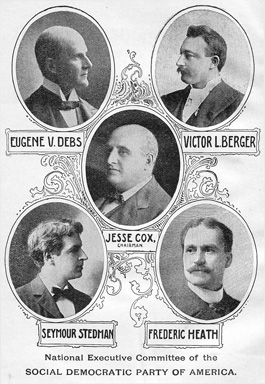
Social-democratic-party-1900necIt was a very unpleasant split. Debs did not like unpleasant splits, speaking temperamentally. Throughout his life, whenever the political heat of inner party politics came on, he managed to “get sick” — almost every single time. This was no different. While the others stayed up all night to form a new political party, the Social Democratic Party of America, Debs nodded his assent and went to bed. Debs not only wasn’t the leader of the 1898 split of the SDA — for a time it wasn’t even completely clear that he supported the decision. His brother Theodore was chosen as National Secretary of the SDP — a symbolic gesture if ever there was one. When push came to shove, Debs was not to be found.

Debs did write a few things for the new party press, but his heart was clearly not in the effort. A few platitudes for his friends. Rah rah, team. He basically took the summer off. Was EVD simply exhausted from his nonstop touring for all of 1896 and 1897? Demoralized by the way his “New ARU” not only failed to usher in the Cooperative Commonwealth in America, but rather split to bits upon the rocks of factionalism?

There is not enough information to answer this just now. But one thing is clear: during the summer of 1898 the relentless touring of Gene Debs suddenly stopped.

•          •          •          •          •

And here’s a weird little story. In the middle of September Debs made a quick trip to Toronto, where the Brotherhood of Locomotive Firemen were holding their annual convention. There was no SDP-related reason for him to go there, nor any big strike with organizers seeking his presence, nor was he up on charges for alleged financial malfeasance from his time as Secretary-Treasurer and needing to appear to make an answer, so far as I’m aware. After some bitterness and whispering about nepotism, Debs’s administration of affairs had already been certified clean by the brotherhood.

There was simply no reason for Debs to have been in Toronto at all in September 1898.

Then a few days later there appeared a wire story — apparently a leak to the press, unattributed information. Debs had wanted his old editorial job back or some other paid post with the B of LF, it was intimated. He had not been successful. No soup for you. His old railway brothers and their still prosperous organization had told him to get bent.

Was this news snippet true? Was it a case of imaginative reporting by a newspaper scrawler in need of a juicy story?

Again: there is not enough information to answer this question just now.

•          •          •          •          •

SDP-pinback-smWith fall in the air and elections around the corner, something unexpected happened: the Social Democratic Party of America began to get hot in Massachusetts. Maybe there was something to this political action idea after all… Debs published a brief notice that party members should get busy with the campaign and hurried off for the Bay state in support of the cause. Night after night throughout the end of October he hammered home the SDP’s message, speaking at Northampton, Holyoke, Worcester, Cambridge, and Boston.

The SDP actually scored some electoral wins, sending L.M. Scates and James F. Carey to the Massachusetts legislature. It was a feather in Debs’s cap — he had done his part.

But then the election was over. What was an unemployed labor agitator to do?

•          •          •          •          •

Although he had earlier sworn off lecturing for pay as unseemly, it appears that Debs decided to do exactly that. A tour of twenty, count them, twenty lectures were booked, almost all of which were in the state of Iowa. They were billed as being “strictly non-partisan” and admission was charged. They were not put on under the auspices of any trade union. It was a paid lecturing venture, by every indication.
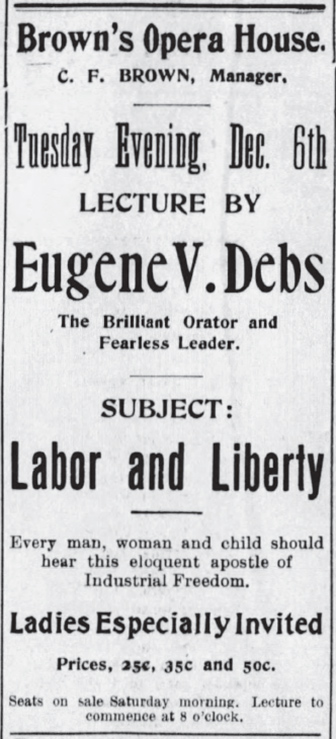
Debs-Iowa-adThe banality of the “Labor and Liberty” 1898 Iowa tour is apparent by its schedule:

  • Dec. 4. — Des Moines, IA
  • Dec. 5. — Marshalltown, IA
  • Dec. 6. — Waterloo, IA.
  • Dec. 7. — Clifton, IA
  • Dec. 8. — Dubuque, IA
  • Dec. 9. — Cedar Rapids, IA
  • Dec. 10. — Davenport, IA
  • Dec. 11. — Burlington, IA
  • Dec. 12. — Muscatine, IA
  • Dec. 13. — Ottumwa, IA
  • Dec. 14. — Creston, IA
  • Dec. 15. — Fort Madison, IA
  • Dec. 17. — Oskaloosa, IA
  • Dec. 18. — Mason City, IA
  • Dec. 19. — Eagle Grove, IA
  • Dec. 20. — Boone, IA
  • Dec. 21. — Council Bluffs, IA
  • Dec. 22. — Omaha, NE
  • Dec. 23. — Sioux City, IA
  • Dec. 24. — Fort Dodge, IA

Here’s the bad part for Debs: his debut paid lecture tour stiffed. Very few small town Iowans paid money to hear the famous (or infamous) labor orator do his thing.

As 1898 came to a close, Eugene V. Debs found himself adrift…


NewFiles

The deadline for Eugene V. Debs Selected Works: Volume 3 is October 15, 2018. I’m setting a soft deadline of August 1 to finish the document compilation phase of the project. This means there are now 21 more Saturdays after today to get the core content section of the book assembled, with a limit for publication of approximately 260,000 words.

  • “Speech at the First Convention of the Social Democracy of America at Chicago” [excerpt] — June 9, 1898 — 574 words
  • “‘The More I Think of the Outcome’ : Excerpt from a Letter to G.A. Hoehn” — July 9, 1898 — 108 words
  • “The Future” — July 16, 1898 — 409 words
  • “The Social Democratic Party and Labor Day” — Sept. 3, 1898 — 917 words
  • “To Our Comrades!” — Sept. 24, 1898 — 330 words
  • “Social Democracy” — Oct. 1, 1898 — 1,514 words.
  • “An End to War — A Start to Militarism” — circa Nov. 15, 1898 — 1,866 words

Total Words this week: 5,718 ******************* Total Words to date: 65,714

There appears to be far less extant Debs material for 1898 than there is for 1897. I will continue to work on the year one more week — by way of comparison, it took me three weeks going full out to finish 1897.

I spent a great deal of time typing up background material this week, including N. Lermond on the history of the Brotherhood of the Cooperative Commonwealth, Cyrus Field Willard’s report of the Colonization Commission to the 1898 Convention of the Social Democracy of America, key BCC activist G.E. Pelton’s December 1898 article declaring that the colony movement in Washington was in danger due to dwindling enthusiasm, the constitution of the Social Democratic Party of America, declaration of principles of the SDP, and like fare.

whatsnewinthelibraryz-

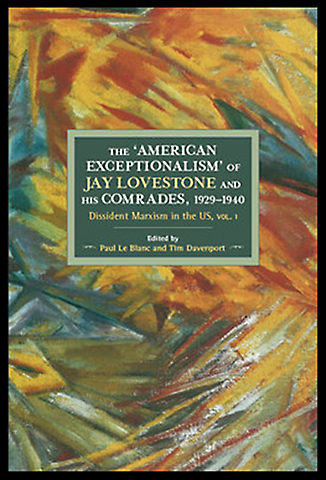
Lovestone★ Well, this one doesn’t have anything to do with Debs or the Gilded Age or the Progressive Era, but it does entertain me — a newly released paperback version of the 2015 edited volume that I did along with Pennsylvania history professor Paul LeBlanc. The title is The “American Exceptionalism” of Jay Lovestone and His Comrades, 1929-1940: Dissident Marxism in the US, Vol. 1.

Don’t blame me for that title, I didn’t do it.

This book is the very prolific Dr. LeBlanc’s baby — his concept was a series of five volumes exploring the ideas of five “dissident Marxist” (i.e., non CPUSA) political parties through their core documents and party press. As there are essentially zero academic experts on the Lovestoneites these days; and as I had very decent coverage of the group up on my www.marxisthistory.org website, with more documents already typed up and ready to rumble; and as I had rare primary source material in my collection as well as a decade’s worth of experience transcribing documents for print; etc., Paul made my acquaintance and we ended up doing this book.
380809-lovestone-sm

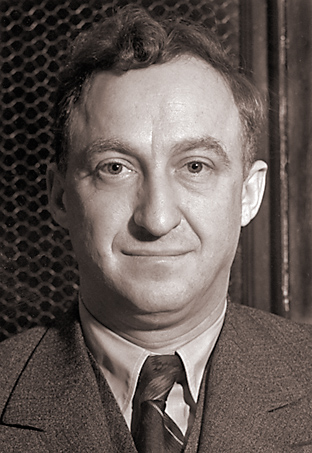
Jay Lovestone (1897 – 1990)

It was a real learning experience for me and I’m thankful for having done it — even though I’d grade the effort D-plus and difficult to dance to… Paul had massive book-creating experience and connections in the left wing publishing world, allowing me to ride along and learn how things work.

Would I be doing this series of Debs books if I had never done this one? Probably not. Would I have been smart enough to deal directly with Haymarket Books instead of fiddle-fritzing around with certain other unnamed publishers whom I am trying hard not to swear about? Not a chance.

If you haven’t figured it out already, this project proved the source of frustration and bitterness on my part with regards to the hardcover edition’s publisher, who ran all the documents through the “house style” meatgrinder, making the Lovestone crew sound like they were from Great Britain — and making me in my One Real Chapter sound not only British, but illiterate. Not that my prose are great, but seriously — that copyediting is horrid. They actually introduced a typo that I wouldn’t have made typing drunk… It was galling. I bailed.

Paul (bless his heart) got it more or less fixed, but they still managed to put fricking British punctuation in the book’s title, for example. (Idiots!) Then they priced the thing at $237, a clever marketing strategy that allowed them to sell approximately 33 copies during the first year. I am not making those numbers up, sadly. And then instead of a projected one year for the paper to appear, it took more like two and a half…

Anyway, now it’s finally out in paper from the Chicago-based Haymarket Books, who are every bit as swell as certain Dutch academic publishers are stupid. The cover price is $36 and Haymarket runs things perpetually at 30% of the cover price through their website and also throws in free shipping on orders over $25 — so for $25.20 you can have this 700 page monstrosity in your mailbox. That’s good value if radical esoterica appeals.

And now, finally, I can try to chill out.

CLICK HERE to order a copy.
Posted in Uncategorized | Leave a comment

Miners, Massacres, and Math (18-04)

lattimer-header

Striking immigrant coal miners march to their doom near Hazelton, Pennsylvania, Sept. 10, 1897.

Although 1897 was one of the most important years in the life of Gene Debs, the available documentary sources are scarce. In the nearly 1800 pages that comprise Bob Constantine’s Letters of Eugene V. Debs, there are just two items from all of that year (plus the first half of 1898!), one letter and one telegram. No copies of the circular letters of the American Railway Union from the year survive, nor do minutes of its board of directors, nor internal documents of the state or local units of the organization. The same can be said for the Social Democracy of America which emerged in its aftermath — no stenographic record of its convention, nor minutes of its executive, nor internal communications to its members, nor documents of its local units. Nothing.

It’s an enormous black hole.

Historians are limited to newspaper accounts to attempt to deduce what happened and why. This is highly imperfect, to say the least, as political organizations tend to “put their best foot forward” (putting things mildly), hyping things like new local organizations formed and membership growth while ignoring internal dissension, local groups folding, and membership attrition.

On top of this there is the problem of sensationalized news coverage, sloppy or inept transcription, uneven coverage of public speeches and statements, and the fact that some material which appeared in print in smaller newspapers has been subsequently lost to time. None of this lends itself to accurate understanding of the internal realities of the organizations being studied.

With respect to the short-lived Social Democracy of America, all of this is a real problem. One must do the best one can with what one has. Maybe there’s something in an archive somewhere, but I’m certainly not seeing any traces of it.

  •          •          •          •          •        

The case of the Lattimer Massacre of September 1897 presents a really interesting historical question of its own.

Almost all of the big, bloody strikes of the late 19th and early 20th century have been studied to death by labor historians, with multiple journal articles, dissertations, and books. The archives have been probed, analysis has been made, and while one must always keep a finger to the wind for the biases of each historian and examples of tendentious or unfairly skewed coverage, in general it is a known and charted world.

The summer of 1897 was marked by a huge nationwide strike of coal miners over tumbling wages — a strike in which Gene Debs had become involved at the invitation of mineworkers’ union officials, touring West Virginia and Pennsylvania and using his five star oratorical skills in the attempt to make isolated work stoppages more general and to thereby force mine owners to the negotiating table for the adoption of a more equitable universal wage scale.

Scan 2

Murdered striker Mike Cheslak and his surviving family.

On September 10, 1897, a few hundred striking miners, almost all Slavic or Baltic immigrants — coal mining was a difficult and dirty job that paid poorly, and new immigrants to America were the most apt to accept such miserable conditions and remuneration — marched in the hot summer sun from their village of Harwood to the Lattimer mines on the northeast side of the neighboring town of Hazelton, six miles away. The strikers were attempting to call out their fellow immigrant miners to join the strike.

The marchers were met by Luzerne County Sheriff James L. Martin and a posse of about two dozen heavily armed and poorly trained deputies, Winchesters at the ready and spoiling for a fight. A scuffle ensued. The deputies opened fire, shooting to kill. There were bodies everywhere and dozens of wounded miners were dragged away by their comrades. It was a catastrophe.

So how many died? If you zip around the internets, you see the same number again and again: 19…… 19…… 19…… 19…… 19…… 19…… 19……

Where does that come from?

There’s exactly one book on the topic, written by an author who declares not once but twice that he is “not a historian.” Michael Novak (1933-2017) was rather a theologian and philosopher, the author of 40 books, including The Guns of Lattimer, a footnote-free work published by Basic Books in 1978 which does not cite the one dissertation on the topic. He said the body count was 19.

How did he come up that number? I’m glad you asked.

“Lists made in 1897-98 show many discrepancies in numbers, persons, and spellings. Often they confused the hospitalized wounded with the dead or dying. The above list [of 19 surnames] is based upon known gravesites.”

Known gravesites?!?

You have got to be kidding me. No serious historian — let me emphasize that: NO SERIOUS HISTORIAN — would use that methodology to generate a body count. I’ll take the list of 21 people in the New York Herald, Sept. 12, 1897, page 3 myself, which provides first and last names, age, and cause of death in a big list. If you want to supplement that with additional “known headstones” — presumably of those who were taken from the scene wounded and who subsequently died — that’s completely reasonable methodology.

The number 25 would be in the ballpark, it would seem. I haven’t worked it through.

P.S. The deputies were acquitted of all charges in court. Some things never change.

  •          •          •          •          •

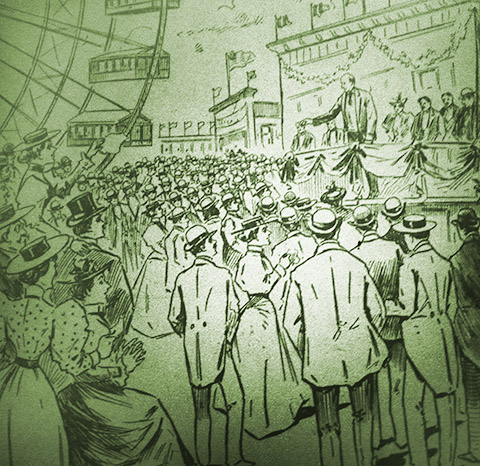
Here’s a little snippet of Debs doing his thing at Ferris Wheel Park in the summer of 1897. It gives a pretty good feel for his core religiosity.

debs-at-ferriswheelpark-sm

Debs speaks at Ferris Wheel Park in Chicago, July 17, 1897.

“There are two social and economic systems which have been conflicting since the morning stars sang together and the son of God shouted forth their joy. Under one system the few have enjoyed the fruits of the earth and the masses have been doomed to serve as beasts of burden. The beneficiaries of this system believe, for the most part, and honestly, that a system under which the few rule and the masses toil and submit to their masters in silence is on the whole a good system. It is a system, however, which has filed the world with unspeakable woe, and it is needless to say that it is under this system we now live. There is another system under which there is no favored class, no special privileges, where the earth and the fullness thereof becomes the heritage of the common people. (Applause.)

“Under this system economic freedom will be established and the brotherhood of man will be inaugurated. The most ardent supporters of the present system are bound to admit that it is a disastrous failure. On the one hand it has produced thousands of millionaires and upon the other its millions of mendicants, and this process is in operation during all the circling hours of the day, the week, the month, and the year. There are those who believe, and I am among them, that the time has come to supplant this system with the cooperative system under which men shall work together for the common uplifting of our common humanity.” (Cheers.)


NewFiles

The deadline for Eugene V. Debs Selected Works: Volume 3 is October 15, 2018. I’m setting a soft deadline of August 1 to finish the document compilation phase of the project. This means there are now 22 more Saturdays after today to get the core content section of the book assembled, with a limit for publication of approximately 260,000 words.

  • “Letter to the Editor of the New York World” — June 15, 1897 — 291 words
  • “A Political Movement: Statement to the Milwaukee Daily News” — c. July 7, 1897 — 934 words
  • “The Power of Money Rules the Country: Speech at Ferris Wheel Park, Chicago” — July 17, 1897 — 3,496 words
  • “The Duty of the Hour” — Oct. 4, 1897 — 452 words
  • “Telegram to the Seattle Post-Intelligencer” — Nov. 26, 1897 — 85 words
  • “Introduction to Robert Blatchford’s Merrie England” — Dec. 1, 1897 — 516 words
  • “Capitalism Hurts People Physically: Speech at Atlanta Federation of Trades Hall” [excerpt] — Jan. 8, 1898 — 641 words
  • “To the Members of the Social Democracy of America” — June 16, 1898 — 1,678 words

Total Words this week: 9,882 ******************* Total Words to date: 59,996

I also managed to locate and finish typing up the constitution of the Social Democracy of America for background and managed to sling a couple thousand words towards a Volume 3 introduction.

whatsnewinthelibraryz-

merrieengland

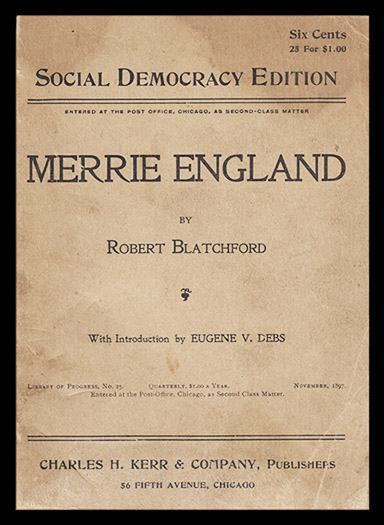
★ Not exactly a new acquisition, but a new discovery in my pamphlet boxes… I was typing up a short report of a Debs speech this week and it reported him making a clear plug to his audience to spend “six cents” to buy a copy of the book Merrie England. “That’s a really weird price,” I thought, “I wonder what that’s about?”

I have probably about half a dozen copies of Merrie England, which was regarded as a socialist classic during the 1890s and which was frequently reprinted. Lo and behold, I have an edition of the 190 page paperback with the really weird price of exactly six cents — featuring an introduction by none other than Eugene V. Debs!

That, my friends, is called a major score…

Scan 1


Posted in Uncategorized | Leave a comment

The Brotherhood of the Cooperative Commonwealth (18-03)

header

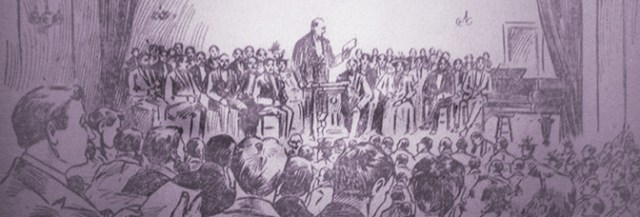
Debs addresses the founding convention of the Social Democracy of America, June 1897.

One error of mine that I’ve discovered over the past couple weeks relates to the founding of the Social Democracy of America by Debs and his Woodstock Jail and American Railway Union associates Sylvester Keliher, James Hogan, Roy M. Goodwin, and William E. Burns. I had previously believed that the organization was formed through merger with the socialist colonist organization known as the Brotherhood of the Cooperative Commonwealth. In reality, these remained two distinct groups working in close alliance during 1897 and the first half of 1898. Full organic unity was never achieved.

The Brotherhood of the Cooperative Commonwealth (BCC) was organized in September 1896, with three stated objectives: (1) to educate the people in the principles of socialism; (2) to unite all socialists in a single “fraternal association;” and (3) to establish cooperative colonies and industries “in one state until said state is socialized.” As such it reflected almost perfectly Debs’s own perspective on strategy and tactics at that particular moment. He, however, remained committed to the atrophying and dying American Railway Union until the last moment — even when the BCC attempted to draft him into their organization by naming him their national organizer, there is no evidence that he took the first step in this regard.

Reed

Rev. Myron W. Reed (1839-1899)

During the first few months of 1897, we recall, Debs spent about ten weeks touring the states of the Mountain West at the invitation of the Western Federation of Miners, which was then embroiled in a long and bitter strike of the silver mines of Colorado. One of the places at which Debs spoke — on the afternoon of Jan. 10, 1897, to be completely precise — was at the Denver church of Myron W. Reed (1839-1899), regarded as one of the foremost Christian socialists in America. Reed was also, not coincidentally, the President of the BCC, and it is certain that he and Debs had at some point a deep discussion and a meeting of the minds, as Debs quickly evolved the idea that his moribund industrial union should be transformed into an explicitly socialist organization with an altogether similar program. It was hoped that the two groups would formally join forces in the near future.

•          •          •          •          •

In the spring of 1897, Debs began teasing the idea that a forthcoming special convention of the ARU, called for a June 15 start in Chicago, would be an eventful gathering. It would be, indeed, with the ARU going into session just long enough to wrap up its affairs and shut itself down before reconvening in a larger hall under a new banner — that of the Social Democracy of America. Not coincidentally, the officials of this new organization would be the same as those of the old: a “Woodstock Mafia” of Debs, Keliher, Hogan, Goodwin, and Burns.

Berger

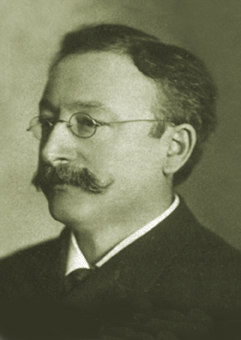
Victor L. Berger (1860-1929)

But this was a new organization, too, and it attracted fairly massive and enthusiastic coverage in the American daily press. Loyalists of the Socialist Labor Party of America — far and away the biggest and most influential Marxist political party in the United States — were on the scene, as was Victor Berger (1860-1929), a former schoolteacher and German-language socialist newspaper publisher from Milwaukee. Independent radicals from Chicago and elsewhere were there, too, including Lucy Parsons and a circle of likeminded revolutionary socialists (called “Anarchists” in the lingo of the day) from Chicago.

The program of the new organization was muddled. On the one hand, it posited that the trade union struggle was ultimately fruitless, with the armed force of the state and the entire judicial system in the pocket of capital. Only a capture of the state through the ballot box and transformation of the entire political and judicial structure would make just change possible. It also sought to advance the rather contradictory agenda of transformation by economic example, though the formation of a connected set of cooperative colonies in a single, sparsely-populated state in the West, which would attract a massive influx of people of good will. The political “take over” would start small, in this one place, inspiring emulation which would ultimately result in a victory at the Congressional and Presidential level and a new constitutional convention that would usher in the socialist millennium.

It sounded good on paper. In real life: not so much. There were plenty of people to go to meetings, but coming up with sufficient capital to fund communal cooperation was a bit more difficult.

Regardless, the effort was made. The founding convention of the Social Democracy of America established a three member “Colonization Commission” consisting of one civil engineer — Richard J. Hinton of Washington, DC — and two journalists. These were Cyrus Field Willard of Boston, editor of The New Time (the monthly forerunner of International Socialist Review published by radical Unitarian Charles H. Kerr), and W.P. Borland of Bay City, Michigan, a prolific socialist propagandist.

The relationship between the SDA and the BCC was close but remained independent. The actual leader of the BCC was not Reed, who was largely a figurehead, but rather the group’s Secretary, Norman Wallace Lermond (1861-1944) of Thomaston, ME. Lermond paid a visit to Chicago in anticipation of the ARU convention and had additional talks with Debs, building an almost embarrassing enthusiasm in him for the colonization idea as the be all and end all of the movement, a giddy glee that lasted about six weeks, judging by the published record.

•          •          •          •          •

tribune-branch1

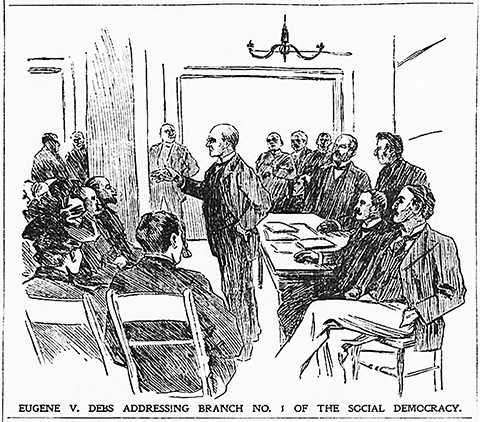
In the September 1897 faction fight between moderate Chicago Local Branch No. 1 and radical Local Branch No. 2, Debs came down forcefully on the side of the former.

There would be infighting in the SDA — the battle between the revolutionary left and the reformist center in the American socialist movement predated the organization by almost a generation, and it unsurprisingly reemerged within months of establishment of the new organization. The pretext for a purge related to certain inflammatory resolutions passed by Chicago Local Branch No. 2 calling for physical retaliation against capitalists and their property in the aftermath of the Lattimer Massacre — a premeditated bloodbath in which 21 striking coal miners were shot to death (and dozens more wounded) by a county sheriff’s posse.

The massacre took place on September 10. Branch 2 passed it resolutions on September 12. The President of moderate Branch 1 made a similar pronouncement to the press on September 12 — which he expeditiously retracted when it made print. Debs wrote an editorial on September 12 which he mailed out to certain newspapers provocatively declaring “Were I not unalterably opposed to capital punishment I would say that the Sheriff and his deputy assassins should be lynched.”

Then on September 18 Debs presided over the 4 hour midnight meeting of the SDA executive which drummed Lucy Parsons and her Branch 2 comrades out of the movement. It’s a dirty little episode of sectarianism and opportunism that really hasn’t been previously documented in the literature.

•          •          •          •          •

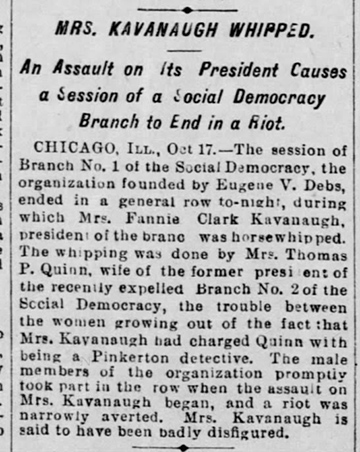
spicyHere’s another good little story. At a regular Sunday night meeting of Local Branch No. 1 in October 1897, the President of the branch disparaged the President of now-expelled Local Branch No. 2, falsely claiming that he was a Pinkerton agent. Those were fighting words, and the wife of the defamed head of the expelled revolutionary socialist group apparently went after the Branch 1 chief with a buggy whip, with at least some success. A near riot ensued, as one might imagine.
Bad blood, bad blood.

•          •          •          •          •

The BCC, which regularly published exact figures, recorded 2,268 paid members in 135 “Local Unions” as of the end of July 1897, with the fledgling SDA adding an unspecified number of additional members in “Local Branches” scattered across 16 states. Coming in the wake of the ARU — which consistently exaggerated its membership figures on the way up and suppressed discussion of them on the way down — the SDA never matched the openness of the BCC. I’ve never seen anything that resembles an honest tally of actually paid membership for the group. In round numbers, 10,000 would probably not be a bad guess.

Ultimately Debs was swayed by the cynical sniping of the SLP (he read their newspaper, his scrapbooks indicate), the ongoing criticism by Berger and the Milwaukee crew, and the realization that no great wave of funds was coming to enable the purchase of a vast tract of land and the establishment of socialist industries thereon. Debs moved back into a more conventional political channel. Nor did he give up on trade unionism, for all the defeatist bluster, spending the second half of 1897 agitating in conjunction with a massive coal mine strike that captivated the nation — which is part 3 of the “Debs in 1897” saga.


NewFiles

The deadline for Eugene V. Debs Selected Works: Volume 3 is October 15, 2018. I’m setting a soft deadline of August 1 to finish the document compilation phase of the project. This means there are now 23 more Saturdays after today to get the core content section of the book assembled, with a limit for publication of approximately 260,000 words.

  • “‘No Hope Except Through the Back Door of Suicide’ : Speech on the Coal Strike at Wheeling, West Virginia” — July 26, 1897 — 2,724 words
  • “Open Letter and Call for National Miners’ Day” — July 28, 1897 — 521 words
  • “The Social Democracy” — Aug. 1, 1897 — 1,228 words
  • “‘It is Something More Than a Strike’ : Speech in Chicago at Kuhn’s Park” — Aug. 1, 1897 — 4,276 words
  • “‘Reduced to a Walking Hunger Pang’ : National Miners’ Day Speech at the Duquesne Wharf” — Aug. 5, 1897 — 1,534 words
  • “Labor Day is Near at Hand” — Aug. 28, 1897 — 1,452 words
  • “Statement to the Press on the Forthcoming St. Louis Conference of Labor Leaders” — Aug. 28, 1897 — 228 words
  • “To the Hosts of the Social Democracy: A Message for Labor Day” — Aug. 30, 1897 — 2,874 words
  • “‘I Plead Guilty to Being a Radical’ : Speech to the St. Louis Conference of Labor Leaders” — Aug. 31, 1897 — 1,705 words
  • “The Lattimer Massacre” — Sept. 12, 1897 — 882 words
  • “Statement to the Press Regarding the Suspension of Local Branch No. 2, Social Democracy of America” — Sept. 19, 1897 — 452 words
  • “Keynote Speech to the Chicago Conference of Labor Leaders” — Sept. 27, 1897 — 469 words
  • “Workingmen and Social Democracy” — Oct. 28, 1897 — 2,160 words
  • “The Indiana Coal Miners” — c. Nov. 30, 1897 — 366 words

Total Words this week: 21,022 ******************* Total Words to date: 50,114

I also typed up for background a major section of the constitution of the Social Democracy of America and a lesser 1,200 word version of the Aug. 31 St. Louis speech that will end up on the cutting room floor.

whatsnewinthelibraryz-

reed-book

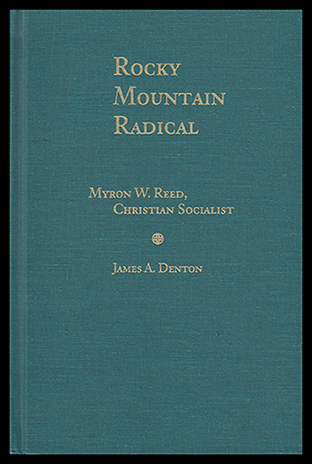
★ Rev. Myron Reed, one of the preeminent American Christian socialists of the late 19th century, was the President of the Brotherhood of the Cooperate Commonwealth during its early optimistic phase and was a key figure in winning Gene Debs over for the idea of colonization, however briefly. This book by James A. Denton, Rocky Mountain Radical: Myron W. Reed, Christian Socialist was actually published back in 1997 but seems to have been recently dumped on the market by University of New Mexico Press, as copies are cheap and plentiful at the moment. The timing of their catalog deletion is thus excellent for me, as this book is a fairly essential source for my background reading on the BCC and Debs.

I’m a little bit disappointed by the lack of graphics as I’m going to need to come up with a useable copy of a good Reed portrait for volume 3. The picture of Reed at the top of this blog I heisted from elsewhere on the internets, so I reckon I will just have to follow that one back to its source for permission to publish. Using the image in a shitty little blog that nobody reads, no issue — a book, rather more.

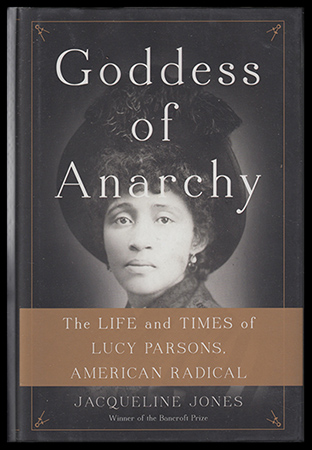
Jones★ Also tangentially related to the 1897 Debs  story is this new biography about revolutionary socialist orator Lucy Parsons. This 2017 book is actually the second full length biography on Parsons, the multiracial widow of Haymarket martyr Albert R. Parsons — the chief target of the trial that decapitated the leadership of the Chicago radical movement. Parsons was a prominent member of Chicago Local Branch No. 2 of the Social Democracy of America from the time of its founding and was one of the five leaders of the branch that were called on the carpet and ultimately expelled in the aftermath of the Lattimer massacre by Debs and the executive of the SDA. This appears to be a well-crafted book and I look forward to exploring it in the coming week. There is at least some coverage of the 1897 Social Democracy of America affair, judging by the index.

publishingupdate-header

Volume 1: Building Solidarity on the Tracks, 1877-1892 is now going through the editing process at Haymarket, with Amelia Iuvino crushing commas and perfecting prose as our copyeditor. Nisha Bolsey is our general project manager and point of contact with the Haymarket editorial board. The book will be released in both hardcover and paperback formats sometime in 2018.

Volume 2: The Rise and Fall of the American Railway Union, 1892-1896 (unofficial title) is completed and is in house with Haymarket. It should appear in both formats late in 2018 or early in 2019.

• There is still no decision on our eleventh hour request that the Debs Selected Works include a sixth volume. If the project remains set for five volumes, Volume 3 will probably be for the time interval 1897-1907. If a sixth volume is granted, the most likely period is 1897-1904.

• In an ideal world, I think Haymarket would like to publish one volume each season (two books a year), but since the compilation and writing process takes more than six months there will almost certainly be a couple “empty” seasons. However, I am going to try to slam and get the interval between manuscripts down from a planned 12 months to 9 or so with a view to speeding this project towards the finish line.

• I’m actually starting to think about what I want to do when the Debs Selected Works are finished — although that is several years away. A new Debs biography while the material is fresh in my memory is one potential play. If I decide to leave Debs I’m pretty certain that I want to do a hefty one book treatment of the Morris Hillquit Selected Works before turning my attention to a planned three volume magnum opus on American radicalism, 1916-1924.

Posted in Uncategorized | Leave a comment

Colorado Miners and Cooperative Colonies (18-02)

97header

posted Feb. 10, 2018

The activities of Eugene V. Debs in 1897 are particularly fascinating to me. Debs publicly declared himself a socialist during the very last days of 1896, and news that the controversial labor leader was leaving the People’s Party (the so-called “Populists”) to make his way as a “straight socialist” swept the wires over the first two weeks of January, with the news making print in scores of newspapers around the country. Debs had only fairly recently left the Democratic Party for the Populists and the Brotherhood of Locomotive Firemen for the American Railway Union, you will recall, so rumblings began to be heard that Debs was a fickle flounderer racing from movement to movement in an unsatisfying search for basic principles.

The trend of jumping from organization to organization would only continue through the next decade — a period of time which would see him closely align with the Western Federation of Miners and the Brotherhood of the Cooperative Commonwealth, lead his American Railway Union into merger with the BCC to form a new colonization group called the Social Democracy of America, join a split of the SDA to help establish a new political party called the Social Democratic Party of America, squabble over unity efforts before becoming a founder of the Socialist Party of America, help publicize the American Labor Union, move with the ALU into the Industrial Workers of the World, and leave the IWW to become an independent commentator on the labor movement.

The years of his early- and middle-40s were a period of seeking, searching, thinking, and building for Gene Debs. His biographer Nick Salvator has a rather more harsh interpretation, more along the lines of “clueless and floundering.”

•          •          •          •          •

Home at last from his relentless touring in support of Democratic-Populist fusion Presidential candidate William Jennings Bryan, Gene Debs found he had a surprise visitor for Christmas 1896 — Edward Boyce (1862-1941), President of the Western Federation of Miners. We are accustomed to think of the WF of M as a union; it was not, but rather an umbrella organization of affiliated local miners’ unions, just as the American Federation of Labor is an umbrella organization of affiliated craft unions.

leadville

At an altitude of more than 10,000 feet, Leadville (“Cloud City”) remains the highest elevation incorporated town in America.

Boyce had a favor to ask of the ARU chief: there was an expensive and increasingly violent strike in need of resolution in the mining town of Leadville, Colorado — a place where Boyce had himself labored in the mines for four years previously. As the Panic of 1893 hit a double dip recession in 1896; unemployment remained at double-digit levels, business closings swept the land, and commodity prices such as that for silver had fallen precipitously. Mining was distinctly less profitable than it had been and some local operators used the bad economy and weak bottom line as an excuse to slash wages, one after another reducing the basic daily  rate for a Leadville miner from $3 a day to $2.50. Those who had not moved the scale were threatening it.

Feeling themselves unable to live on $2.50 a day in the comparatively costly community of Leadville (then the second largest town in Colorado after Denver, believe it or not) miners sought a restoration of the $3 daily rate, or at least make such a case to an impartial board of arbitration. The mine operators would neither budge on the wage rate or the matter of arbitration — and  suspicions were rife that this intransigence was a mere pretext for the real object: busting the union. The result was a massive strike that lasted for months.

Boyce decided to reach out to Debs in the hope that he would pay the town visit, make a speech or two, and see if he could help bring the strike to a more or less successful conclusion.

LeadvilleGuard

The Colorado National Guard was called out during the Leadville Mining Strike of 1896-97

Debs came, Debs saw, Debs spoke.

Debs ended up spending two months on the road with Boyce throughout the West in an effort to publicize the miners’ plight. It was all for naught. The miners didn’t heed the advice of either Debs or the Governor of the state by agreeing to a compromise wage scale based on the market price of silver. The costly work stoppage (every member of the WF of M was paying $1 a month for strike relief) festered for another several months, by which time the offer was off the table and the union came away with nothing.

The Western Federation of Miners would end up being radicalized by the affair, eventually emerging as the American Labor Union — one of the chief movers for establishment of the Industrial Workers of the World. So the story of this somewhat forgotten Colorado mining strike popping up at the beginning of Volume 3 does eventually come around full circle by the end of the book.

•          •          •          •          •

Here’s a Debs anecdote that I had never previously heard. On January 27, 1897, Gene and Ed Boyce were sharing a horse-drawn buggy, riding down Gold Hill in Leadville. Suddenly, something spooked the horses and they bolted down the rugged trail, the cart wildly bouncing behind. Both Debs and Boyce were knocked from the buggy, fortuitously, it would seem, as the panicked horses soon smashed the small cart to pieces racing over jagged rocks beside the road. Neither Gene nor Ed was hurt, but they both could just as easily have been seriously injured or killed.

Being dead in a buggy wreck would have been quite the career ender for EVD.

•          •          •          •          •

While Debs was getting involved in the Western hard rock miners’ movement, his mind was wandering in a vaguely parallel direction. He started moving towards Utopian Socialism — the idea that like-minded individuals could band together in a cloistered, non-exploitative community, and through their joint, cooperative efforts, raise manna from dirt clods while living in log cabins. Actually, their vision was more pretty than that, but the reality of the situation is as I have drawn it up — agricultural pioneering is an arduous, tedious task performed with dismal physical accommodations. Not exactly an optimum situation for middle class intellectuals, no matter how pure their motives…

Still, Debs became obsessed with the notion. A few successful colonies would inspire mass emulation, and together the colonists could exert political weight at the state level, taking over state government and using tax policy to put wealthy exploiters out of business, to make way for a return to honest, small-scale economy.

Returning to Terre Haute from a trip as a guest of the Western Federation of Miners to its 5th Annual Convention in Salt Lake City late in May, Debs met with Norman Lermond (1861-1944), National Secretary and leading spirit of the Brotherhood of the Cooperative Commonwealth (BCC) in Terre Haute to discuss possible joint action in establishing  socialist colonies. The BCC had favored a location in Tennessee or Arkansas, sufficiently rural that land prices were not exorbitant; Debs had in mind the newly minted state of Washington, which had only come into the union in 1889 and which not only had cheap land but which was relatively unpopulated and thus ripe for political takeover if thousands of unemployed workers could be persuaded to move across the country to join the socialist colony movement.

A special convention of the now moribund American Railway Union had already been scheduled June 15 in Chicago; Lermond agreed to postpone any further search for land in the Southeast pending the outcome of the Chicago conclave……….

[to be continued…]

NewFiles

The deadline for Eugene V. Debs Selected Works: Volume 3 is October 15, 2018. I’m setting a soft deadline of August 1 to finish the document compilation phase of the project. This means there are now 24 more Saturdays after today to get the core content section of the book assembled, with a limit for publication of approximately 260,000 words.

  • “The Individual vs. Socialism” — Jan. 6, 1897 — 378 words
  • “‘I Am With the Miners in Their Present Trouble’ : Speech in Leadville, Colorado” [excerpt] — Jan. 13, 1897 — 2,393 words
  • “Questions and Answers: Speech to Striking Miners in Leadville, Colorado” — Jan. 14, 1897 — 2,487 words
  • “‘The World is Not Right’ : Speech in Butte Montana” — Feb. 8, 1897 — 3,760 words
  • “Special Convention Forthcoming: From ARU Circular Letter No. 3 (1897)” [excerpt] — April 1, 1897 — 133 words
  • “Strike Lessons: A Dispassionate Review of the Great Leadville Struggle” — April 5, 1897 — 1,505 words
  • “The New Commonwealth: Letter to the New York Journal” — April 16, 1897 — 970 words
  • “‘The Constitution Says People May Bear Arms’ : Statement to the Press in Salt Lake City” — May 11, 1897 — 512 words
  • “The Coming Republic: Letter to the New York Journal” — May 30, 1897 — 2,260 words
  • “Lesson of the Great Leadville Strike” — May 31, 1897 — 1,088 words
  • “A Bright, Happy Spot in Civilization: Interview with the Chicago Chronicle” — June 14, 1897 — 1,023 words
  • “Opening Address at the Special Convention of the American Railway Union in Chicago” — June 15, 1897 — 4,131 words
  • “‘All That Will Be Done is To Perhaps Change the Name’ : Statement to the Chicago Inter Ocean” — June 16, 1897 — 343 words
  • “‘The First Colony Will Be Composed of Picked Men’ : Interview with the New York World — June 16, 1897 — 466 words
  • “‘Farmers Will Form the Vanguard’ : Statement to the Chicago Chronicle” — June 18, 1897 — 357 words
  • “Interview with James Creelman of the New York Journal” — June 18, 1897 — 4,471 words
  • “Open Letter to John D. Rockefeller” — June 19, 1897 — 497 words
  • “Closing Speech at the Founding Convention of the Social Democracy of America in Chicago” [excerpt] — June 21, 1897 — 413 words
  • “Letter to the Editor of the Chicago Tribune” — June 21, 1897 — 316 words
  • “‘The Hour Has Struck to Call a Halt’ : Call for the St. Louis Convention of Coal Miners — Aug. 23, 1897 — 656 words
  • “‘We Cannot Hope to Succeed by Violence’ : Speech to Branch 1, Social Democracy of America” — Sept. 19, 1897 — 931 words

Words this week: 29,092 * * * * * * * * * * Total words to date: 29,092

I also located and made a 1,200 word addition to a piece from Volume 2 and tagged and typed up a 1,550 word Chicago Record news story for background.

whatsnewinthelibraryz-

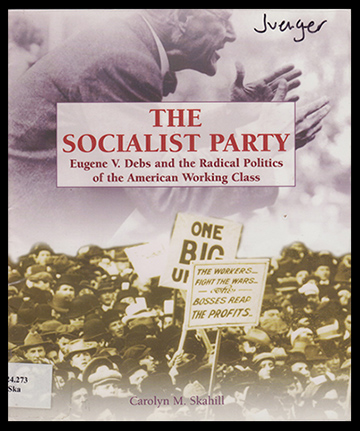
skahill★ I usually hate hate, hatey hate, hate hate hate to add books to my shelves that have formerly been in public libraries. They are damaged beyond collectibility and sometimes even beyond use with stickers and stamps and cemented borrowers’ cards and marked pages and underlining and damaged bindings and what have you. But I tell you, this particular addition to the book hoard is especially cool precisely because it has ex-library markings showing!
The title is The Socialist Party: Eugene V. Debs and the Radical Politics of the American Working Class, by Carolyn M. Skahill, a self-described “freelance writer.” Published in 2006 and barely moving the scales as a 32 page pamphlet, at a glance you just KNOW that this is unacademic fluff. Ah, gloriously so, gloriously so — for you see, this turns out to be a children’s book with about 16-point type and a vocabulary seemingly targeted to precocious third graders. As such it is a fascinating thing to behold.

inside

As to content: hey, a couple little mistakes here and there but an altogether passable job of telling the big story of the rise and fall of the Debsian Socialist Party. I mean, jeez, the author name-checks the Conference for Progressive Political Action and the Non-Partisan League, for goodness sakes, and this in a book that also tells us to pronounce those big words “KAHM-yuh-nist” and “SOH-shu-list PAR-tee.” That’s absolutely fantastic, is it not? I’ll betcha twenty bucks that the author used my www.marxisthistory.org website very heavily in producing this little book (freelance writers dropping in on a topic aren’t otherwise apt to pick up that the CPPA and the NPL were even things, after all), but alas, no printed credit for me — which makes an otherwise jolly Santa slightly sad. That truly would have been the bleached-and-food-colored cherry on top of the ice cream sundae…

“Leftists are people who generally oppose war, push for political change to broaden freedoms, and want to improve the status of the common man.” (pp. 18-19). Bingo.

So, yeah, the ex-library damage is in its own way glorious. This copy hails from an actual elementary school library in Bothell, Washington… (Bonus points: I used to live in Bothell, a suburb of Seattle, for a year.) Of course, it would be better if it was still part of that elementary school library instead of being deaccessioned, but it just goes to prove what I’d be happy to tell you about librarians…

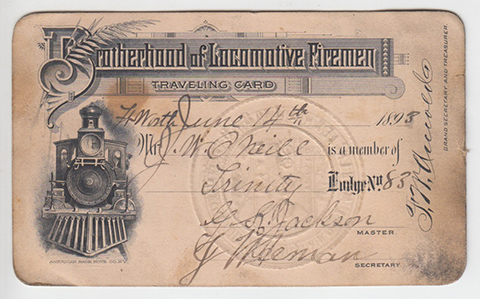
travelingcard★ Speaking of cool Debs-related ephemera, I managed to score a Brotherhood of Locomotive Firemen “traveling card” from eBay this past week. It is dated June 1893, so I just missed having the Debs facsimile signature by a few months (he refused re-election as Secretary-Treasurer in September 1892, which is when this card blank would have been printed), but still a very slick item from the time when EVD was still editing the brotherhood’s monthly magazine.
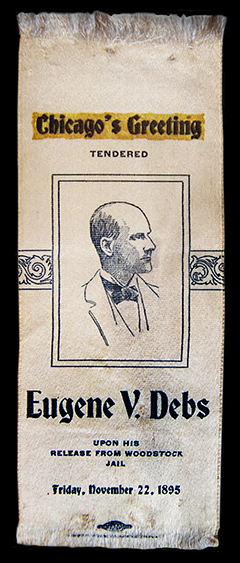
Traveling cards, as I understand them, were issued to members who were on the road a great deal so that they could attend the otherwise closed meetings of local lodges in other towns as the occasion presented itself. They were issued annually and according to the printed conditions on the back they were supposed to be returned to the issuing lodge for destruction at the end of that time. This probably helps explain why there are so few of them around. For the record, this ran me about $20. A card with a Debs signature instead of Frank Arnold’s could easily have punched through the $100 barrier.

Labor ephemera collector Vince Kueter says I got a good deal.

Posted in Uncategorized | Leave a comment

Two down, three or four to go… (18-01)

ARUCards-header

It has been a few months since I’ve had time to work on the site. I discovered that being able to debrief once a week is very helpful for the compilation phase of the work but a detriment to the nitty gritty of editing.

The project started as a four volume thang but the publisher agreed to split the early, pre-socialist material into two volumes, one of which deals with the Brotherhood of Locomotive Firemen material and the second of which deep-dives into the American Railway Union material from late 1892 to 1896. Both of those manuscripts are now in house, the first being copyedited currently. They will release six months apart.

Work now begins on the socialist phase, starting Jan. 1, 1897. We’ve pitched for a fourth volume of the socialist material — which would further extend the five volume series to a sixth volume — and are still waiting to hear from the Haymarket editorial board as to whether they want to commit to doing that. It’s about a 50-50 probability, in my estimation. The project is already pretty huge from a publishing perspective, as each volume is going to be about 750 pages in print.

The title of the first volume is now finalized: Volume 1: Building Solidarity on the Tracks, 1877-1892 is the winning name. The suggestion was the publisher’s and it is totally fine with both David and me. A little more “action packed” than the more mundane title that I favored, Volume 1: The Brotherhood of Locomotive Firemen, 1877-1892.

DebsRibbon

The second volume is likely to be called Volume 2: The Rise and Fall of the American Railway Union, 1892-1896, although Haymarket still has not signed off on that. I’m a little bit more adamant about that than I was the title for the first volume. We shall see.

I don’t have a clue what the third volume will end up being called; the name will probably depend to some extent on what the terminal date is — a six volume series will have a shorter time interval. The working title is Volume 3: Movement Builder, 1897-1907, but that’s almost 100% guaranteed to change as we move along, especially since volume 1 has “build” in the title.

I worked pretty hard on the introductions for volumes 1 and 2 and am happy enough with them, I suppose. Combined, they total about 24,000 words, which is a pretty good chunk towards a Debs biography if you think about it that way. My co-editor David Walters has expressed a strong desire to split the writing of the introduction for the next volume so we’ll be writing that collectively. David will concentrate on the trade union material — the American Labor Union and the Industrial Workers of the World — and I will concentrate on the political stuff — founding the Social Democracy of America, the Social Democratic Party of America, and the Socialist Party of America. If you get the sense that there is a lot of ground to cover in a smallish amount of introductory space, you are on target.

If we get a sixth volume, we will probably cut the third volume off with the election of 1904, leaving the IWW material, such as it is, for volume 4. This is 100% a matter of Haymarket’s willingness or lack thereof to expand the scope of the project — and to stretch out the timeline another year. These volumes are going to take about a year each to compile and finish.

Anyway, I’m breathing a deep sigh of relief at being finished at last with the pre-socialist period. It’s a fairly enormous contribution to American labor history, only something like 4 of the more than 350 Debs pieces have seen print in other collections of his material, so it’s going to be completely new fare for most readers.

More to follow, of course.

tim

whatsnewinthelibraryz-

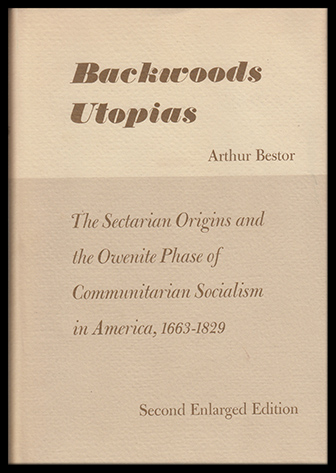
backwoodsutopias• Rolling in the door yesterday was a clean hardcover copy of the enlarged second edition of Arthur Bestor’s Backwoods Utopias: The Sectarian Origins and the Owenite Phase of Communitarian Socialism in America, 1663-1829 (University of Pennsylvania Press, 1970). I’ve actually already had a paperback of this title but any time I’m able to upgrade from a paperback to a real book on the cheap, I try to do that. I’ll rehome the paper trading it in with Bolerium Books in San Francisco.

Debs started out his socialist career as a “Utopian socialist” — an advocate of like-minded individuals getting together in one place and carving out a cooperative society from the wilderness. The scheme has a long tradition in American history, as the title of this book intimates, and has almost never worked for more than a few years before the cooperatives blow apart from internal pressure. Religious communes have had only a slightly better record of longevity, to which the history of the Shakers and the Oneida Community lends testimony.

There’s actually a pig-ton of books on Robert Owen and Owenism. Bestor’s remains one of the best.

Thanks to Vince Kueter and Gene Dillman for the graphics.
Posted in Uncategorized | Leave a comment