

• Hey, nice photo of a train wreck from the 1888 Burlington strike, eh? I actually bumped into this on Wikimedia Commons, it was an image originating in a book that I had been working with to write the WP article on that extremely important Debs-related event. Twenty minutes of Photoshop editing it starts to look pretty compelling, does it not? The image is of the aftermath of a collision which took place on Feb. 27, 1888 (the day of the start of the strike) at the crossing of the Chicago, Milwaukee & St. Paul Railroad’s line. The Chicago, Burlington & Quincy was subject to a labor stoppage on that day by its engineers and firemen who wanted to be paid a flat rate by the mile like other competing lines running out of Chicago instead of according to a complex company rate book that factored in difficulty of each route, trip length, cargo, and tenure of the employee.

I must be getting old because I’m starting to prefer toned coins like this instead of those that are dipped to be “bright white.”
Not accidentally, under the Burlington pay system the employees of the CB&Q wound up being paid significantly less than did equivalent employees on rival lines. Also not accidentally, the CB&Q was an extremely profitable business concern in this period and was in no hurry to change their economically advantageous pay system.
Just about every single engineer and fireman joined the stoppage — more than 97% of the road’s 2,100-some-odd cab employees took part. With the key running employees off the job, the company pressed everybody and their dog into service, putting pencil-pushers and maintenance workers and conductors and foremen behind the throttle and at the shovel in an attempt to keep the line running. Some trains went BOOM as a result, because not every pencil-pusher can run a train safely. BOOM!!!
The strike was extremely bitter and lasted until early January 1889. It ended with the railroad achieving retention of its established pay system, but the privilege cost them an estimated $5 million in lost business. Some of the striking employees were rehired, many others were replaced. Everybody lost out. So it goes.

• I found a pretty nice example of the vilification that Debs had to face in the press during the height of the 1894 Pullman boycott, when he was for a time Public Enemy No. 1. The cartoon, from the front page of the right wing Los Angeles Times of July 11, 1894, reprints a bogus “Associated Press dispatch” that reads: “Dr. B.T. Robertson, the New York specialist, knows Eugene V. Debs and treated him in past for a serious case of dipsomania [alcoholism]. His system broke down completely under constant alcoholic excess, and he became a mental and physical wreck. Dr. Robertson sent a telegram to Debs on Thursday night, warning him that he was in no condition to enter upon such an undertaking as the managing of the great ARU strike. ‘I consider him to be almost, if not fully, irresponsible,’ said Dr. Robertson, ‘and I told him so in my telegram. He will break down physically and mentally as soon as the strain is over, if not before, and will probably relapse into his former dissipated habits.’”
The drawing depicts a drunken Debs knocking over his ink pot and trashing his office amidst a maniacal fluttering array of strike orders. You should be able to make out the cartoon’s caption pretty clearly. “Fake News” and bogus pictorial memes are no recent invention…
• I spent one of my three book-work days reading and working a bit on the American Labor Union page on Wikipedia, uploading convention proceedings for the ALU, the IWW, and the Western Federation of Miners to Archive.org, and compiling scanned pages of the New York Call, a Socialist Party daily newspaper, into pdf files. This stuff actually does relate to the Debs project, but only to later volumes. I have to watch myself so that I don’t get sidetracked — which is an old time railroading term, by the way. I learned a lot about Western miner radicalism, but this isn’t the time to fully debrief on it…
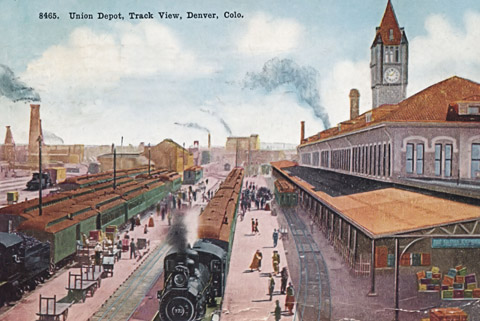 I will, however, share one key insight I have gained. During the 1890s for the first few years of the 20th Century, Denver was the second city of the American West. It was not Seattle (42,800 population in 1890) or Los Angeles (50,400) or Portland (46,400) but Denver (106,700) that was the second largest industrial hub of the region.
Denver was center of metal mining — including companies which manufactured heavy industrial equipment for that burgeoning industry. Denver was the locus of the wealth extracted by that hard rock mining and the site of conflict between the owning class and the working class.
Denver was to San Francisco as Chicago was to New York City. So it makes perfect sense that it would emerge as the headquarters city of the organizational center of western trade union radicalism, the Western Federation of Miners and the trade union federation it launched, the American Labor Union.
• 10 more Saturdays to go until we hit the July 1 target for the end of production of of Debs-written editable text. There are still 195 article pdfs remaining to be processed (or rejected at second reading)…
• We’ve started cutting the 1877-1885 material. I did a physical printout of articles and got my sharpie marking… We’re looking at something in the range of 75 to 100 pages out of 700 or so dedicated to the early “conservative labor editor” stuff. David pulled one back from the burn barrel but we’re still sitting north of 100 pages and need to sharpen our knives.

 • My new library acquisitions this week included what has proven to be one of the most zany Debs items out there. The Story of Eugene Debs is a book by Henry T. Schnittkind, published in 1929, just a few years after EVD’s death. I’ve known of it for a while but hadn’t made getting a copy a priority, as it was said to be a children’s book — which is true. It was my understanding that it was published by the Workman’s Circle, a Jewish-Socialist fraternal benefit society based in New York City that was very closely tied to the Socialist Party of America. Which is to say: No big whoop. This turned out to be rather less true, as the book was actually published by the Independent Workmen’s Circle, not the Workmen’s Circle — a Communist-sponsored factional split-group that was transformed into the International Workers Order in 1930. In other words, this is a Communist book for kiddies rather than a Socialist book for kiddies, which makes it way, way, way more interesting from where I’m sitting.
Here’s where the story gets fascinating. This was book 1 of a projected 4 volume set of biographies called “Heroes of Peace and Liberty.” The other biographical subjects were to include Tolstoy, Socrates, and Lenin. What a peculiar set of four! But that’s not the good part. Here it is: virtually every single word of The Story of Eugene V. Debs is flat-out, unflinching, completely unapologetic fiction! Dialogs and incidents that are completely unmentioned in the literature are created from whole cloth — here and there a name, a factual date, and an odd quote plucked from the historical record, buried beneath wheelbarrow-loads of imagined events and contrived dialog worthy of the worst of Based On A True Story™ Hollywood screenwriting.
Take this exposition on the inner thoughts of little Gene, for instance:
“The Civil War was over at last, and people once more came to their senses. The North and the South shook hands, they apologized for having killed so many of the strongest and the most beautiful of the young men of the country, and everything was all right again. Everybody was happy, except the young fellows that had been killed in the war….
“Gene thought it very silly for old people to send young people to their death, and to make up a great speech about them afterwards. But, then, Gene was only nine years old, and so he kept his thoughts to himself. It wouldn’t do to tell grown-ups what you thought of them. They were so much bigger and stronger than you. They might get angry and give you a good spanking.
“But he kept his eyes open, and every day he learned more and more about the world….”
And so on and so forth. Just one after another after another made up incident designed to teach the children to whom the book was read or who read the book about the exciting life of pacifist-boy-genius-youth-orator Gene Debs and his adventures, teaching valuable lessons about war and capitalism all the while, culminating in “old Mr. Wilson” being “stubborn, as usual” and keeping the aging Gene locked in prison.
It’s an absolutely fascinating piece of Debsiana and I’ve simply gotta find that Lenin for American Tykes book…
[P.S.: I think I found the Lenin for Tykes book. Alas, it looks like I’m gonna have to learn Yiddish… Here’s the info: לענין װײזט דעם װעג /מױשע שעפריס. ]
[P.P.S.: Comrade John, who reads Yiddish, says the title is Lenin Shows The Way, by Moishe Shefris.]

• “The Future of the Order of Railway Conductors” — Feb. 1889 article — 1,125 words
• “The Strength of All for the Good of All” — Feb. 1889 article — 1,400 words
• “Labor as a ‘Commodity’” — March 1889 — 2,210 words
• “The Church and the Workingman” — April 1889 — 1,800 words
• “Unmasking Hypocrisy” — April 1889 — 2,550 words
• “Labor Organizations” — May 1889 article — 1,700 words
• “The Political Control of Railways” — June 1889 article — 1,825 words
• “Truth and Fiction” — June 1889 article — 1,560 words
• “Federation Inaugurated” — July 1889 article — 1,190 words
• “Supreme Council of United Orders of Railway Employees Formed” — July 1889 article — 2,710 words
….Word count = 389,680 words in the can + 18,070 this week = 407,750 words
….Plus another one that I’m putting on account for Volume Four:
• “Wendell Phillips: Orator and Abolitionist” — May 1917 article — 3,760 words


 • We are sliding towards the next aspect of the Debs Project, cutting down a projected 560,000 words to fit a 260,000 word content “hole” for volume 1. I have been working through the Locomotive Firemen’s Magazine material chronologically, beginning the week towards the end of 1888 and starting to take a big bite out of 1889. Everything is being ported over to Marxists Internet Archive as individual files, which follow my traditional 6 x 9 inch pages size, use of the Adobe Garamond font family, and use of true footnotes rather than endnotes, compiled with the Apple Pages word processor program and outputted as pdfs.
 • LIBRARY ACQUISITIONS: I don’t usually make the rookie mistake of missing out on rare items that I need in my field of interest that come up for sale under market-value, but I really screwed the pooch on a nice copy of Pearson’s magazine’s 1919 pamphlet of Debs articles, Pastels of Men. I was holding off on my ABE order for two days for my credit card to “cut” for the month and wound up being one day too slow. Grrrr. Fortunately I found a scan of a beat-shit copy from the University of Michigan library via Google Books, so I now know what the content of that lesser-known pamphlet is for sure — and as a new owner of a decently-complete run of Pearson’s from the period in question, it turns out I wouldn’t have been using the reprint pamphlet version anyway, instead working from first edition magazines. Still, it doesn’t happen too often that I miss something that I really want because I failed to pull the trigger decisively. It is, like I say, a rookie mistake and it sort of sucks.
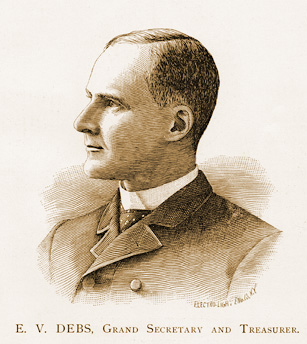 The thing is, a large part of Debs’s (gotta get used to that Haymarket House Style!) early writing happened in the pages of Locomotive Firemen’s Magazine, the official journal of the Brotherhood of Locomotive Firemen, of which he was the paid editor for a dozen years. All those issues have been scanned by Google for their Google Books project, which means that material can be handled without leaving the laptop computer environment. Issues can be perused, articles selected and segregated, files prepared for Optical Character Recognition (OCR), output gathered, proofreading done, finished files assembled — no paper issues or microfilm necessary.
 • Next comes the OCR phase of the exercise. As this week began I had 259 remaining Firemen’s Magazine Debs article files to run through Optical Character Recognition. Since I’ve got 13 weeks until I turn into a pumpkin on July 1, this means that I need to make 20 files per week go away — about 3 files per day.
 • New additions to the library this week include huge microfilm runs of two important national news and politics magazines, The Outlook (1894-1935) and The Forum (1886-1940). Total tab for 59 reels of film, postpaid from Alabama: $55 — 93 cents a reel! That’s almost free. Also scored another lot of Pearson’s magazine from 1915, 1916, and the first half of 1917 — nice copies for about $3 an issue, postpaid, which is also stealing.
 years of left wing political history, 1916 to 1924. Yeah, those dates have meaning. My vision is to tie together the story of the attenuation of the Socialist Party and the Industrial Workers of the World and the Communist Party’s emergence and growth in the superheated political environment of world war and European revolution. Parts of this story have been narrated many times; other aspects of the saga have never been told. To my mind it has never really been done right, although the Philip Foner’s 10-volume History of the Labor Movement in the United States at least touches most of the bases, no matter how tendentiously.
 Marxists Internet Archive (MIA) is structured a bit strangely. The basic site is built around the writings of individuals — all of Marx here, all of Lenin there, all of Trotsky on another page, Kautsky on still another, and so forth — all with server access pretty tightly restricted so that only one or two or a very few volunteers have access to any particular index page to keep the works from getting effed up. I was doing my own thing as part of a “US History section” mirroring content of my site but I didn’t want to screw around with MIA’s html pages, which were not a direct replication of my own primitive “frames”-based website but had its own very definite form. David Walters emerged as the adapter of my stuff and my handler of sorts, converting my material to the official MIA site structure.
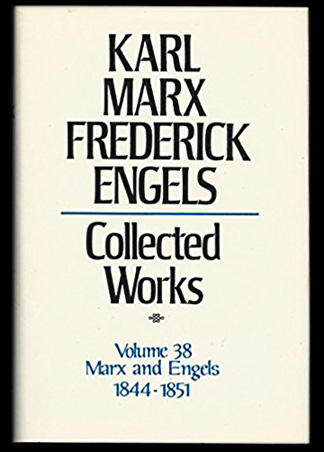 Any Marxist can tell you that there’s a world of difference between “Collected Works” and “Selected Works.” The latter generally means one or two or three volumes of the most important stuff, with tons of lesser material and fluff left behind. The former includes literally everything written or spoken by a person and that gets big fast. Lenin’s Polnoe sobraniie sochineniia (“Complete Collected Works”) ran to 55 thick volumes in Russian, with the slightly truncated English edition tipping in at 45. The Marx-Engels Gesamtausgabe (“Complete Edition”) runs to 44 volumes in German, some of these in multiple parts, and 50 volumes in English. Russian or English collected works have never even been completed for Leon Trotsky, despite the size and fervor of his political following. The subset of Trotsky’s 1929-1940 material alone that is not included in his three foot shelf of freestanding books runs to 14 volumes in English — that’s just the tip of the iceberg. Bear in mind that all of these Collected Works projects took teams of scholars decades to produce. Moral: Collected Works = BIG.
 In the meantime, I got drafted into working on the Lovestone book mentioned above. The connection was made through my own website, I think, anybody working on Lovestone seriously and running Google searches would have come into contact with my documents at some point, as I had gathered material on the Lovestoneites running into the 1930s. I wound up spending the better part of a year on that project and learned a lot in terms of the publishing process and the dos and don’ts of editing a “documents” book. I can’t emphasize enough that the Lovestone book wasn’t my vision, that I was only the co-pilot. I have finally learned to not hate it, which is a baby step for me, I was pretty discouraged near the end there… I did manage to sneak one chapter into the work that approximated my vision — I’m sure my co-editor Paul LeBlanc hates that particular contribution (it does stick out like a sore thumb from the rest of the book), but he’s a prolific guy who is already about half a dozen projects down the road from Lovestone by now. Maybe the Lovestone will come out in paperback this year and more than a dozen will actually see it, who knows? Anyway, I know what I do and don’t want to do this time around. There is no substitute for experience.
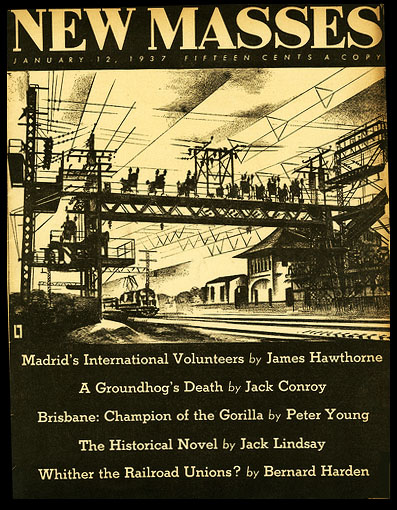 Upon further review — much to my surprise — I found that this was an entirely different article than the piece I thought it was, a 1909 bit written for Socialist Woman and republished in the 1916 collection, Labor and Freedom. Very cool, very cool. I spent some time and got a good clean scan of he rotten, brown paper — feel free to download the piece and have a read:
  The Debs Project